Americans devour 3.5 billion pizzas annually (48 slices per person), showcasing our obsession with this Italian classic. Pepperoni reigns supreme (24% love it), while anchovies face widespread rejection. New York’s thin crust leads national preferences at 27%, followed by Chicago’s deep dish at 19%.
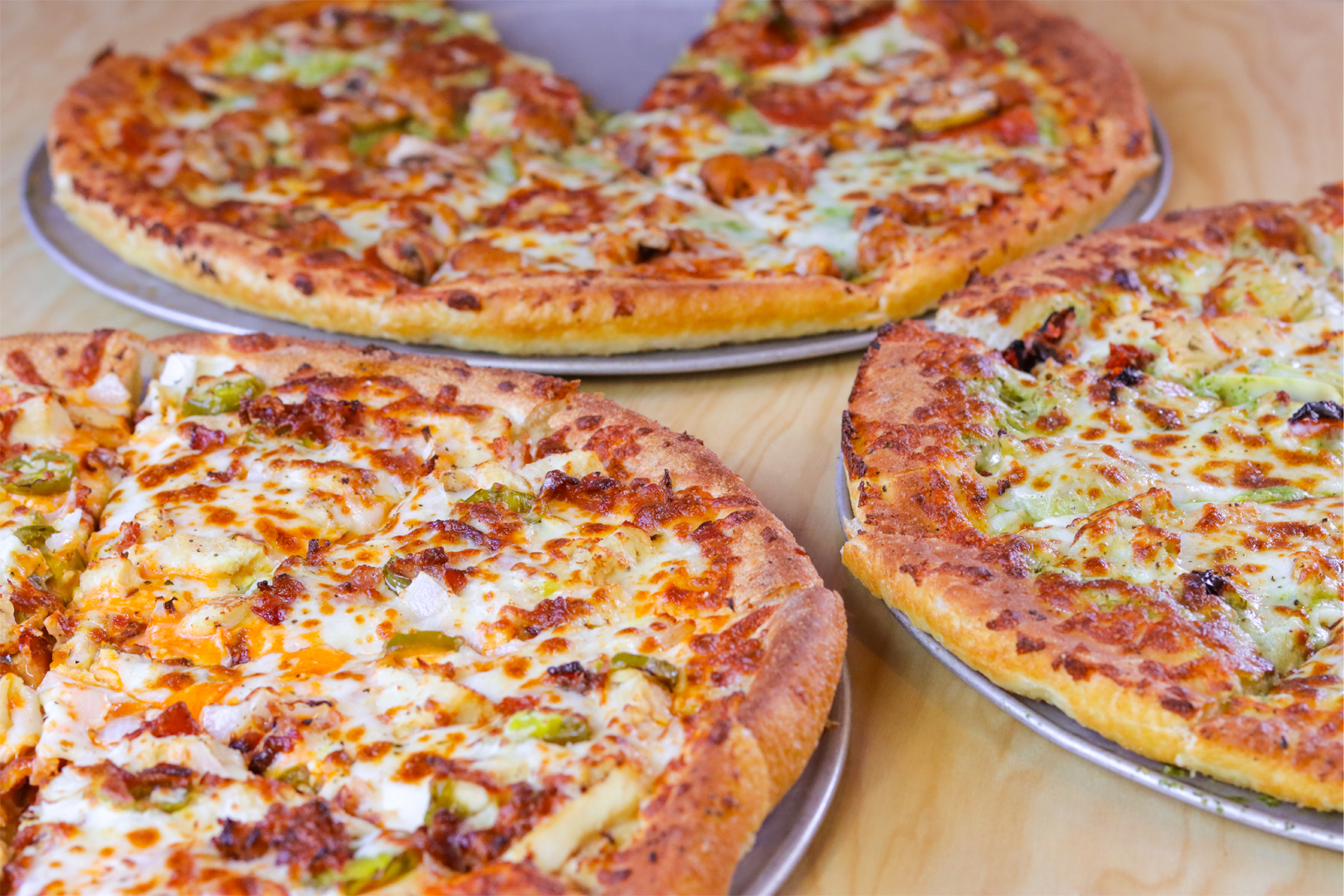
Pizza isn't just food in America – it's a cultural phenomenon deeply embedded in our national identity. Americans devour approximately 3.5 billion pizzas every year, translating to an astonishing 48 slices per person annually. This obsession has transformed the humble Italian flatbread into something uniquely American. When seeking quality pizza in Colfax, Washington, Westside Pizza honors this tradition by crafting fresh pizzas daily with premium ingredients that satisfy our collective pizza cravings.
Pepperoni sits unchallenged on the throne of American pizza toppings. According to a comprehensive YouGov survey, 24% of Americans name pepperoni as their favorite topping, and an impressive 50% say they "love it" on their pies. What's particularly notable is pepperoni's universal appeal – fewer than 1% of Americans list it as their least favorite topping.
The silver and bronze medals go to sausage (13%) and extra cheese (11%), respectively. Extra cheese actually edges out pepperoni slightly when Americans are asked which toppings they love, with 51% expressing affection for that additional layer of melty goodness. Mushrooms follow at 9%, with chicken rounding out the top five at 6%.
On the opposite end of the spectrum, anchovies hold the dubious honor of being America's most disliked pizza topping. A staggering 29% of Americans name anchovies as their least favorite topping, with 42% saying they outright hate these small, salty fish on their pizza. What makes this particularly notable is how one-sided the sentiment is – only 1% of Americans claim anchovies as their favorite topping.
Jalapeños (8%), pineapple (6%), and eggplant (6%) round out the most commonly cited least-favorite toppings, though none come close to the unified dislike of anchovies. Broccoli and mushrooms tie at 5% as fifth most disliked, showing that even popular toppings have their detractors.
Few pizza toppings spark as much heated debate as pineapple. The survey reveals America is truly split on this tropical addition, with 22% loving pineapple on pizza and another 37% saying they like it. On the opposing side, 18% dislike it and 19% hate it. This nearly even division explains why the pineapple debate feels so contentious – the country is genuinely divided, with passionate advocates on both sides.
Interestingly, this mirrors a global debate. A separate survey found that 77% of Italians consider pineapple on pizza a culinary crime against their national heritage, highlighting the cultural tensions at play in pizza preferences.
Despite jokes about people abandoning their crusts, the data tells a different story. A substantial 79% of Americans eat their pizza crust, showing that the majority value this bread-based handle as an integral part of the pizza experience. Only 19% admit to regularly leaving those outer edges behind.
When it comes to crust style, thin crust leads the pack with 39% of Americans expressing a preference for this style. Thick crust follows at 30%, while stuffed crust – that cheese-filled innovation – captures 16% of the market. The remaining 14% have no strong preference, happy to enjoy pizza regardless of crust thickness.
Shape matters too – 75% of Americans prefer the classic triangular slice, while only 15% favor square cuts and 5% like their pizza cut into strips. This preference for triangular slices aligns perfectly with the fold-and-hold eating style that dominates American pizza culture.
The debate over how to physically eat pizza has a clear winner in America: 73% of pizza eaters prefer using their hands, embracing the casual, tactile nature of the food. Only 11% opt for the fork-and-knife approach, while 15% report using both methods equally depending on the situation.
This hand-dominant approach separates American pizza culture from some European traditions, particularly in Italy, where knife-and-fork dining is more common for certain pizza styles. The American preference for eating with hands aligns with our cultural value of casual, accessible dining experiences.
And what about dipping? Americans have adopted various sauces to accompany their pizza. Garlic butter and marinara sauce tie at 23% each as the most popular dipping choices, with ranch dressing following closely at 22%. Regional differences appear here too – Northeasterners favor blue cheese dressing at higher rates (17%) than the national average (9%).
When Americans are asked about regional pizza styles, New York-style pizza emerges as the national favorite, with 27% declaring it their preferred style. Known for its thin, foldable crust, minimal toppings, and large slices designed for on-the-go eating, New York pizza represents a specific urban pizza culture that has won over the American public.
The regional loyalty to this style is striking – 47% of Northeasterners claim New York-style as their favorite, showing how deeply regional pizza styles become part of local identity. Even in the West, 18% of residents prefer New York-style pizza, demonstrating its national appeal.
Chicago-style pizza, often known as deep dish, captures the second-place position nationally with 19% of Americans declaring it their favorite. With its high edges, inverted layering (cheese on the bottom, sauce on top), and casserole-like depth, Chicago pizza stands as the polar opposite of New York's thin slices.
Regional loyalty plays a significant role here too – 30% of Midwesterners claim Chicago-style as their favorite, displaying the same regional pride seen in the Northeast's devotion to New York pizza. This deep-dish style has expanded beyond its Midwestern roots, with 19% of Southerners and 14% of Westerners also naming it their preferred style.
While less nationally dominant, Detroit-style pizza has carved out its own devoted following, with 4% of Americans naming it their favorite. Known for its rectangular shape, crispy caramelized cheese edges, and strips of sauce atop the cheese, Detroit pizza represents a distinct regional variation that's gaining momentum nationwide.
These regional variations showcase how pizza has evolved to reflect local tastes and preferences across America. At Westside Pizza, these diverse pizza traditions inspire menu options that cater to different regional preferences while maintaining consistent quality.
Pizza's journey to America wasn't a direct export but arrived through waves of Italian immigration between 1880 and 1950. While the dish originated in Naples, its transformation in America has been profound. Early Italian immigrants recreated their homeland's food in American cities like New York, Trenton, Boston, Chicago, and St. Louis, initially serving primarily other immigrants.
These early pizzas were simple affairs – flatbreads with minimal toppings that reflected the humble origins of the dish in Naples, where poor workers needed inexpensive food that could be consumed quickly. For decades, pizza remained largely confined to Italian-American communities, viewed as an ethnic food rather than a national dish.
Pizza history often credits Gennaro Lombardi with opening America's first pizzeria in 1905 at 53½ Spring Street in New York City. However, recent historical research has revealed a different story. Filippo Millone, who emigrated from Naples in the 1890s, likely established the first American pizzeria at that same address around 1897 – nearly a decade earlier.
Millone, a trained pizza maker from Naples, opened multiple pizzerias in New York, including one on Bleeker Street called John's. Despite his pioneering role, Millone has been largely forgotten in pizza history, having no family and ending up in an unmarked grave in Queens – a poignant reminder of how easily cultural contributions can be misattributed.
While popular lore suggests returning WWII soldiers developed a taste for pizza in Italy and drove its popularity upon returning home, the reality is more complex. Pizza's mainstream American breakthrough came in the post-war economic boom, driven by suburbanization, increased disposable income, and technological developments.
Two key developments accelerated pizza's ascent to American food royalty:
Media exposure further cemented pizza in American culture, with appearances in popular shows like "I Love Lucy" and "The Honeymooners," and Dean Martin's hit song "Amore" bringing pizza into the mainstream American consciousness.
Today, pizza has evolved from its humble Neapolitan origins into a $145 billion global industry, with America leading consumption. Each region has adapted this Italian import to reflect local tastes, ingredients, and dining cultures, creating a pizza ecosystem as diverse as the country itself.
When you're craving a perfect slice that honors America's rich pizza tradition, Westside Pizza in Colfax, WA delivers quality pizzas crafted with the same passion that has made pizza America's favorite food.


