Planning a kitchen remodel? That granite countertop you’re eyeing weighs up to 25 pounds per square foot, and most homeowners drastically underestimate total debris weight. One miscalculation could leave you with expensive overage fees and project delays.
Kitchen remodels consistently surprise Peoria homeowners with the sheer volume and weight of debris they generate. What appears manageable at the start quickly becomes overwhelming when granite countertops and multiple layers of cabinetry hit the dumpster. Understanding these weight realities upfront prevents costly surprises and ensures proper planning for successful renovation projects.
Kitchen renovations create substantially more debris than most homeowners estimate during initial planning. Cabinets that look modest when installed transform into bulky, space-consuming loads when removed. The issue compounds when multiple cabinet layers exist in older homes, where previous remodels left original units behind updated facades.
Weight becomes the primary concern rather than volume in most kitchen demolitions. Homeowners frequently fill dumpsters to only 60% capacity before hitting weight limits, leaving expensive empty space while exceeding tonnage allowances. Stone countertops and ceramic flooring drive these weight calculations, creating dense loads that challenge standard disposal assumptions.
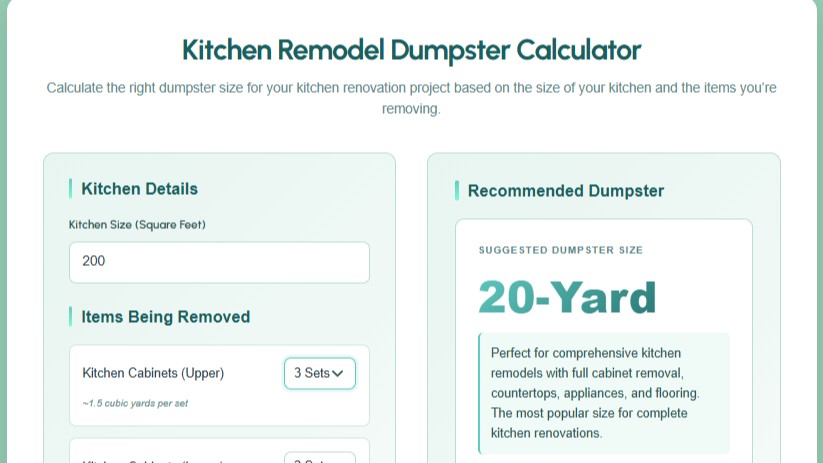
Using our dumpster size calculator to understand proper dumpster sizing for kitchen projects helps prevent these common miscalculations that lead to additional fees and project delays.
Hidden discoveries during demolition multiply waste estimates quickly. Water-damaged drywall weighs three times normal amounts, while discovering multiple tile installations underneath current flooring doubles expected debris volumes. These surprises catch even experienced contractors off guard, making conservative planning necessary for kitchen renovation success.
Granite countertops weigh between 15 to 20 pounds per square foot, depending on thickness and stone density. A standard L-shaped kitchen counter measuring approximately 50 square feet can weigh between 750 and 1,250 pounds total. Even a modest 3-foot by 6-foot granite section weighs 270 to 360 pounds, requiring proper handling equipment and strategic dumpster placement.
The thickness factor significantly impacts total weight calculations. Standard 1.25-inch thick granite weighs considerably less than premium 2-inch thick slabs, but both exceed homeowner expectations when removal begins. Quartz countertops present similar weight challenges, often matching granite's density while requiring careful cutting for safe removal.
Kitchen cabinets create more volume than their installed appearance suggests. Upper cabinets, lower units, corner pieces, and island bases combine to fill dumpster space rapidly. Most kitchens contain 8 to 12 cabinet boxes, plus trim pieces, toe kicks, and hardware that add substantial bulk to disposal loads.
Older homes frequently contain cabinet surprises that multiply removal efforts. Previous renovations often installed new cabinets over existing units rather than complete removal. These double-layer installations can triple original weight estimates, catching homeowners unprepared for the additional disposal requirements and associated costs.
Ceramic and porcelain tile floors generate some of the heaviest debris per square foot in kitchen renovations. Standard ceramic tile weighs 4 to 6 pounds per square foot, while porcelain tile typically weighs 5 to 10 pounds per square foot. A typical 150-square-foot kitchen floor produces 600 to 1,500 pounds of tile debris when removal includes adhesive and cement board backing.
The removal process compounds weight issues as tiles come off with mortar and backing materials attached. Thin-set adhesive and cement board underlayment add substantial mass beyond the tile weight alone. These materials don't separate cleanly during demolition, creating dense chunks that quickly fill dumpster capacity while exceeding weight limits.
Standard kitchen renovations in Peoria homes consistently produce between 1,000 and 3,000 pounds of debris, with projects typically generating 15 to 25 cubic yards of waste depending on kitchen size and material choices. Smaller galley kitchens with laminate counters and minimal cabinetry fall toward the lower end, while open-concept kitchens with stone surfaces and extensive millwork approach the upper limits.
Material composition drives these weight variations significantly. Kitchens featuring granite countertops, ceramic tile floors, and solid wood cabinets generate substantially more weight than those with laminate surfaces and particle board construction. The difference often exceeds 1,000 pounds between budget and premium material renovations in similar-sized spaces.
Discovering multiple cabinet installations during demolition represents the most common weight calculation error among Peoria homeowners. Homes built before 1980 frequently contain original cabinets beneath 1990s updates, which may have additional layers from recent renovations. These discoveries can triple initial weight estimates and require larger dumpster capacity.
The layering effect particularly impacts load distribution and dumpster selection. Three sets of cabinets from different eras create dense, unevenly weighted loads that challenge standard disposal methods. Professional assessment becomes necessary when multiple layers are suspected to prevent mid-project capacity issues and additional rental fees.
Fifteen-yard dumpsters accommodate cabinet replacement projects and limited flooring updates effectively. This size works well for kitchen refreshes involving cabinet door replacement, countertop swaps, and vinyl or laminate flooring installation. The capacity handles moderate debris loads without risking weight limit violations.
Cabinet-focused renovations generate primarily wood waste, which allows better space utilization within weight constraints. Removing doors, breaking down cabinet boxes, and separating hardware maximizes the 15-yard capacity while maintaining manageable weight loads for safe pickup and transport.
Twenty-yard dumpsters handle most complete kitchen renovations in standard Peoria homes. This size accommodates cabinet removal, countertop demolition, tile floor tearout, and backsplash elimination while providing adequate weight capacity for stone materials. The additional space prevents overflow issues common with smaller containers.
Full kitchen gut jobs require careful material management even with 20-yard capacity. Strategic loading becomes necessary to maximize space efficiency while respecting weight distribution requirements. Proper planning ensures all demolition debris fits within the container without exceeding tonnage limits that trigger additional fees.
Thirty-yard dumpsters serve expanded kitchen projects involving wall removal, open concept conversions, and multi-room renovations. These larger containers accommodate the substantial debris volumes generated when combining kitchen remodels with dining room updates or structural modifications.
Open concept projects create unique disposal challenges beyond standard kitchen renovation scope. Structural wall removal, flooring transitions between rooms, and expanded cabinet installations generate debris volumes that overwhelm smaller containers. The 30-yard capacity provides necessary space for these wide-ranging renovation approaches.
Loading stone countertops and tile debris on the dumpster bottom creates weight distribution and prevents dangerous load shifting during transport. Heavy materials placed at the base provide stability for lighter debris layered above, maximizing container capacity while maintaining safe transport conditions.
Strategic placement of granite and ceramic materials prevents damage to the dumpster and ensures efficient pickup. Concentrated weight at the bottom allows hydraulic systems to operate properly while preventing materials from shifting during loading and transport. This technique also makes space for lighter materials that would otherwise be wasted with poor loading practices.
Dismantling cabinets before dumpster loading dramatically improves space utilization and weight management. Removing doors, separating face frames, and breaking down cabinet boxes creates manageable pieces that stack efficiently. This preparation prevents air gaps that waste valuable container capacity.
Cabinet breakdown also facilitates weight distribution throughout the dumpster load. Smaller pieces can be strategically placed to balance heavy stone materials and create stable loading configurations. The time invested in dismantling pays dividends in maximized container efficiency and prevented weight violations.
Using lighter materials like drywall, trim, and packaging to fill gaps between heavy items maximizes dumpster capacity while preventing load movement during transport. These materials act as stabilizing agents that secure heavier debris and eliminate wasted space common in poorly loaded containers.
Strategic gap filling also improves weight distribution across the entire dumpster load. Lighter materials can be positioned to balance concentrated heavy spots, creating safer transport conditions while maximizing the total debris capacity. This technique prevents both overages and underutilization of available space.
Kitchen renovation weight challenges require local knowledge and proper planning to avoid costly surprises and project delays. Understanding material weights, debris volumes, and loading techniques ensures successful renovation completion without unexpected fees or capacity issues. Proper preparation makes the difference between smooth project execution and frustrating setbacks that extend timelines and budgets.
Professional guidance helps homeowners select appropriate dumpster sizes based on specific project scopes and material choices. Local knowledge of Peoria renovation patterns and common kitchen configurations provides valuable insights for accurate planning and successful waste management throughout the renovation process.
For guidance on kitchen renovation dumpster selection and waste management planning, Zap Dumpsters Peoria provides debris removal solutions tailored to local homeowner needs.


