A historic moment unfolded at the Vatican when Pope Leo XIV declared St. John Henry Newman the 38th Doctor of the Church—but what makes this recognition so revolutionary for Catholic education, and why did Newman University’s president call witnessing it “better than Disneyland”?
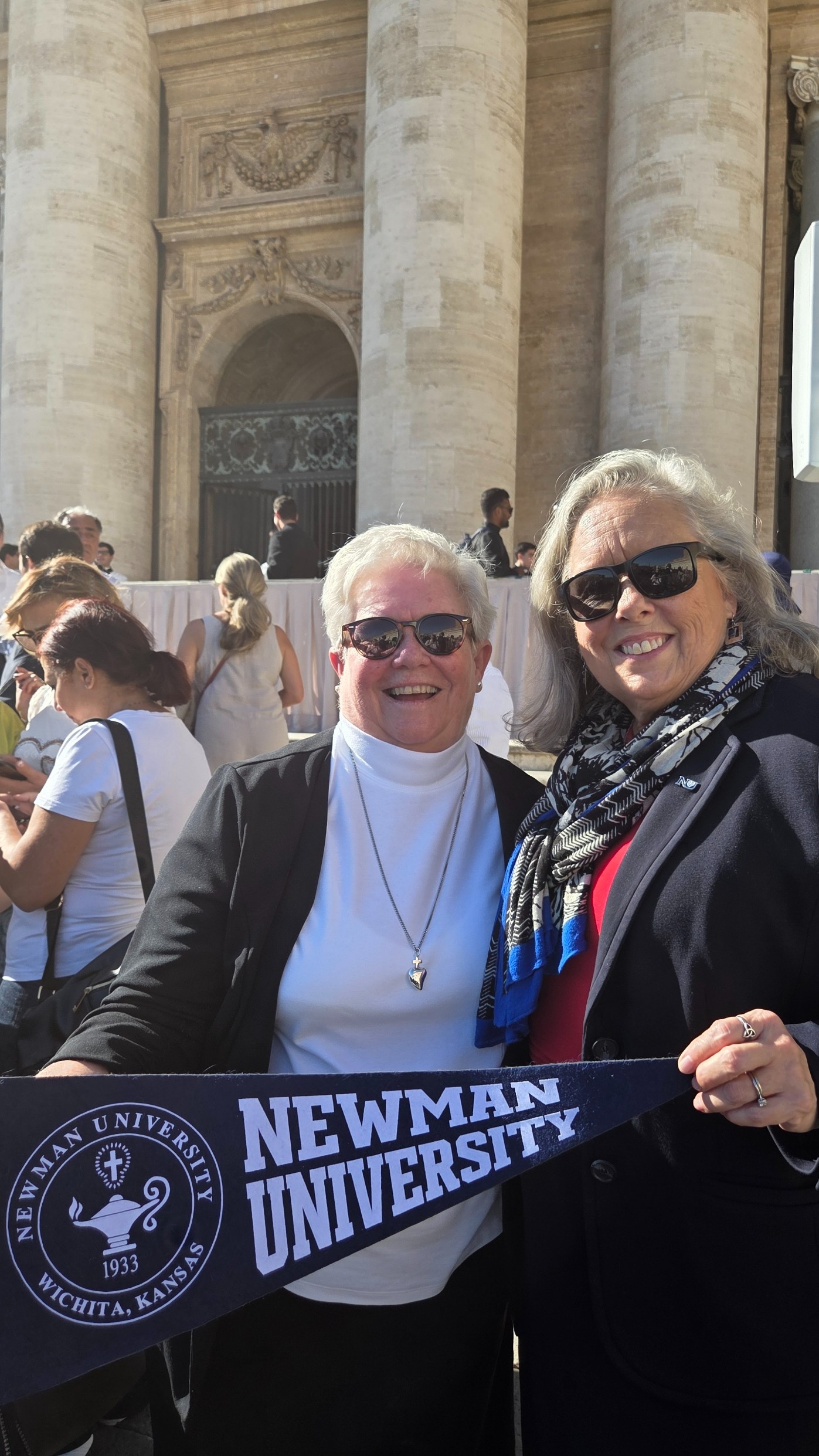
The bells of St. Peter's Basilica rang out across Rome on November 1, 2025, as Pope Leo XIV made history. In front of 15,000 gathered faithful, the Holy Father declared St. John Henry Newman the 38th Doctor of the Catholic Church—a recognition that carries profound significance for Catholics worldwide and especially for the university that bears his name.
The declaration came during the culmination of the weeklong Jubilee of the World of Education conference, with Pope Leo XIV celebrating Mass in St. Peter's Square. This extraordinary honor places Newman among an elite group of saints—including Augustine, Thomas Aquinas, and Thérèse of Lisieux—whose writings and teachings have made lasting contributions to Church doctrine and theology.
The timing proved particularly symbolic. Pope Leo XIII had elevated Newman to the cardinalate in 1879, admiring Newman's fierce religious orthodoxy, and now another Leo completed Newman's ecclesiastical recognition by bestowing one of the Church's highest honors. The ceremony drew significant ecumenical participation, with leading members of the Anglican Church of England and the British government in attendance, including Archbishop Stephen Cottrell of York and Deputy Prime Minister David Lammy.
For Newman University and its community, this recognition validates decades of living by the principles their namesake championed. President Kathleen Jagger, who witnessed the historic moment firsthand, described feeling "an immense sense of pride to be there representing Newman University at this historical moment."
The title "Doctor of the Church" represents one of Catholicism's most distinguished honors, reserved for saints whose theological contributions continue to instruct the faithful across cultures and centuries. The recognition requires three elements that Newman embodied throughout his remarkable life and scholarly career.
Newman's path to sainthood spanned over a century. His cause opened in 1958, with Pope St. John Paul II declaring him Venerable in 1991 after recognizing his life of heroic virtue. Pope Benedict XVI beatified him during his historic papal visit to the UK on September 19, 2010, at Cofton Park in Birmingham, making an exception to the custom of local bishops beatifying while popes canonize. Finally, Pope Francis canonized him on October 13, 2019, during an open-air Mass in St. Peter's Square, following the approval of a second miracle.
Newman's literary output was prodigious and remarkable in its range: theology, philosophy, history, apologetics, sermons, lectures, essays, poetry, and novels. His writings must demonstrate fidelity to Church teaching, and Newman's works have proven their theological soundness through rigorous scholarly examination. A detailed "positio" document with seventeen chapters covering theology, philosophy, development of doctrine, faith and reason, ecclesiology, and Divine Revelation demonstrated his influential contributions to Catholic theology.
The final requirement—formal recognition by the Church—arrived when Pope Leo XIV made his historic proclamation. As Pope Benedict XVI noted, naming a saint as Doctor "implies the recognition of a charism of wisdom bestowed by the Holy Spirit for the good of the Church." Newman becomes the first Doctor of the Church from England in modern times and one of the few whose thought bridges Protestant and Catholic traditions.
Newman's theological legacy rests on three foundational pillars that transformed Catholic understanding and continue to influence Church teaching today. His insights addressed fundamental questions about how faith develops, how conscience operates, and how believers achieve certitude in religious matters.
Newman's most groundbreaking contribution was his theory of doctrinal development, articulated in his masterwork "An Essay on the Development of Christian Doctrine" (1845). Writing during his transition from Anglicanism to Catholicism, Newman addressed a fundamental challenge: how to reconcile the apparently simple Christianity of the New Testament with the elaborate beliefs and rituals of the nineteenth-century Catholic Church.
Newman distinguished between authentic "development" and "corruption," proposing seven tests to identify genuine development: preservation of type, continuity of principles, power of assimilation, logical sequence, anticipation of its future, conservative action upon its past, and chronic vigor. His insight was that Christianity, like all world-changing ideas, needed time for its full understanding through historical and social processes.
Cardinal Joseph Ratzinger (later Pope Benedict XVI) declared Newman's concept "one of the decisive and fundamental concepts of Catholicism," noting that Newman's teaching "had placed the key in our hand to build historical thought into theology." This theory profoundly influenced the Second Vatican Council and provided theological tools for understanding how doctrine can authentically develop while maintaining continuity with apostolic tradition.
Newman's theology of conscience represents another pillar of his contribution. In his famous "Letter to the Duke of Norfolk," Newman offered one of literature's most celebrated toasts: "I shall drink—to the Pope if you please—still, to Conscience first, and to the Pope afterwards." Far from establishing conflict between personal conscience and Church authority, Newman understood conscience as "the voice of God in the nature and heart of man" and "the aboriginal Vicar of Christ."
For Newman, conscience wasn't radical subjectivity but rather the voice of God in the mind and heart. He characterized it as having two functions: moral sense (judging right from wrong) and sense of duty (compelling obedience to moral law). His view anticipated the Church's 1965 Declaration on Religious Freedom and provided philosophical grounding for understanding the relationship between individual conscience and ecclesial teaching authority.
In "An Essay in Aid of a Grammar of Assent" (1870), Newman addressed how faith can possess certitude when rising from evidence that can never be more than probable. He distinguished between "notional assent" (acknowledging an abstract proposition as true) and "real assent" (when deeper faculties directly perceive truth, engaging instincts, emotions, and will).
Newman introduced the concept of the "illative sense"—a natural, often unconscious mode of reasoning that moves from concrete things to conclusions through a cumulative process rather than formal logical inference. This explained how persons reach certitude in religious matters through gradual growth into conviction rather than a sudden "leap of faith."
In a move that surprised many Catholic educators worldwide, Pope Leo XIV simultaneously named Newman co-patron of Catholic education joining St. Thomas Aquinas—the first such appointment in nearly 145 years. This recognition honored Newman's vision of Catholic education, particularly as expressed in "The Idea of a University," based on his lectures as founding rector of the Catholic University of Ireland (1852-1858).
Newman's educational philosophy insisted that a university must teach "all branches of knowledge" in an integrated system, with theology providing context and preventing other disciplines from overreaching their boundaries. He emphasized that "Religious truth is not only a part, but a condition of general knowledge," a principle quoted by Pope Leo XIV in his apostolic letter "Disegnare Nuove Mappe di Speranza" ("Drawing New Maps of Hope"). Newman also outlined principles to inspire Catholic liberal education, founding the Oratory School in Birmingham, England.
The pope emphasized Newman's vision of education as "just as intellectually responsible and rigorous as it is profoundly human," rejecting purely commercialistic approaches that measure education solely by functionality and practical utility. Newman's approach required students to think beyond focused skillsets or disciplines, embracing learning in all its dimensions.
Newman's educational philosophy directly addressed four major threats that remain relevant today: utilitarianism (reducing education to vocational training), fragmentation (compartmentalization without unifying principles), secularism (excluding religious knowledge), and rationalism (absolutizing human reason without divine truth). His integrated approach offers a roadmap for Catholic institutions navigating contemporary challenges while maintaining their distinctive mission.
Pope Leo XIV's proclamation during the Jubilee of the World of Education underscored that Newman's wisdom addresses urgent needs of our time. In an age of rapid change, polarization, and challenges to truth itself, Newman's example of rigorous intellectual engagement united with deep faith offers "new maps of hope" for navigating contemporary complexities.
Newman University President Kathleen Jagger's journey to Rome for this historic moment began just two weeks before the ceremony, when she learned of Newman's impending declaration. Through the support of the Adorers of the Blood of Christ sisters, the university's sponsors, she secured her place at this once-in-a-lifetime event.
From her seat on the piazza, just steps from the altar where Pope Leo XIV celebrated Mass, Jagger experienced the ceremony up close. "He was very physically close," she recalled. "Seeing the inside of the Vatican rather than looking at it from St. Peter's Square was different and new for me, and it felt really special."
The morning brought some anxiety as she and the sisters navigated Rome's streets, trying to reach the Vatican in time. "I'm sitting in the car trying to be encouraging, with my phone on GPS mapping, Sister Marie in the backseat with her phone on GPS mapping," Jagger laughed. "I really just said a prayer in the car, and then we called the Monsignor and he figured out how to get us there. It was divine providence."
When Newman's beloved hymn "Lead, Kindly Light" filled St. Peter's Square during the ceremony, Jagger felt a profound connection to home. "Hearing the words, 'Lead, kindly light, amid the encircling gloom, lead thou me on, the night is dark, and I am far from home'—that was a powerful moment for me," she said. "To hear them in a completely new context reinforced some of the messages that we're giving here at Newman all the time."
The Jubilee of the World of Education conference brought together teachers, scholars, and students from every continent. "It was definitely an experience of the wonderful variety of people in the education sphere," Jagger observed. "You'd see women in their native African garb, priests from every continent, teachers from Austria and Italy—all committed to the same mission."
Each speaker presented in their native language, while attendees used their phones to follow along in their own language through the Vatican website. The conference featured everything from philosophy to practical education applications, with some speakers using PowerPoint presentations while others spoke from the heart. One speaker even had the entire audience singing together.
Jagger was struck by the theme "Constellations of Hope" and the familiar Latin phrase "Ad astra per aspera" (to the stars through hardships), which happens to be the Kansas state motto and part of the Great Seal of the State of Kansas, referring to the state's long delay in being admitted to the Union because of the dispute over slavery. "It showed how, if every educated person is a star shining bright, you can see the sort of constellation connection that education has and its ripple effect," she explained.
During her five-day stay in Rome, Jagger lived with the Adorers of the Blood of Christ sisters, the religious community that founded Newman University in 1933. "It was an opportunity to experience the global nature of the ASC community," she said. "At the dinner table, I met sisters from Italy, the U.S., Croatia, Ukraine, India, Tanzania, and Vietnam."
Each meal brought opportunities for connection across language barriers, with conversations flowing between English, Italian, and various native languages. "We sang together, we laughed together, and they made me feel so included," Jagger recalled. "By the time I left, I felt like it was home."
The experience included attending daily Mass in the sisters' chapel, all conducted in Italian. "One of the beautiful things about the Eucharist is that it can be in any language and you still know what's being said," Jagger noted. She also visited the reliquary of St. Maria De Mattias, founder of the Adorers of the Blood of Christ, calling the experience "amazing."
For Newman University, St. John Henry Newman's elevation to Doctor of the Church represents more than historical recognition—it's a powerful affirmation of the institution's educational philosophy and mission. The declaration validates the university's commitment to Newman's vision of integrated Catholic education and his understanding of each person's unique calling.
"Our mission, if we say it plainly, is a call to action for our community to empower students," President Jagger explained. "And it's a call to action on the part of students to use their God-given talents to transform society, to do what God has called each of us to do." This aligns perfectly with Newman's famous words about discovering one's definite service: "God has created me to do Him some definite service. He has committed some work to me, which He has not committed to anyone else. I have my mission."
The recognition reinforces Newman University's approach to whole-person education, which requires students to think beyond narrow specializations. "You can't just come in here and learn a trade," Jagger noted. "Being educated in an environment like Newman requires that you think beyond that one very focused skillset or discipline." This philosophy echoes Newman's vision of a university that teaches all branches of knowledge in an integrated system.
Pope Leo XIV's message during the education conference resonated strongly with Newman University's mission. The pope spoke of schools and universities as "laboratories of prophecy, where hope is lived and constantly discussed and encouraged." He emphasized education's task "to offer this kindly light to those imprisoned by the shadows of pessimism and fear," directly referencing Newman's beloved hymn.
As graduates leave Newman University to become what Jagger calls a "constellation of stars," they carry forward Newman's legacy of rigorous intellectual engagement united with deep faith. The saint's recognition as Doctor of the Church ensures that his timeless wisdom will continue to guide not just Newman University, but Catholic education worldwide for generations to come.
Learn how Newman University continues to live out St. John Henry Newman's vision of empowering graduates to transform society through Catholic higher education.


