With childhood myopia rates rising sharply—especially in urban areas—parents are faced with two leading treatment paths: orthokeratology (Ortho-K) and low-dose atropine eye drops. Here’s how they work, how they differ, and how to know what’s best for your child.
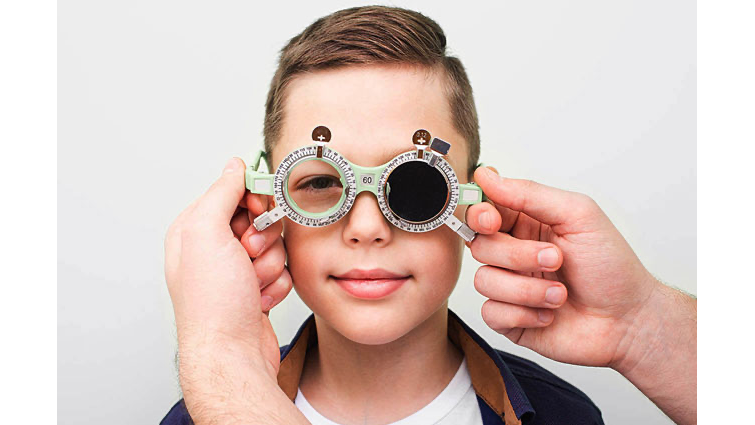
If your child has started squinting at road signs, complaining of headaches, or sitting closer to screens, they're not alone.
Myopia, or nearsightedness, now affects more than 36% of American children aged 5 to 17, according to a recent ARVO study. In urban communities like Ramsey and Park Ridge, NJ that number climbs even higher—up to 41%—compared to just 15.7% in rural areas.
Experts point to lifestyle shifts as a major driver. Increased screen time, prolonged near work (like reading or digital learning), and reduced outdoor exposure are all contributing to earlier and more aggressive myopia onset. One study found that digital screen use can increase myopia risk by 4 to 8 times, while spending 40 to 80+ minutes outdoors daily helps protect against the condition—especially in the early stages.
Myopia isn't just about glasses. Left unmanaged, it can progress to moderate or high levels, increasing the risk of glaucoma, retinal detachment, and cataracts later in life. And since kids' eyes are still growing, early intervention is key.
Today's most effective treatments don't just correct vision—they aim to slow or stop myopia progression altogether. Two of the most studied and widely used options are orthokeratology (Ortho-K) and low-dose atropine eye drops.
Pros:
Cons:
Pros:
Cons:
Multiple studies have confirmed that both treatments are effective at slowing myopia. A large study involving 736 children showed that:
In children with anisometropia (unequal myopia in each eye), Ortho-K was more effective in reducing axial length differences—especially in the more affected eye.
There's no one-size-fits-all answer. Younger children may respond better to atropine. Those with higher prescriptions—or who are highly active—may benefit more from Ortho-K. In some cases, combining the two offers the best results, with fewer side effects than high-dose atropine and better long-term control.
Clinics that specialize in myopia management, such as A2Z Eyecare in Waldwick, NJ, often customize treatment plans based on your child's age, lifestyle, and prescription. Their team also works closely with families to monitor progress and adjust as needed over time.


