School event coordinators face time pressure when ordering pizza for large groups. Learn how to calculate quantities, manage dietary needs, coordinate delivery timing, and avoid common ordering mistakes that leave students hungry or budgets blown.
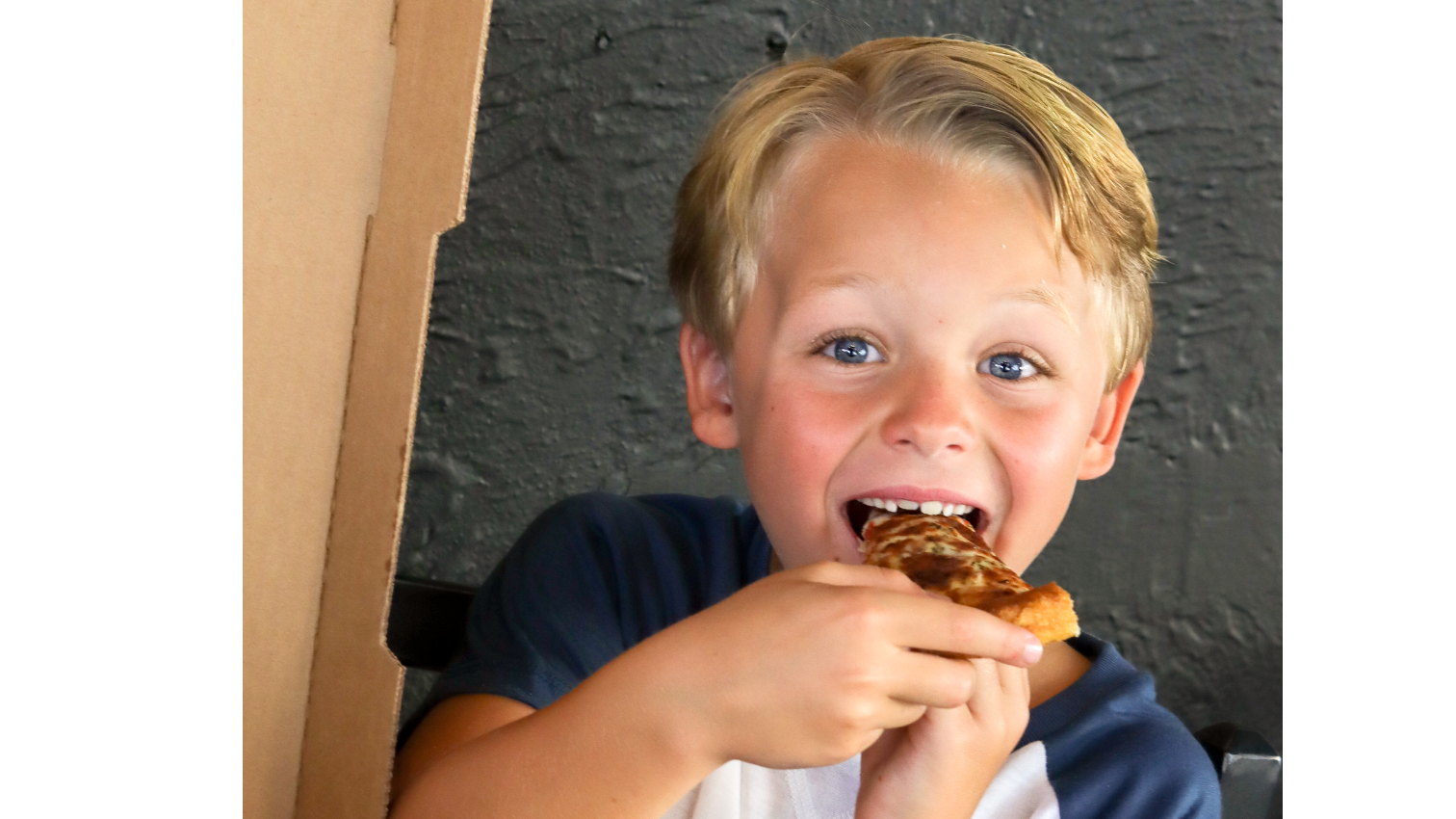
You got the email at 4 PM on Thursday, and the spring concert is Friday at 6 PM—somehow you're now in charge of feeding 80 students and their families. Welcome to the wonderful world of last-minute school event planning, where pizza becomes your best friend and only hope.
The good news is that pizza solves almost every group-feeding challenge, but the bad news is that ordering wrong can turn your event into a hangry disaster where fifth-graders stage a mutiny over the mushroom situation.
School events create unique ordering challenges that don't exist when you're just feeding your family on a Tuesday night, and you're managing different age groups with wildly different appetites. A third-grader eats two slices and declares themselves "so full," then watches a high school basketball player demolish six slices before asking if there's more. You're also dealing with dietary restrictions, budget limits, and the reality that someone will absolutely complain no matter what you order.
Add time pressure to this mix and you've got a recipe for stress, since most school events don't give you weeks to plan. You're working with days or hours, trying to figure out quantities while also coordinating who's bringing napkins and whether the cafeteria will actually be unlocked.
The math gets weird fast as you try to figure out whether to count adults, what about younger siblings, and whether you should assume everyone eats or plan for the fact that half the parents will skip food entirely.
Start with age-appropriate serving sizes rather than generic "slices per person" advice, since elementary students (K-5) typically eat 2-3 slices and get excited about pizza but fill up quickly. Middle schoolers (6-8) consume 3-4 slices on average, while high schoolers (9-12) easily put away 4-5 slices, sometimes more if they're athletes or just hit a growth spurt.
Here's a practical formula: multiply your student count by the average slices for their age group, then divide by 8 (slices per large pizza) and add 15% extra as a buffer because someone always wants seconds, and you'd rather have leftovers than run out.
For 80 middle schoolers, you'd calculate 80 × 3.5 = 280 slices, divided by 8 = 35 pizzas, plus 15% buffer = 40 pizzas total.
If parents attend, assume half will eat and count them at 2-3 slices each, since most parents either already ate or will grab something later. The ones who do eat usually take smaller portions because they're busy managing kids.
Round up, not down, because running short creates bigger problems than having extra pizza—leftover pizza gets eaten or taken home, but missing pizza creates disappointment and complaints that last longer than your event.
Your pizza variety matters more than most people realize, and the 60-30-10 rule works reliably across different school events. Order 60% safe classics (cheese and pepperoni), 30% popular favorites (sausage, Hawaiian, supreme), and 10% adventurous options (veggie, barbecue chicken, specialty combinations).
This ratio prevents the common mistake of ordering too much variety, because when you spread across too many flavors, you end up with lots of partially eaten pizzas and nothing that everyone wants. Kids gravitate toward familiar options, especially younger students who view mushrooms as a personal attack.
Classic Foundation (60%):
Popular Favorites (30%):
Adventurous Options (10%):
Label pizzas clearly, since nothing creates chaos like students opening every box to find their preferred topping—simple paper labels or a marker on the box lid saves massive time and confusion.
Delivery timing can make or break your event logistics, so schedule arrival 15-30 minutes before your planned serving time. This buffer accounts for setup, potential delivery delays, and the reality that you need time to organize boxes and serving areas; pizza sitting for 30 minutes stays perfectly edible, but pizza arriving 30 minutes late creates angry families.
Avoid peak dinner hours (5-7 PM) when ordering for evening events, since restaurants get slammed during this window and your delivery might arrive later than promised. If your event hits this timeframe, place orders earlier in the day and coordinate a specific delivery window.
Setup Considerations:
Call to confirm 30 minutes before expected delivery, because this simple step catches mistakes early—if something went wrong with your order, you've got time to fix it rather than discovering missing pizzas when the delivery driver leaves.
Have a backup plan and keep the phone number handy for quick additions if you underestimated, since most pizza places can rush a few extra pies faster than you'd think, especially if you're already a customer that day.
Food allergies and dietary restrictions require advance planning, not last-minute panic, so send a quick survey or email asking about dietary needs when you know pizza is coming. You'll get better information this way than trying to accommodate imagined restrictions, since most groups have 2-3 students with genuine needs—gluten-free, vegetarian, dairy-free—that you can plan for specifically.
Order specialized pizzas separately and label them clearly, because a gluten-free pizza sitting in a stack of regular pizzas is useless if no one knows it's there. Set these apart with obvious labels and alert affected families when they arrive.
Vegetarian needs are easiest to meet since cheese pizza already works, and you don't need special orders—just ensure enough cheese pizzas exist beyond what picky meat-eaters might take. The 60-30-10 ratio naturally provides vegetarian options.
Allergy-Friendly Options:
Cross-contamination matters for severe allergies, so if a student has serious reactions, coordinate directly with their parents about whether restaurant pizza works safely or if they need to bring their own food. You can't guarantee zero cross-contamination at most pizza places.
Keep ingredient information accessible, since most pizza restaurants provide allergen data online—print it or have it on your phone so parents can check ingredients quickly if questions arise.
School event budgets are usually tight, making smart ordering critical.
Bulk Discounts and Deals:
Compare per-pizza pricing rather than total cost, since a slightly more expensive pizza place might actually cost less overall if their pizzas are larger or they include extras like plates and napkins. Factor in everything you'll need to purchase separately.
Money-Saving Strategies:
Partner with local businesses for sponsorship, since a nearby pizza restaurant might discount your order in exchange for a sign at your event or mention in your program—this works especially well for recurring events like monthly family nights.
Finding the right pizza provider makes everything easier, so look for restaurants that actively work with schools and community groups. These places understand large orders, delivery timing for events, and the specific challenges of feeding kids, since they've solved the problems you're facing before you even ask.
Pizza shops positioned along major routes like Highway 195 between Spokane and Pullman serve as convenient stops for school coordinators who need reliable, quick service, and the best ones maintain fundraising programs where a percentage of event sales can support your school or team, turning your pizza purchase into a fundraiser simultaneously.
Questions to Ask Potential Providers:
Test your provider before the big event by ordering from them for a smaller gathering first, since you'll learn their timing, quality, and how they handle special requests. This test run prevents surprises when you're feeding 80 people.
Establish a relationship with one or two reliable providers, because when they recognize your school or organization, you'll get better service, more flexibility, and often better pricing. Repeat customers get priority treatment, especially during busy periods.
Pull this checklist out every time you're managing school event pizza:
48 Hours Before:
24 Hours Before:
Day of Event:
This systematic approach removes stress from the process, since you're not winging it—you're following a proven method that accounts for the common failure points.
After your event, document what worked by writing down how many pizzas you ordered, what percentage of each type remained, and any issues that came up. This information makes your next event dramatically easier to plan.
Schools that host regular events benefit from creating a standard order template, because when you know that 40 pizzas in your specific variety mix works perfectly for your spring concert, you can replicate that success for the fall play without recalculating.
Build relationships with parent volunteers who handle food well, since having an experienced pizza coordinator who already knows the process saves time for everyone. These volunteers become institutional knowledge that helps your school's events run smoothly year after year.
Consider rotating local providers to maintain options, because while having a go-to restaurant helps, knowing 2-3 reliable sources prevents problems when your first choice is booked or closed. This flexibility matters during busy seasons when multiple schools host events simultaneously.
School events run smoother when food arrives hot, on time, and in the right quantities, and your job as coordinator isn't to be a pizza expert—it's to learn from actual experts who handle large orders daily and apply their knowledge to your specific situation. So the next time you get that last-minute email asking you to feed a crowd, you'll know exactly what to do.


