The Oberheim OB-X8 pairs a knob-and-slider workflow with advanced “Page 2” functions accessed via its OLED display—adding deeper control for sound design and performance. Key features: additional SEM filter modes, per-voice panning, LFO keyboard tracking, mod delay time, envelope inversion, and independent pulse width control.
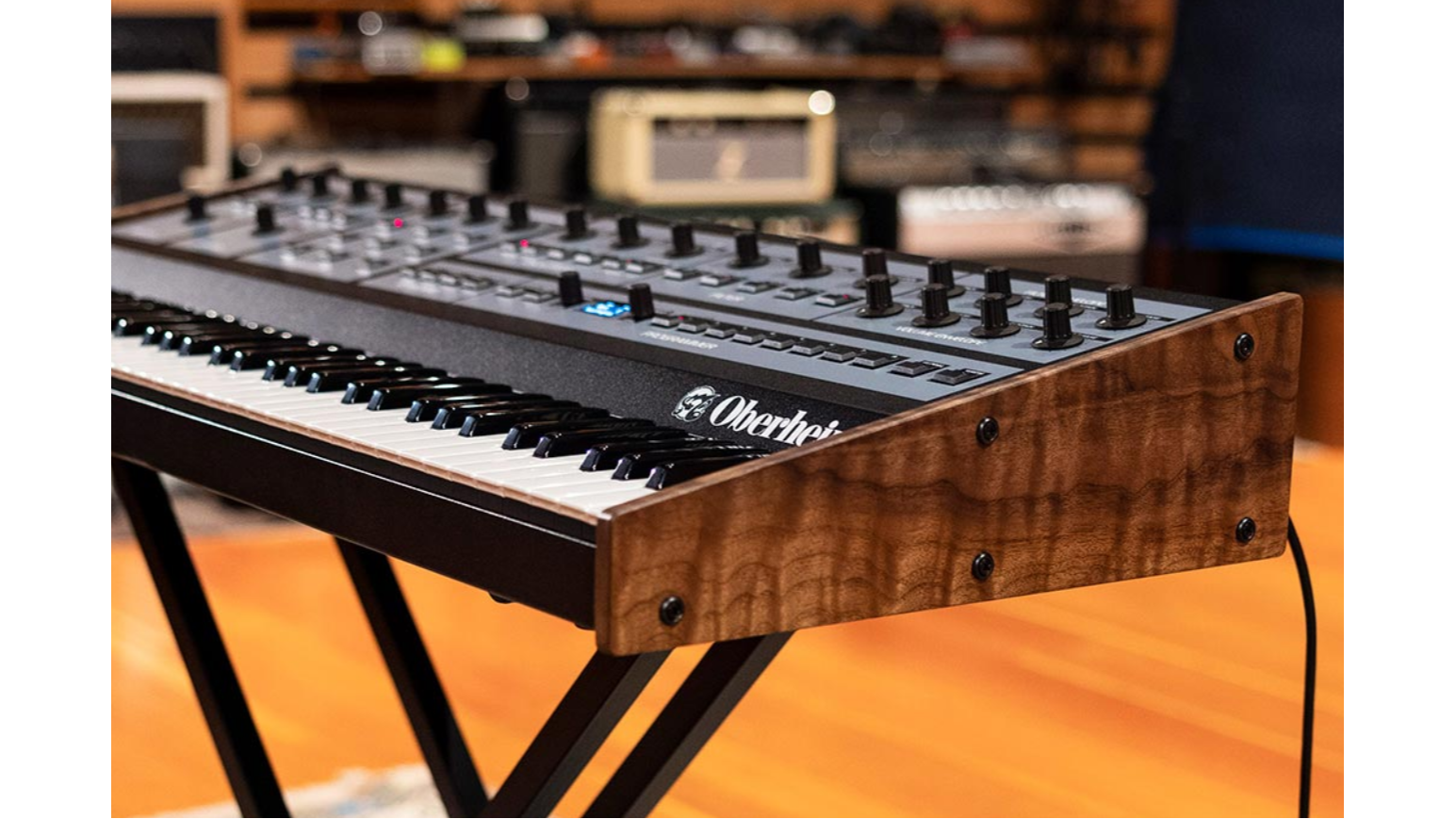
The Oberheim OB-X8 is designed to feel immediate on the surface—two VCOs per voice, a familiar panel, and a pure analog signal path—while still offering deeper control through its "Page 2" feature set. If you've dialed in the essentials from the front panel and want more detailed movement, stereo control, or modulation options, Page 2 is where those additions live.
Oberheim describes the OB-X8 as including "40+" Page 2 functions, accessed via the instrument's OLED display, with new parameters added beyond what was available on earlier models. Rather than changing the hands-on workflow, Page 2 extends it—giving you extra options when you need them without turning the OB-X8 into a menu-first instrument.
Sam Ash carries the OB-X8 as an 8-voice analog polysynth that combines the OB-X, OB-Xa, and OB-8 voice architectures, and the Page 2 layer is part of what makes that "three-in-one" concept more flexible in day-to-day programming.
Oberheim notes that Page 2 includes additional SEM filter modes. If you're exploring the OB-X side of the OB-X8, these modes are one of the most direct ways to broaden the basic filter behavior beyond the primary front-panel choices.
Page 2 includes per-voice panning, along with programmable pan and spread—useful for widening pads, placing stacked voices across the stereo field, or keeping layered parts separated in a mix.
Oberheim lists LFO keyboard tracking as a Page 2 feature. In practice, this lets modulation behavior track your playing range—handy when you want movement that stays consistent across the keyboard.
Oberheim also calls out independent pulse-width control on Page 2. This is a practical upgrade for shaping oscillator character in more detail—especially when you're building animated timbres from pulse waves.
Envelope inversion is included in the OB-X8's Page 2 list. It's a straightforward way to push beyond standard "open on attack, close on release" behaviors when you're assigning envelopes to tone-shaping destinations.
Oberheim lists variable oscillator and noise levels as an OB-X8 enhancement. This gives you finer control over source balance when building patches, without being limited to fixed steps.
The OB-X8 is an 8-voice polysynth, and Sam Ash highlights its bi-timbral operation (splits and doubles). When you're stacking parts, Page 2's deeper controls can be a valuable complement to the instrument's performance-oriented design—especially for dialing in how a sound sits in a layered setup.
Both Oberheim and Sam Ash emphasize that the OB-X8 combines the OB-X, OB-Xa, and OB-8 architectures, each with its distinct characteristics. If you're aiming to stay closer to one model's feel versus another, the OB-X8 is designed around that concept—Page 2 exists in part to help you access and refine those differences.
Page 2 is accessed through the OB-X8's OLED display, and Oberheim positions it as a way to reach deeper parameters while keeping the instrument's tactile workflow intact. A practical approach is to identify a short list of Page 2 parameters you use most (for example, panning/spread and LFO tracking) and revisit them as part of your standard patch-building routine.
Oberheim offers the SoundTower "OB-X8 SoundEditor" as both a standalone editor and a plugin, providing another way to work with the OB-X8's deeper parameter set. If you prefer to see settings in one place while programming, this can be a convenient alternative to navigating the front panel.
The OB-X8 delivers 8-voice analog polyphony, classic OB-X/OB-Xa/OB-8 character, and deeper Page 2 sound design for stage, studio, and scoring— all you need to create iconic sounds. For guidance on fit, workflow, and setup, buy from a trusted music retailer that knows their synths.


