Newman University just made history with its first-ever three-way tie for top respiratory care graduate—but the personal story behind one winner’s career choice will surprise you, and it reveals why this healthcare field is exploding with opportunities.
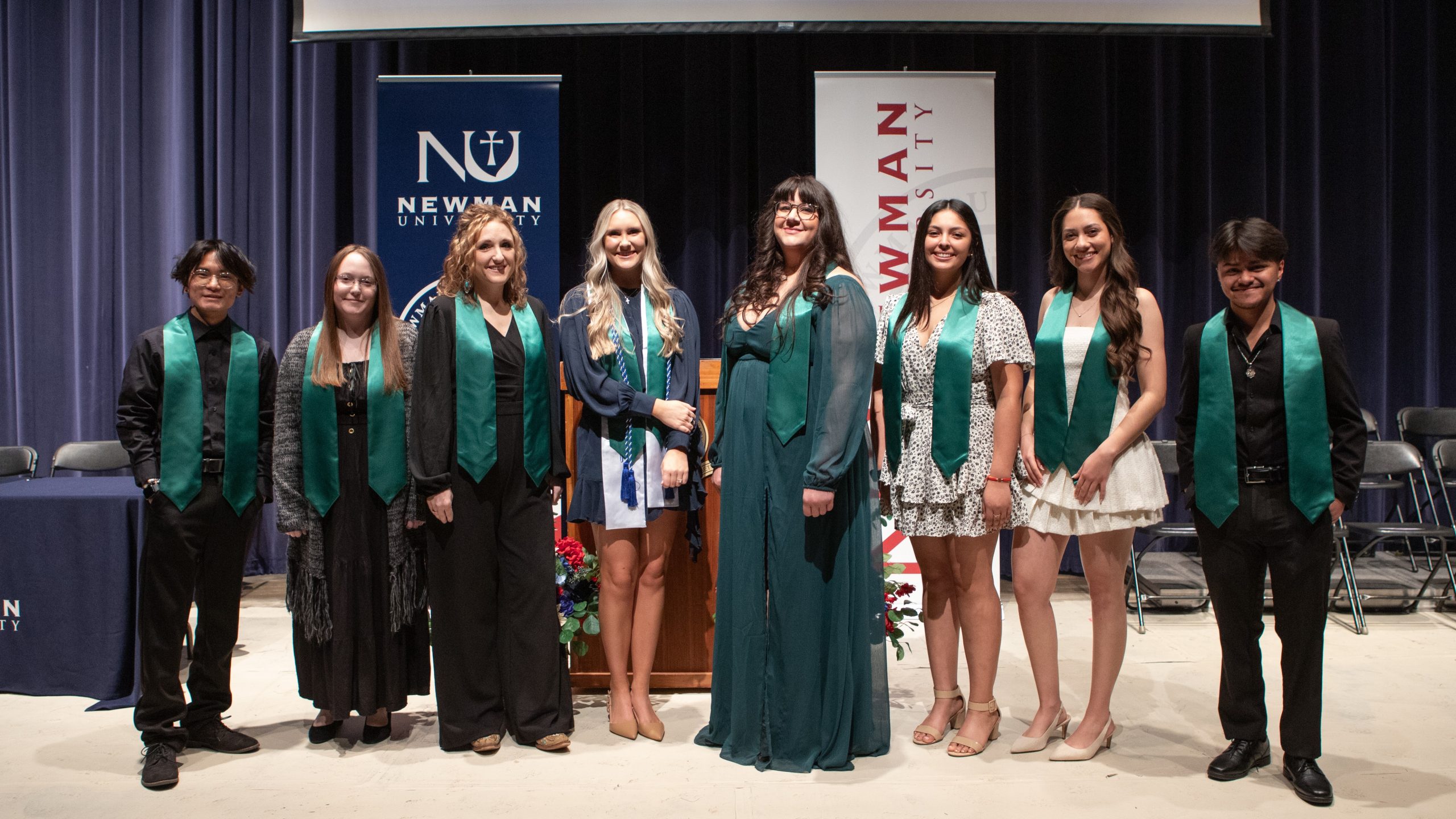
Newman University's DeMattias Performance Hall buzzed with unprecedented excitement on December 5, 2025, as the School of Healthcare Professions celebrated something that had never happened before: a three-way tie for the Outstanding Respiratory Care Graduate Award. The fall pinning ceremony honored 19 graduates—eight earning Associate of Science degrees in respiratory care and 11 receiving Bachelor of Science degrees in nursing—but it was the unusual award situation that made this ceremony particularly memorable.
"This year it got a little interesting," explained Stacie Fox, director of the respiratory care program, as she prepared to announce the three co-winners. The award, typically given to one student based on input from clinical preceptors and faculty, recognizes academic excellence, professionalism, and outstanding clinical competency. For the first time in program history, three students achieved identical recognition levels.
The pinning ceremony itself carries deep significance in healthcare education, marking the transition from student to professional practitioner. Dean of the School of Healthcare Professions Dr. Timothy Cho emphasized this milestone, noting that the event "symbolizes both the students' hard work and a significant milestone as they enter into their vocation." Newman University's respiratory care program has built a reputation for producing highly skilled graduates who are immediately sought after by healthcare employers throughout the region.
Jessica Liebst's journey into respiratory care began with one of the most personal motivations possible: watching a respiratory therapist save her daughter's life. Her daughter was born with hypoplastic right heart syndrome, a complex congenital heart condition that also affects breathing. When her daughter contracted RSV a couple of years ago, a respiratory therapist's quick intervention and expertise made the difference between life and death.
"A respiratory therapist saved her life when she got RSV a couple years ago, so I was inspired to study respiratory therapy myself," Liebst explained. "I really enjoy that one-on-one communication with the patients and troubleshooting." This personal experience drives her passion for the field and her commitment to providing the same level of life-saving care to other families facing critical moments.
Liebst, who hails from Andover, Kansas, has already secured a position at Ascension Via Christi Hospital in Wichita and will begin her career on January 18, 2025. Her family connection to Newman University runs deep—her father also graduated from the institution, having studied counseling for drug addiction treatment.
Haven Sjogren of Lindsborg, Kansas, embodies the behind-the-scenes nature that draws many professionals to respiratory care. "Respiratory care is a field that not many people know about, but it's vital to the healthcare field," Sjogren observed. "You kind of do really important stuff, but you're not in the limelight, and I really feel like I liked both of those things."
The unexpected recognition left Sjogren feeling grateful and humbled. "I'm so thankful for everyone who voted for me and thought I was good enough to accept the award," she said. Her success didn't come without strong support systems—she credits her family, her fiancé Brett (whom she'll marry in 30 days), her clinical preceptors, and faculty for helping her achieve this recognition.
Sjogren will join Wesley Medical Center in Wichita starting January 19, 2025, adding to the growing pipeline of Newman graduates entering the local healthcare workforce. Her approach to the field reflects the collaborative nature of respiratory care, where professionals work as essential team members in patient care scenarios.
For Brittany Friend, the path to respiratory care represented a significant career transition from behind-the-scenes healthcare work to direct patient care. Having worked as a medical coder for years with Ascension Via Christi Home Medical, Friend witnessed firsthand how respiratory therapists helped her loved ones, inspiring her to pursue the field herself.
"My professors could not be better," Friend emphasized. "They're amazing—caring, approachable, compassionate... everything we could hope for to get us through our journey." The recognition from these same professors who guided her education brought her nearly to tears. "I'm in shock, to be honest. It's a great feeling and means a lot."
Friend's journey exemplifies the challenges many adult learners face—balancing full-time work, full-time school, and raising four children. Despite these demanding responsibilities, she maintained the excellence that earned her the Outstanding Respiratory Care Graduate Award. She'll begin her new role at Ascension Via Christi St. Francis, where her husband already works in the emergency department, creating a family pipeline into Newman University's healthcare network.
Katie Metzger's achievement of the Distinguished Bachelor of Science in Nursing Graduate Award becomes even more remarkable when considering her personal circumstances. For the past three years, while completing her nursing education, Metzger served as the full-time caregiver for her grandmother, who lives at home with the family and is on hospice care.
"She's from Vietnam, so she doesn't speak any English, and she's been on hospice, so we take care of her from home," Metzger explained. Managing this responsibility while maintaining academic excellence, participating in Newman's cheer and dance teams, and engaging in extensive community service required exceptional time management and dedication.
The nursing program recognized Metzger as an "exceptional example of leadership and service," according to Associate Professor of Nursing Nancy Lugo-Baez. Her ability to balance these competing demands while excelling academically demonstrates the resilience and compassion that healthcare employers seek in new graduates.
Metzger's involvement extended far beyond academics and caregiving responsibilities. She served on the Newman Cheer & Dance teams and was selected by coaches to serve on the Student-Athlete Advisory Committee. Within the nursing program, she held the secretary position on the Nursing Student Council Board, worked as a peer tutor, and earned membership in Sigma Theta Tau International Honor Society of Nursing.
Her community service included volunteering with the ICT Street Team, helping individuals experiencing homelessness receive essential healthcare services. Additionally, she volunteers at Ascension Via Christi St. Teresa Hospital, assisting visitors with transportation and guidance. This extensive service record reflects the values Newman University instills in its healthcare graduates.
"I feel like I worked really hard for it," Metzger reflected on receiving the award. Her recognition acknowledges not just academic achievement but the complete development of a healthcare professional ready to serve diverse patient populations with compassion and competence.
The immediate employment success of all award recipients highlights the strong demand for Newman University healthcare graduates in the local market. Major healthcare systems in Wichita, including Ascension Via Christi and Wesley Medical Center, consistently recruit from Newman's programs, creating direct pathways from classroom to career.
Metzger accepted a position in the cardiothoracic intensive care unit at Ascension Via Christi St. Francis Hospital, where she completed her capstone experience. "I did my capstone there, and I saw people come in really sick, but then after their surgeries I'd see people actually recover and do better," she explained. This exposure to the full patient care continuum influenced her specialty choice and career trajectory.
The geographic proximity between Newman University and major healthcare employers creates mutual benefits. Healthcare systems gain access to well-trained professionals who understand local patient populations and community needs, while graduates find immediate opportunities to apply their education in familiar environments.
The Bureau of Labor Statistics projects 12% growth in respiratory care occupations over the next decade, significantly faster than the average for all occupations. This growth reflects increasing demand for respiratory care services driven by an aging population, higher rates of chronic respiratory conditions, and expanded recognition of respiratory therapists' critical roles in healthcare teams.
Respiratory therapists work in diverse healthcare settings, including hospitals, rehabilitation facilities, diagnostic laboratories, and increasingly in home healthcare environments. Their expertise in mechanical ventilation and pulmonary disease management makes them essential team members in intensive care units, emergency departments, and specialized treatment centers.
The COVID-19 pandemic highlighted the critical importance of respiratory care professionals, leading to increased awareness of the field and improved compensation packages. Healthcare systems now recognize respiratory therapists as essential personnel whose specialized knowledge directly impacts patient outcomes in critical care situations.
Newman University's School of Healthcare Professions has established itself as a key pipeline for meeting regional healthcare workforce demands. The university's programs consistently produce graduates who are immediately job-ready, with clinical training conducted at the same facilities where many students will begin their careers.
The success of the fall 2025 graduating class reflects broader trends in Newman's healthcare education approach. By maintaining small class sizes, providing extensive clinical experiences, and fostering close relationships between students and faculty, the university creates an environment where students can achieve the level of excellence demonstrated by the award recipients.
Healthcare employers in the region have come to rely on Newman graduates for their combination of technical competence, professional behavior, and commitment to patient-centered care. This reputation creates a positive cycle where clinical sites eagerly accept Newman students for training, leading to job opportunities and continued strengthening of industry relationships.
The pinning ceremony represents more than individual achievement—it demonstrates Newman University's ongoing contribution to healthcare workforce development in Kansas and the broader region. As healthcare needs continue to evolve, Newman's commitment to producing skilled, compassionate healthcare professionals positions both graduates and the communities they serve for continued success.
Newman University continues to prepare the next generation of healthcare professionals through rigorous programs that combine demanding academics with practical clinical experience.


