Learn how myopia control works for children with astigmatism, including treatment options and what parents should know before choosing care.
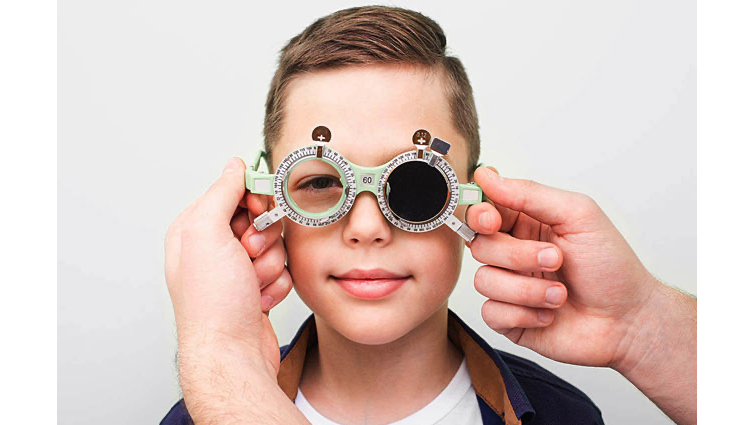
Rates of childhood myopia have increased steadily over the past decade, with eye care professionals reporting that vision changes are appearing at younger ages. Astigmatism, which affects how light focuses on the eye, is frequently diagnosed alongside myopia, adding complexity to treatment decisions for families.
As awareness grows, parents are hearing more about myopia control, an approach that goes beyond traditional glasses or contact lenses and focuses on slowing abnormal eye growth during childhood. When astigmatism is part of the picture, understanding how these treatments work becomes even more important.
Myopia, or nearsightedness, occurs when the eye grows too long from front to back, causing distant objects to appear blurry. In children, this growth often continues year after year, leading to steadily stronger prescriptions. Astigmatism, by contrast, is caused by an irregularly shaped cornea or lens, which distorts vision at all distances rather than simply affecting near or far sight.
These two conditions can develop together because both are linked to how the eye grows and focuses light. When present at the same time, they can compound visual challenges, making it harder for children to see clearly in classrooms, during sports, or while reading. Left unmanaged, progressive myopia may also increase the risk of more serious eye conditions later in life.
Standard glasses and contact lenses are designed to correct vision, allowing children to see clearly at a given moment. Myopia control takes a different approach. Its goal is to slow the underlying eye growth that causes prescriptions to worsen over time.
Research has shown that higher levels of myopia are associated with increased risks of retinal detachment, glaucoma, and other eye health issues in adulthood. By intervening earlier, myopia control aims to reduce how severe nearsightedness becomes, potentially lowering those long-term risks. When astigmatism is also present, careful planning helps ensure that vision remains clear while eye growth is being managed.
Astigmatism does not rule out myopia control, but it does influence which treatment options may be most appropriate. Some approaches are better suited to children with mild astigmatism, while others are specifically designed to accommodate more complex prescriptions.
Since children’s eyes continue to change as they grow, eye care providers typically assess not only current vision but also how quickly prescriptions have been changing, allowing them to select a treatment strategy that balances effectiveness, comfort, and practicality for daily life.
One of the most widely used approaches is orthokeratology, often referred to as Ortho-K. This non-surgical treatment uses custom-fitted contact lenses worn overnight to gently reshape the cornea. In the morning, the lenses are removed, and many children experience clear vision throughout the day without glasses or contacts. Since the lenses are customized, Ortho-K can often be adapted for children with astigmatism and is considered adjustable as the eyes develop.
Specialty soft contact lenses are another option. These lenses are worn during the day and are designed with optical patterns that help slow myopia progression while also correcting astigmatism. For some children, this approach fits more naturally into daily routines, particularly for those who are already comfortable with contact lenses.
Low-dose atropine eye drops may also be part of a myopia control plan. These drops are typically used at night and have been shown to slow myopia progression in many children. While atropine does not correct astigmatism on its own, it is sometimes combined with glasses or contact lenses to address both conditions simultaneously.
In certain cases, specialized eyeglasses may still play a role, particularly for younger children or those not ready for contact lenses. While glasses alone may not be as effective for myopia control, some designs are intended to influence peripheral vision in ways that may help slow progression.
Choosing a myopia control strategy involves more than selecting a product. Eye care providers consider factors such as the child’s age, how quickly prescriptions have changed, daily screen use, time spent outdoors, and overall eye health. Comfort and consistency also matter, since even the most effective treatment requires regular use to deliver results.
Follow-up visits are a key part of the process. Regular monitoring allows adjustments to be made as a child grows and vision changes, ensuring that treatment remains appropriate over time.
Most myopia control programs begin with a comprehensive eye exam and detailed measurements of the eye’s shape and focusing behavior. There may be an initial adaptation period as children adjust to new lenses or routines, particularly with overnight treatments like Ortho-K.
Parents are typically guided on proper hygiene, wear schedules, and what signs to watch for between visits. Given that these treatments are designed for developing eyes, ongoing communication and follow-up help ensure safety and effectiveness.
Children often adapt to vision changes without realizing anything is wrong, which means myopia and astigmatism can progress quietly. Regular eye exams make it possible to detect subtle shifts early, before prescriptions change dramatically or symptoms begin to interfere with learning and daily activities.
Early detection allows families to explore management options sooner, when myopia control strategies tend to be most effective.
Managing myopia and astigmatism during childhood is not about achieving perfect vision overnight. It is about guiding eye development during critical years and reducing the likelihood of more serious issues later in life. As research continues to evolve, myopia control is becoming a central part of pediatric eye care rather than a niche option.
For parents, understanding the available treatments and the reasons behind them provides clarity during what can otherwise feel like a confusing process. With informed decisions and consistent care, many children are able to maintain functional vision while slowing the progression of myopia as they grow.


