Modern synthesizers offer lush new layers for ambient music production with features early pioneers could only dream of. But which specific capabilities make the biggest difference, and how do hybrid technologies create those signature atmospheric textures that define the genre?
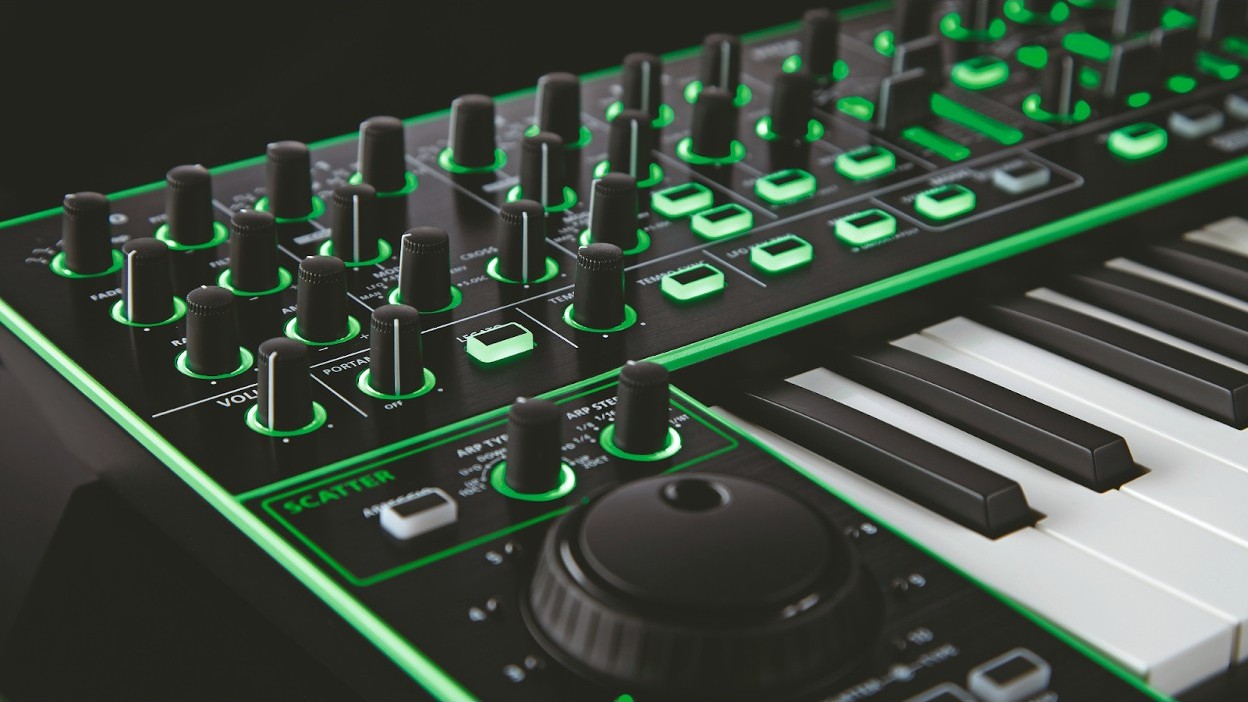
Ambient music thrives on atmosphere, texture, and the subtle art of sonic evolution. While early pioneers crafted expansive soundscapes with basic analog equipment, today's producers have access to sophisticated synthesizers that make creating immersive ambient music more accessible and expressive than ever before.
The foundation of compelling ambient music lies in its ability to create sustained, evolving atmospheres that draw listeners into immersive environments. Modern synthesizers excel at this task through their advanced architecture and processing capabilities that go way beyond what early ambient pioneers had available.
Unlike traditional pop or rock music that relies on distinct melodies and rhythmic patterns, ambient music emphasizes gradual tonal shifts and textural complexity. This requires instruments capable of generating multiple simultaneous voices, complex modulation routing, and sophisticated sound shaping tools. Modern synthesizers deliver all these elements in integrated packages that streamline the creative process.
Contemporary synthesizers also offer hybrid systems that combine the warmth of analog circuits with the precision and flexibility of digital processing. This combination allows producers to achieve both the organic character that defines classic ambient recordings and the detailed control needed for intricate sound design.
Polyphony determines how many simultaneous notes a synthesizer can produce, and for ambient music, more voices translate directly to richer, more complex textures. Modern synthesizers often provide 16, 32, or even unlimited polyphony, allowing producers to layer multiple oscillators, harmonics, and sustained tones with ease.
This abundance of voices enables techniques like harmonic layering, where multiple versions of the same sound play at different octaves or with slight detuning. The result? Fuller, more immersive pads that seem to breathe and pulse with organic life. High polyphony also prevents note-stealing, where new notes cut off existing ones, maintaining the continuous flow essential to ambient atmospheres.
Static sounds kill ambient music's hypnotic quality. Modern synthesizers address this with sophisticated modulation systems that create constant, subtle movement within sustained tones. Multiple LFOs (Low Frequency Oscillators), envelope generators, and modulation matrices allow producers to route control signals to virtually any parameter.
This modulation capability enables slow filter sweeps that gradually brighten or darken tones, pitch variations that create subtle detuning effects, and amplitude modulation that adds rhythmic pulse without traditional percussion. That means slow, almost imperceptible changes can keep listeners entranced for the long haul.
Reverb and delay form the backbone of ambient music's spatial character, creating the sense of vast spaces and endless echoes that define the genre. Modern synthesizers integrate high-quality digital effects processors that eliminate the need for external equipment while providing immediate access to these essential tools.
Advanced reverb algorithms simulate everything from intimate chambers to cathedral-sized spaces, while sophisticated delay systems create complex echo patterns that add rhythmic interest without overwhelming the underlying harmony. Many synthesizers also include chorus, phasing, and filtering effects that add movement and character to sustained tones.
The debate between analog and digital synthesis is no longer relevant. Instead, modern synthesizers combine both technologies strategically. Hybrid architectures typically use digital oscillators for precise waveform generation and complex synthesis techniques, then route the signal through analog filters and amplifiers that add warmth and character.
This approach delivers the best of both worlds: digital precision for complex waveforms and modulation, combined with analog warmth that prevents sounds from becoming sterile or harsh. The result is rich, complex tones that retain organic character while offering unprecedented control over their evolution.
Granular synthesis breaks audio into tiny fragments called grains, then reconstructs them in new arrangements that create unique textures impossible to achieve through traditional synthesis methods. This technique excels at generating the unpredictable, organic textures that make ambient music compelling.
By sampling small portions of existing audio and manipulating their playback speed, pitch, and timing, granular synthesis creates everything from shimmering clouds of sound to rhythmic textures that evolve organically. The randomization inherent in granular processing ensures that sounds never repeat in exactly the same way, so the music is always changing. That's the ambient genre in a nutshell.
Effective ambient production often involves layering multiple synthesizer voices to create complex, multidimensional textures. This process goes beyond simply playing multiple sounds simultaneously. In fact, it requires careful attention to frequency distribution, stereo placement, and timbral interaction.
Spatialization techniques use panning, stereo delays, and phase relationships to position sounds across the stereo field, creating three-dimensional sonic environments. Advanced producers also employ mid-side processing and surround sound techniques to enhance the immersive quality of their compositions, making listeners feel surrounded by the music rather than simply listening to it.
The Prophet Rev2 is a highly regarded analog synthesizer for ambient music, offering up to 16 voices of true analog sound generation with extensive modulation capabilities. Each voice features two analog oscillators plus a sub-oscillator, providing the thick, rich tones that define classic ambient recordings while offering modern flexibility.
The synthesizer's modulation matrix enables complex routing between LFOs, envelopes, and sound parameters, creating the subtle movement essential to engaging ambient textures. Built-in digital effects (including reverb and delay) complement the analog signal path, providing immediate access to spatial processing without external equipment. The Rev2's interface balances hands-on control with deeper programming capabilities, making it suitable for both performance and studio composition.
The Novation Peak is a hybrid synthesizer known for its ability to create unique textures suited to atmospheric music production. Its three digital oscillators per voice support traditional waveforms, wavetables, and FM synthesis - feeding into analog multi-mode filters that add organic character and natural resonance.
Peak's strength lies in its ability to create evolving, morphing textures through wavetable synthesis and complex modulation routing. The synthesizer excels at generating the dark, textural sounds that characterize modern ambient and electronica, while its intuitive interface encourages experimentation and real-time sound shaping. Built-in effects provide additional spatial processing, making Peak a complete solution for atmospheric sound design.
The Roland JD-Xi, meanwhile, is a compact synthesizer that offers surprising depth and flexibility for atmospheric music production.
Despite its small size, the JD-Xi offers four-part multitimbral operation, allowing producers to layer analog bass lines, digital pads, and rhythmic patterns simultaneously. Its step sequencer enables the creation of evolving loops and phrases that develop gradually over time, while built-in effects provide essential spatial processing. As such, the JD-Xi is an ideal entry point for producers interested in ambient music or those needing portable synthesis capabilities.
The path to creating compelling ambient music begins with understanding how modern synthesizers can transform your musical ideas into complex, atmospheric compositions. These instruments provide the foundation for the lush textures, evolving timbres, and spatial depth that define the genre.
Success in ambient music production comes from mastering the balance between complexity and restraint. Sophisticated synthesis capabilities can create rich, detailed sounds while maintaining the subtlety and space that allows listeners to enter meditative states. Modern synthesizers make this balance achievable by providing powerful tools wrapped in intuitive interfaces.
Whether starting with an affordable hybrid like the Roland JD-Xi or investing in a full-featured analog instrument like the Prophet Rev2, the key lies in understanding each synthesizer's unique capabilities and discovering how its particular character contributes to the overall atmospheric vision. Music retailers like Sam Ash offer synthesizers and music production equipment designed to craft atmospheric soundscapes.


