The Milwaukee M18 FUEL 3/8 Compact Impact Wrench delivers up to 250 ft-lbs of torque in a 4.8-inch body—suitable for confined workspaces. While designed for efficiency and maneuverability, the friction ring anvil presents trade-offs that users should consider.
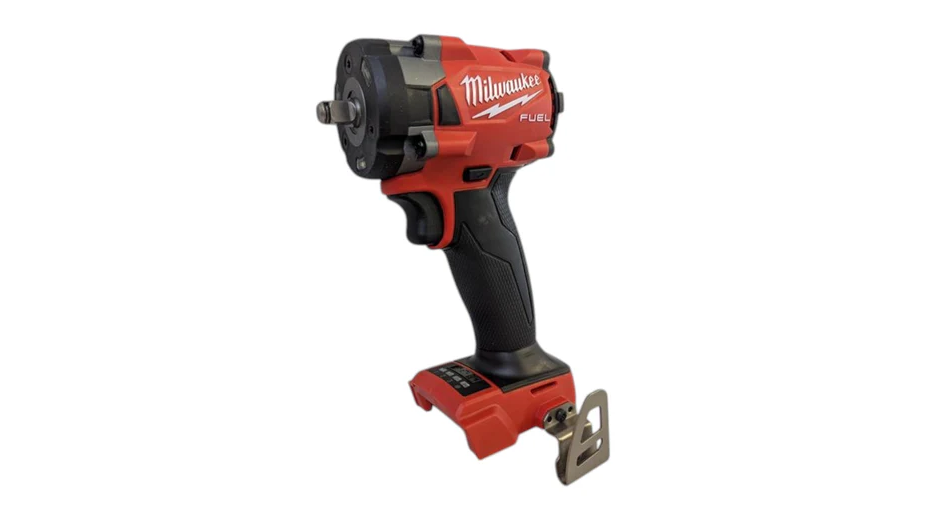
Tight engine compartments, suspension assemblies, and cramped repair bays have long forced automotive technicians to choose between torque and accessibility. That trade-off is shifting. The Milwaukee M18 FUEL 3/8 Compact Impact Wrench (2854-20) delivers professional-grade power in a design compact enough to access spaces where traditional wrenches struggle to fit.
This shift reflects broader industry trends. The U.S. power tools market is projected to reach USD 7.6 billion by 2035, driven by demand for compact, high-performance solutions across construction, automotive, and manufacturing sectors (Future Market Insights, 2025).
At just 4.8 inches in length and weighing 2.4 pounds (bare tool), the 2854-20 reflects a broader evolution in cordless tool engineering. Integrated with Milwaukee's M18 battery system, it offers seamless compatibility for professionals already operating within the platform.
Despite its size, the wrench delivers up to 250 ft-lbs of fastening torque—performance that once required bulkier 1/2-inch models. Its smaller form factor allows direct access to fasteners tucked deep within engine bays or behind tight suspension components, minimizing the need to reposition surrounding parts.
Gear specialists at GenuineTools note that this level of precision can reduce overall repair time and user fatigue. In environments where every minute counts, compact cordless tools like the 2854-20 are becoming essential for streamlining workflow without compromising on output.
Delivering 250 ft-lbs of torque in a 4.8-inch frame, the Milwaukee M18 FUEL 3/8 Compact Impact Wrench (2854-20) stands out for its power-to-size ratio. Technicians working with rusted or over-torqued fasteners often find themselves limited by tool clearance; this model addresses that challenge without compromising torque output.
Field reports indicate that while its tightening capacity hovers around 225 ft-lbs, reverse torque can exceed 500 ft-lbs—making it effective for fastener removal in conditions impacted by corrosion, heat cycles, or road salt exposure.
The tool is powered by Milwaukee's POWERSTATE™ brushless motor, which reduces friction and mechanical wear. Compared to traditional brushed systems, the brushless configuration improves heat management and extends both runtime and tool lifespan. Electronic speed control allows for responsive adjustments across a range of applications, from precision fastening to high-torque bolt removal.
Additional protection is provided by REDLINK PLUS™ Intelligence, Milwaukee's onboard electronics system that monitors temperature, voltage, and current draw in real time. This system helps prevent damage from overload or thermal stress while optimizing performance in fluctuating worksite conditions.
Built for longevity, the 2854-20 features a reinforced motor housing, sealed internal components, and an impact-resistant exterior. Its ergonomic grip reduces strain during extended use, especially in demanding repair environments where precision and endurance matter.
The Milwaukee 2854-20 integrates three high-intensity LEDs arranged around the anvil, delivering even, shadow-free lighting across the work area. Unlike single-source lights that cast obstructive shadows, this tri-LED configuration enhances visibility of fasteners and surrounding components, particularly in enclosed or low-light spaces.
The lights activate with trigger engagement and remain illuminated briefly after release, allowing for post-fastening inspection without repositioning external lighting sources. This built-in illumination supports accurate socket placement and reduced eye strain, especially when working under vehicles or inside engine bays where ambient lighting is limited.
The Milwaukee 2854-20 features a 4-Mode DRIVE CONTROL™ system designed for task-specific precision. Each setting adjusts motor speed, impact frequency, and torque output, enabling users to match tool performance to a range of fastening applications.
Mode selection is controlled via a single-button interface and integrates directly with REDLINK PLUS™ Intelligence for optimized power delivery.
Modes 1 through 3 offer progressive control. Mode 1 (0-800 RPM / 0-1,000 IPM) is intended for small fasteners or delicate materials, where over-torquing can lead to cross-threading or component damage. Mode 2 (0-1,650 RPM / 0-2,400 IPM) suits general-purpose fastening, delivering balanced power and control. Mode 3 (0-2,400 RPM / 0-3,500 IPM) provides full output for heavy-duty removal tasks involving seized or corroded fasteners.
Mode 4 incorporates two distinct features that improve control and accuracy. In forward operation, the auto shut-off function limits torque to 20 ft-lbs and then stops, helping prevent over-tightening of fasteners on aluminum or plastic components. This feature allows technicians to complete final torque with calibrated tools, improving consistency across sensitive assemblies.
In reverse, Mode 4 engages bolt removal control. Full torque is applied initially to break the fastener free, followed by an automatic speed reduction once resistance drops. This controlled slowdown prevents fasteners from falling into confined or inaccessible areas—a common issue during suspension, brake, or engine repairs—and minimizes the risk of thread damage from uncontrolled extraction.
Combined, these intelligent features support greater accuracy, reduced material stress, and improved workflow across a wide range of automotive repair applications.
The 2854-20 is equipped with a friction ring anvil system designed for rapid, tool-free socket changes. This mechanism relies on a rubber O-ring that expands a steel retaining ring, applying outward pressure to secure sockets without additional locking components.
In contrast, pin detent systems use a spring-loaded pin that locks into a socket hole, offering maximum retention but requiring a punch or tool to disengage. While secure, this design can slow workflow in applications where frequent socket changes are required.
For automotive tasks involving multiple fastener sizes, such as brake service or suspension work, the friction ring enables faster transitions. Sockets attach with a firm push and can be removed by hand, allowing one-handed swaps in confined spaces. The convenience contributes to overall efficiency, especially during time-sensitive or extended repair sessions.
However, trade-offs exist. In high-vibration or overhead scenarios, friction ring setups may allow sockets to loosen over time. The O- and tension rings are subject to wear with heavy use. While replacement parts are inexpensive and easy to install with basic tools, professionals working in vibration-heavy environments may prefer pin detent systems for added security.
Power tool specialists at GenuineTools note that for most general-purpose automotive repairs, the friction ring provides a balance of speed and reliability, especially when socket changes are frequent and tool access is limited.
Independent field testing confirms that the Milwaukee 2854-20 delivers consistent performance in demanding automotive scenarios. It effectively removes factory-torqued lug nuts, brake caliper bolts, and suspension fasteners—even those exposed to corrosion, heat, or environmental wear. The tool's compact size often eliminates the need for disassembly, allowing direct access to fasteners that would be obstructed when using larger models.
In comparative trials, the 2854-20 outperforms many compact-class competitors in both torque output and battery efficiency. It maintains steady performance across the battery’s full discharge cycle, avoiding the voltage drop-offs that can affect tool responsiveness in extended use.
With a total length of 4.8 inches, the 2854-20 is particularly effective in confined spaces. Tasks involving alternator bolts, power steering mounts, and A/C compressor connections benefit from the tool’s maneuverability. Suspension work, including strut assemblies, sway bar links, and control arm fasteners, also becomes more accessible, reducing total repair time and limiting the need for awkward tool angles that risk component damage.
Automotive professionals consistently highlight the tool's utility in daily shop operations. Feedback from technicians indicates that the 2854-20 has replaced larger 1/2-inch impact wrenches for most routine tasks, offering a more ergonomic solution without sacrificing essential torque. The tool's intelligent control modes are also cited as key features, helping to prevent issues such as over-tightening and dropped fasteners during removal.
In production environments, users report reduced setup time and fewer hazards due to the cordless design. Without air hoses or compressor-related limitations, the tool provides reliable output with fewer interruptions.
Limitations do exist in extreme use cases. Heavily seized crank bolts, rusted exhaust studs, and commercial-grade truck lug nuts may still require full-size, high-torque models. But the 2854-20 is widely regarded as sufficient for the vast majority of automotive repair applications, offering a balance of power and accessibility that streamlines shop workflows.
The Milwaukee 2854-20 blends power, precision, and portability in a format suited to the realities of modern repair environments. With four-mode control, compact design, and intelligent power management, it addresses the fast-paced demands of professional shops and specialized repair work alike.
While originally designed with automotive service in mind, the 2854-20 has proven effective in a range of mechanical applications. The friction ring system, compact frame, and performance consistency make it adaptable across tasks that require torque without sacrificing access.
Gear specialists at GenuineTools note that while the 2854-20 does not replace high-torque models for extreme use cases, it significantly reduces reliance on larger tools during routine operations. For professionals working in confined spaces or rotating across fastener sizes, its efficiency and control offer measurable time savings.
As battery-powered impact technology continues to evolve, tools like the 2854-20 reflect a shift toward more ergonomic, application-driven solutions in the power tool market.


