Choosing the wrong impact wrench retention system can slow you down, cost you money—or worse, create real safety risks. Milwaukee offers both pin detent and friction ring options for a reason: each is built for a different kind of job.
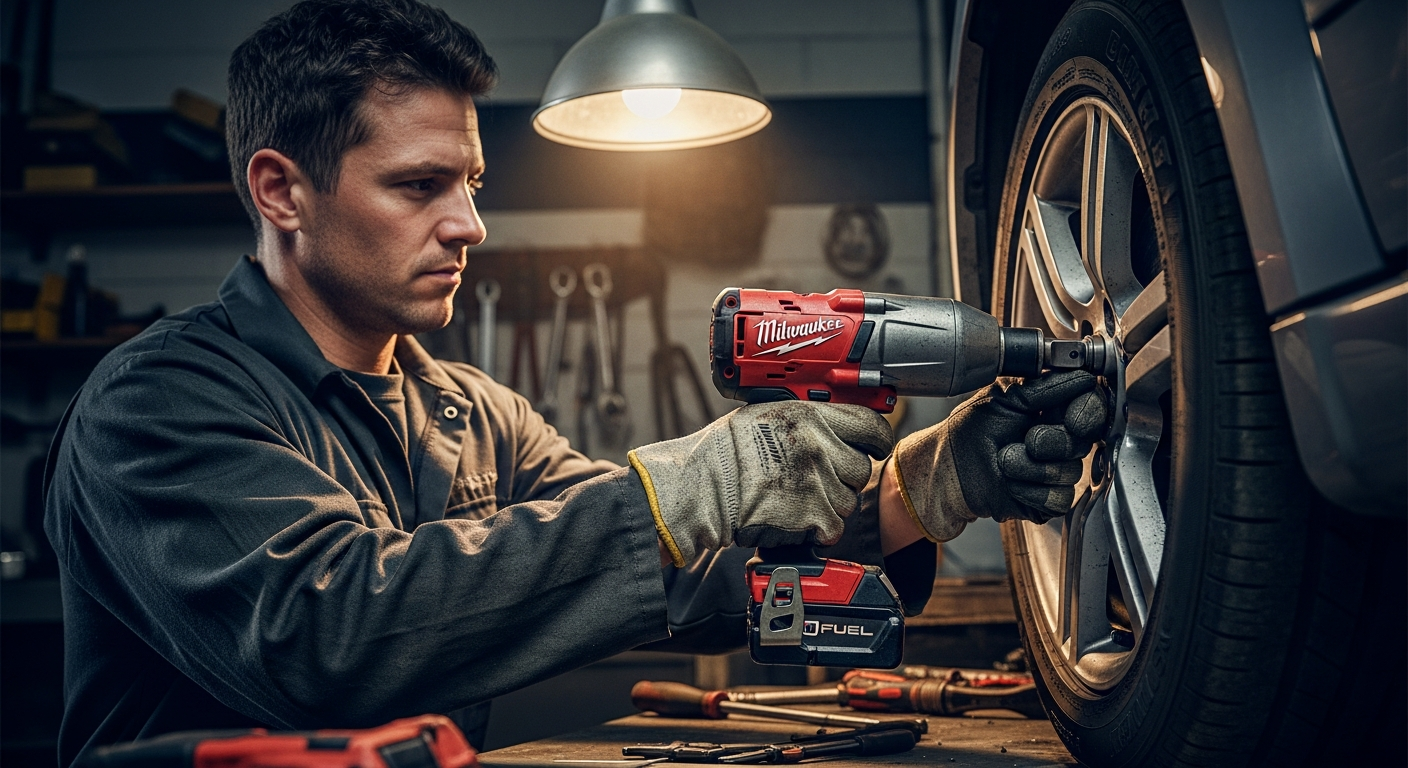
Choosing between Milwaukee's pin detent and friction ring impact wrenches isn't just a matter of preference—it's about matching the tool to the task. Each retention system solves a different challenge, whether it's quick socket swaps during brake jobs or secure hold while working under a lifted vehicle.
The anvil system determines how firmly a socket stays on and how fast it comes off. The experts at GenuineTools explain that understanding this difference is key to choosing the right impact wrench for your workflow.
Friction ring anvils prioritize speed and convenience, making them ideal for frequent socket changes. Pin detent systems focus on maximum retention, minimizing the risk of a socket falling off mid-task. Both have their place in a professional setup.
The right choice depends on three things:
There's no one-size-fits-all here as each system is built for a specific use case.
Milwaukee's M18 FUEL lineup reflects that reality. Its impact wrenches offer both retention options across different models, shaped by decades of feedback from mechanics, techs, and industrial users. The goal? Give pros tools that match their exact needs—not compromise them with catch-all solutions.
Also known as hog rings, these systems use a C-shaped steel ring and a rubber O-ring set into a groove on the anvil. The rubber expands the ring's diameter, creating enough clamping force to hold sockets securely, while still allowing tool-free removal. That's why friction rings are popular for one-handed socket changes; they're perfect for rapid jobs like suspension or brake work.
The steel ring applies pressure at four points around the socket base, distributing force evenly. That multi-point contact keeps sockets in place while preserving the quick-release convenience mechanics rely on. The design is simple, low-maintenance, and durable—a favorite for general-purpose use.
Pin detent systems use a spring-loaded ball or pin on the anvil’s side. When a socket with a through-hole slides onto the square drive, the pin locks into place. The result? A mechanical connection that holds tighter than friction-based retention.
To remove the socket, you'll usually need a pick, nail, or strong grip to push the pin back—though some designs allow hand removal with a firm pull. The trade-off is speed for security: you sacrifice a few seconds for peace of mind in high-impact or awkward-angle jobs, where a loose socket could mean lost time or damage.
Friction ring systems shine in general automotive repair—brake jobs, suspension work, and engine maintenance all demand frequent socket swaps. Tool-free removal keeps the workflow fast and smooth; no extra tools needed to change sizes on the fly.
In assembly lines or production environments, where socket changes are frequent but workloads stay within safe ranges, friction rings boost efficiency without sacrificing function. They also work well in garage or shop settings where socket drops aren't a serious hazard, and speed matters more than lock-tight retention.
Overhead engine work, especially under lifted vehicles, benefits from pin detent security. Dropped sockets here aren't just inconvenient; they can cause damage or require hours of teardown to retrieve. A positive lock eliminates that risk.
In construction and industrial settings, especially at height, pin detents are often mandatory. A falling socket from scaffolding is dangerous. Many job sites require pin detent tools for this reason alone.
Aviation, marine, and precision industries rely on pin detents to avoid foreign object debris (FOD) in critical systems. Here, socket loss isn't a delay—it's a catastrophe.
Friction rings are consumables, and eventually, they'll need replacing. The rubber O-ring degrades over time due to normal use, heat cycles, and exposure to automotive fluids. Most pros swap them out every 6-12 months, though it depends on usage and environment. Replacements are cheap but require disassembling the tool.
The steel hog ring rarely fails, butit can deform under heavy loads or impact. Once bent, it loses even pressure and compromises socket retention. Warning signs include slipping sockets, cracked O-rings, or visible distortion in the ring.
Pin detents have excellent longevity. The spring-loaded pin can endure thousands of cycles without losing grip. Since it doesn't rely on rubber components, there's less to wear out. Plus, a well-maintained pin detent can even outlast the wrench itself.
That said, repetitive use causes wear at the locking point. Sockets with through-holes may develop ovaling over time, reducing retention strength. The pin itself can also wear down, but this usually takes years of heavy, daily use.
Pin detent systems require impact sockets with through-holes—standard chrome vanadium sockets won't cut it. Impact sockets, usually made of chrome molybdenum steel, are built to work with detent pins. That said, this requirement limits socket options compared to friction ring systems.
Using a pin detent with non-drilled sockets creates weak retention as the pin only touches one spot instead of the four-point grip friction rings provide. This means less holding power and potential wear on both socket and anvil from uneven pressure.
Drive size also matters.
Milwaukee's M18 FUEL lineup offers both retention types across key models.
Milwaukee also offers pin detent versions in smaller models like the 2962P-20 (mid-torque) and 2855P-20 (compact), giving users secure retention without sacrificing size or control.
Pro tip: Look for the "P" in the model number—that's your shorthand for pin detent. It lets you match specs while choosing your retention type based on task, not trade-offs.
In today's workshops, it's common to see both friction ring and pin detent impact wrenches on hand.
A compact friction ring model covers fast-paced automotive work, while a high-torque pin detent wrench handles heavy-duty tasks like axle removal or industrial assembly. This two-tool setup eliminates compromises. Mechanics can switch tools based on the task, saving time and avoiding costly socket drops.
Job site rules often require it.
Construction crews and industrial teams may mandate pin detent tools for overhead work but allow friction rings at ground level. Having both systems ensures compliance, safety, and efficiency across every environment.
Looking to build a setup that works for your workflow? GenuineTools carries a wide range of professional-grade Milwaukee impact wrenches, so you can match the tool to the task without sacrificing performance.


