Milkback isopods roam in plain sight, dwarf whites stay hidden in the soil—and that one behavioral difference can completely change how your enclosure looks, feels, and functions. Learn more about choosing the right species for your terrarium.
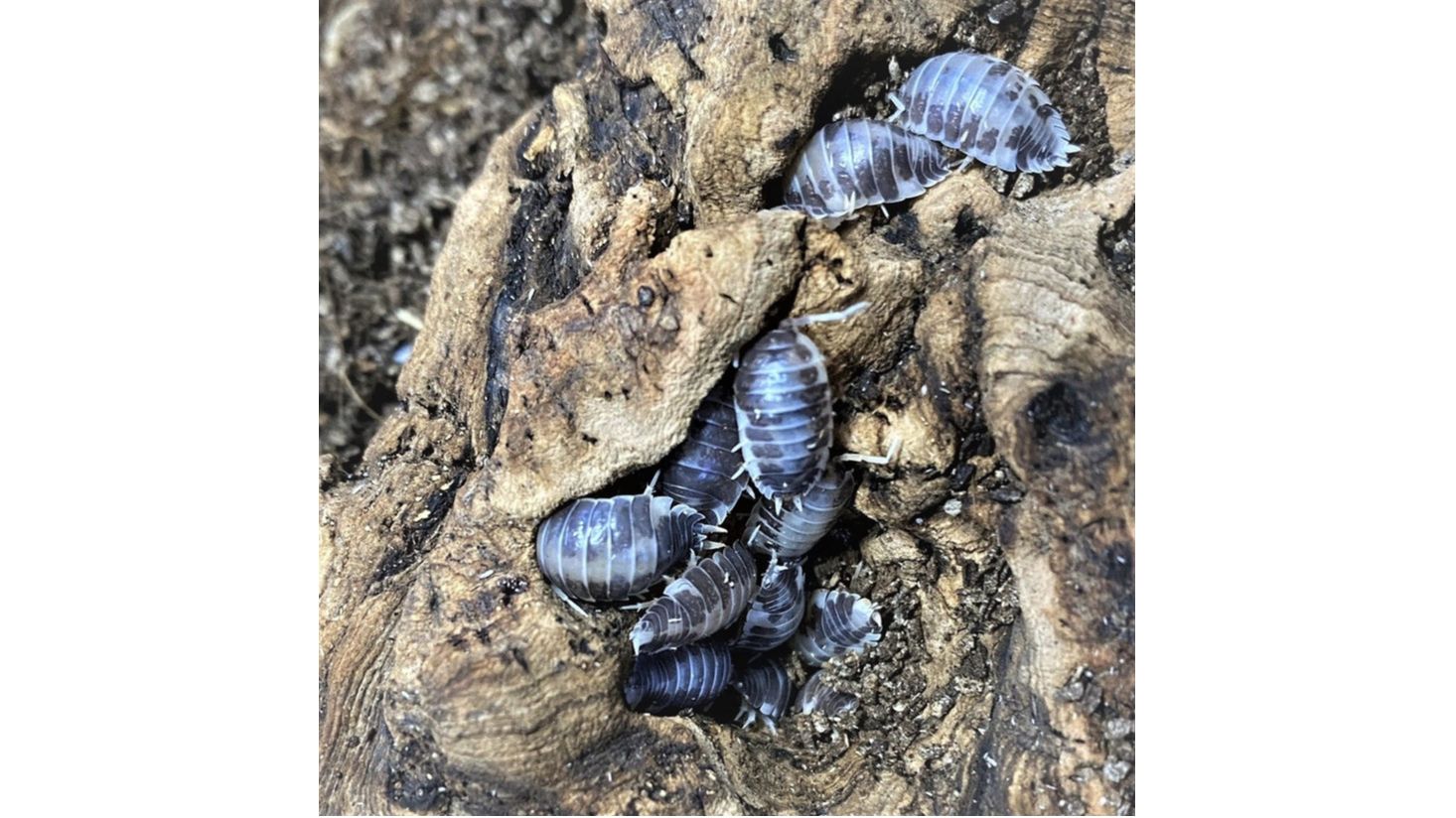
Milkback isopods are fascinating. They're big by isopod standards, constantly on the move, and absolutely down to eat whatever disgusting mess your reptile leaves behind. Dwarf whites, on the other hand, are like the night janitors of the terrarium world: always working, rarely seen, and somehow everywhere.
If you've ever stared into your bioactive enclosure wondering which tiny crustacean army to unleash, here's an introduction to two of the toughest of your crew.
Milkbacks (Porcellio laevis "Milkback") are the heavy-duty option, explains MiceDirect, a supplier of feeder animals. They get large, reproduce well, and bulldoze through leftover food, feces, and shed skin. You see them—on cork bark, in the leaf litter, occasionally sprinting across the glass like they're late for something.
Dwarf whites (Trichorhina tomentosa), in contrast, spend most of their time underground. They're small, soft-bodied, and almost invisible unless you dig. They quietly aerate soil, nibble on decaying organics, and keep mold in check without drawing much attention.
Both are technically "cleanup crew," but they interact with your animals and your enclosure in very different ways.
If your main residents include dart frogs, tiny geckos, slings, or delicate invertebrates, dwarf whites are the safer default. Because they're small and soft, they're less likely to harass molting inverts or overwhelm very small tankmates. They also fit better in nano and vertical enclosures where floor space is limited and a horde of large isopods would feel like a stampede.
You won't get much feeder value out of them—most reptiles ignore them, and they're bite-sized only for very tiny mouths—but you will get steady, low-drama bioactive maintenance.
Milkbacks shine in enclosures where the main resident is a medium-ish, ground-focused reptile or amphibian that poops like it means it: think young monitors, skinks, terrestrial geckos, or chunky frogs. They're big enough to make a visible dent in waste and leftovers, and they'll happily process shed skin, dead feeder insects, and leaf litter.
They also double as occasional live feeders. A well-fed Milkback is essentially a calcium-rich, moving snack that your reptile can hunt down between scheduled feedings. That's not a job dwarf whites do nearly as well.
Can you run Milkbacks and dwarf whites together? Absolutely. A typical pattern is:
Where it gets sketchy is in tiny enclosures or with extremely fragile or slow-molting inverts. In those cases, a large, hungry Milkback population can be more stress than help. If in doubt, start with dwarf whites alone—or build your Milkback numbers slowly and watch how your pet responds.
If your question is "What will quietly keep my viv healthy without changing the vibe?" the answer is probably dwarf whites.
If your question is "What can actually keep up with my reptile's mess and maybe become a snack now and then?" you're looking at Milkbacks.
It's important to keep your terrarium well-supplied with healthy milkback isopods sourced from ethical suppliers who care about quality.
For keepers who want the best of both, pairing Milkbacks with a smaller species and springtails gives you layers of cleanup from surface to soil. Your animal gets enrichment and a cleaner habitat. The isopods get a lifetime supply of trash. Everyone wins—except the leftovers.


