Smart bathroom upgrades don’t require massive budgets. Local remodeling experts share proven strategies for achieving beautiful, functional bathroom transformations while keeping costs manageable through strategic planning and material choices.
Bathroom renovations often feel overwhelming when you start calculating costs. Between tile, fixtures, labor, and unexpected surprises, budgets can spiral quickly. But creating a doesn't mean draining your savings account.
The secret lies in understanding where to spend and where to save, says Steadfast Construction. Smart homeowners focus their budgets on elements that deliver the biggest visual impact while finding creative alternatives for less critical components. The most successful bathroom transformations happen when homeowners approach their projects with clear priorities and realistic expectations about what different investment levels can achieve.
Before selecting a single tile or fixture, establish a firm budget that includes a 15-20% contingency fund for unexpected issues. Most successful bathroom renovations allocate funds strategically: 30% for labor, 25% for fixtures, 20% for tile and flooring, 15% for vanity and storage, and 10% for accessories and finishing touches.
This framework helps prevent overspending on trendy elements while ensuring adequate funds for quality installation. Understanding these percentages allows you to make informed decisions about where to splurge and where to save. For instance, if your total budget is $10,000, you should plan to spend roughly $3,000 on professional labor, $2,500 on fixtures, and $2,000 on tile and flooring materials.
Many homeowners underestimate the importance of that contingency fund, but bathroom renovations frequently reveal hidden problems like water damage, outdated plumbing, or structural issues that weren't visible before demolition began. Having financial breathing room prevents these discoveries from derailing your entire project.
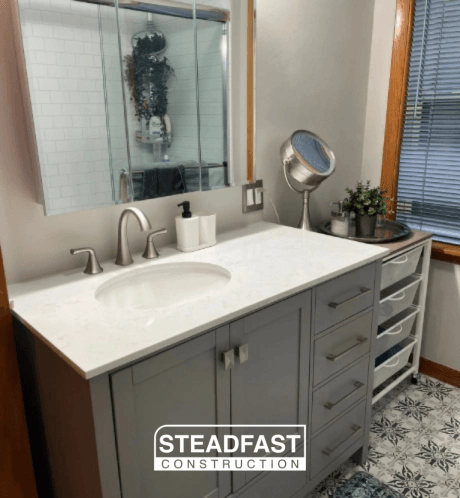
Rather than purchasing an entirely new vanity, consider refreshing your existing one. Quality cabinet refinishing, new hardware, and updated countertops can transform the look for a fraction of replacement costs. Professional refinishing services can completely change your vanity's appearance with new paint, stain, or even decorative techniques that create custom looks.
If replacement is necessary, shop for builder-grade vanities and upgrade them with premium hardware and countertops. This approach gives you the foundation you need while allowing you to invest in the details that create visual impact. Quality drawer pulls, cabinet knobs, and hinges can make an inexpensive vanity feel luxurious, while granite or quartz countertops provide the durability and elegance that cheaper alternatives can't match.
Consider repurposing furniture pieces as vanities for truly unique results. Antique dressers, console tables, or even custom-built pieces can create stunning focal points while staying within budget constraints.
Swapping outdated light fixtures creates immediate visual impact. Modern LED vanity lights and stylish pendant lighting can completely change your bathroom's atmosphere without major electrical work. Good lighting transforms how colors appear, makes spaces feel larger, and creates the ambiance that turns ordinary bathrooms into spa-like retreats.
Layer your lighting with multiple sources rather than relying on a single overhead fixture. Combine vanity lighting for task illumination, ambient lighting for general brightness, and accent lighting to highlight architectural features or artwork. This approach creates depth and visual interest while remaining budget-friendly.
LED technology has revolutionized bathroom lighting by offering energy efficiency, longevity, and better color rendering than traditional bulbs. While LED fixtures may cost more initially, their lower energy consumption and extended lifespan make them cost-effective long-term investments.
Use expensive designer tiles as accent pieces rather than covering entire walls. Create stunning focal points behind vanities or in shower niches while using affordable ceramic tile for larger areas. This technique allows you to incorporate premium materials without premium budgets.
Consider creating geometric patterns or mosaic designs using smaller quantities of high-end tiles combined with basic subway or ceramic tiles. These designs draw the eye and create visual interest without requiring expensive materials throughout the entire space.
Ceramic tile technology has advanced significantly, offering stone-look options that cost 60-70% less than natural materials. High-quality ceramic provides similar aesthetics with easier maintenance and better moisture resistance. Modern printing techniques create incredibly realistic textures and patterns that closely mimic marble, granite, travertine, and other natural stones.
Unlike natural stone, ceramic tiles don't require sealing, resist stains better, and maintain their appearance longer in high-moisture environments. This makes them particularly well-suited for bathroom applications where durability and low maintenance are priorities.
Large-format ceramic tiles can create seamless, contemporary looks while minimizing grout lines and maintenance requirements. These tiles work especially well in smaller bathrooms where they can make spaces appear larger and more open.
Today's laminate countertops mimic granite, quartz, and marble convincingly. Paired with undermount sinks and quality edge treatments, laminate delivers sophisticated looks at budget-friendly prices. Modern laminate manufacturing creates realistic textures, patterns, and colors that closely resemble natural materials.
The key to successful laminate installations lies in professional fabrication and installation. Quality edge treatments, proper substrate preparation, and skilled installation techniques can make laminate countertops virtually indistinguishable from more expensive alternatives.
End-of-model-year sales, contractor surplus stores, and online retailers offer significant savings on quality fixtures. Shopping during winter months often yields the best prices as demand decreases. Many manufacturers introduce new product lines in spring, making fall and winter ideal times to find discounted inventory.
Building relationships with local suppliers can provide access to contractor pricing and advance notice of upcoming sales. Some suppliers offer designer discounts or contractor rates to homeowners working with licensed professionals.
Painting, installing new hardware, mounting mirrors, and basic decorating fall within most homeowners' capabilities. These tasks can save hundreds in labor costs while giving you control over timing and quality. Painting alone can dramatically transform a bathroom's appearance for minimal cost, especially when you choose colors that complement new fixtures and finishes.
Installing new cabinet hardware, towel bars, toilet paper holders, and similar accessories requires basic tools and skills that most homeowners possess. Taking on these tasks yourself allows you to work at your own pace and ensure details meet your exact standards.
Plumbing modifications, electrical work, and structural changes require licensed professionals. Attempting these yourself often creates expensive problems that cost more to fix than hiring experts initially. Water damage from improperly installed plumbing can destroy floors, walls, and ceilings, while electrical mistakes create fire hazards and code violations.
Bathroom remodeling specialists, like Steadfast Construction, understand building codes and permit requirements, preventing costly mistakes that DIY attempts might create. They also carry insurance and warranties that protect your investment if problems arise after installation.
Professional contractors have relationships with suppliers, access to specialized tools, and experience handling unexpected complications that can derail DIY projects. Their expertise often saves money through efficient work methods and bulk purchasing power.
Shopping during contractor off-seasons (typically fall and winter) can yield 20-30% savings on materials and labor. Contractors often offer competitive pricing to maintain steady work during slower periods. This timing also means better availability and less rushed schedules, potentially resulting in higher quality installations.
Many homeowners avoid winter renovations, but bathroom projects are largely unaffected by weather since they're interior work. Taking advantage of seasonal pricing can significantly reduce overall project costs.
Building supply stores regularly discount discontinued items, overstocked materials, and display models. These sources provide quality materials at substantial savings for flexible homeowners. Visiting these stores regularly and building relationships with staff can provide advance notice of upcoming sales and clearance events.
Online marketplaces and auction sites offer additional opportunities for finding quality materials at reduced prices, though careful inspection and measurement are essential to avoid costly mistakes.
Consider completing your bathroom renovation in phases spread across several months or seasons. Start with cosmetic updates like paint and fixtures, then tackle larger projects like flooring and vanity replacement when budgets allow.
This approach prevents debt accumulation while allowing you to live with changes and adjust plans based on actual usage patterns. You might discover that certain upgrades provide more satisfaction than anticipated, while others prove less important than originally thought.
Phased renovations also allow you to save money over time rather than financing the entire project upfront. This approach reduces financial stress and often results in better material choices since you're not pressured to make all decisions simultaneously.
don't require unlimited budgets. Strategic planning, smart material choices, and understanding where to invest create beautiful spaces that enhance your home's value while respecting financial boundaries.


