Though most shoppers focus on runtime, it’s the less-discussed specs—like recharge speed and carry-weight—that truly define a portable oxygen concentrator’s usability. But even that focus overlooks the contributing factors: battery choices and pulse settings.
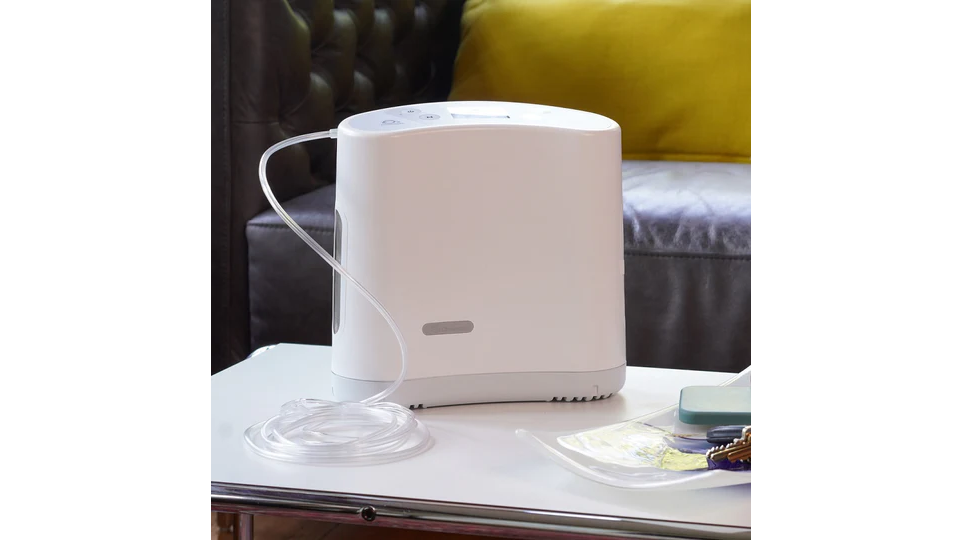
Choosing between standard and extended battery options for portable oxygen concentrators requires understanding how runtime, weight, and charging demands align with daily activities. The Inogen Rove 4 offers two distinct battery configurations, each designed for different user priorities and lifestyle requirements.
According to the user manual, the standard 4-cell BA-400 battery powers the Inogen Rove 4 for up to 3 hours on pulse setting 1, providing reliable oxygen therapy for shorter outings and daily activities. This baseline performance makes it suitable for trips to the grocery store, medical appointments, or brief social visits where extended runtime isn't needed.
Extended battery performance lasts significantly longer, delivering up to 5 hours and 49 minutes on setting 1. This nearly doubles the operational time, creating opportunities for longer excursions, full-day activities, or situations where charging access remains limited. Main Clinic Supply offers detailed information about both battery configurations to help users make informed decisions based on their specific oxygen therapy requirements.
Both battery types utilize Inogen's Intelligent Pulse Dose Technology, which delivers oxygen within milliseconds of inspiration. This precise timing ensures efficient oxygen delivery while conserving battery power by only activating during inhalation cycles.
Understanding how different pulse settings affect battery performance helps users plan their daily activities and manage power consumption effectively. The Inogen Rove 4's four flow settings (1-4) deliver progressively higher oxygen volumes, but this increased output comes at the cost of reduced battery life.
Pulse setting 2 reduces the runtime significantly compared to setting 1. The standard battery provides approximately 2 hours and 23 minutes on setting 2, cutting nearly 40 minutes from the maximum runtime. This reduction reflects the increased oxygen delivery demands and more frequent pulse activation required for higher flow settings.
Extended battery performance on setting 2 maintains its proportional advantage, delivering approximately 4 hours and 40 minutes of operation. This extended capacity proves valuable for users whose prescribed oxygen therapy requires setting 2 for daily activities while still needing substantial mobility time.
Mid-range pulse setting 3 creates moderate power demands that balance oxygen delivery with reasonable battery life. Standard battery runtime drops to around 1 hour and 25 minutes, making it suitable for specific activities rather than all-day use.
Extended battery performance on setting 3 reaches around 2 hours and 44 minutes, nearly doubling the available time compared to the standard battery configuration. This extended runtime provides users with setting 3 prescriptions more flexibility for longer activities or reduced charging frequency.
The highest pulse setting 4 delivers maximum oxygen output but significantly reduces battery life across both configurations. Standard battery operation on setting 4 provides about 54 minutes of runtime, limiting use to specific high-demand situations or short-duration activities.
Extended battery performance on setting 4 reaches about 1 hour and 47 minutes, providing more than double the standard battery duration. While still limited compared to lower settings, this extended capacity offers users requiring maximum oxygen flow more practical mobility options.
Physical weight considerations significantly impact user comfort and mobility, especially for individuals who carry their oxygen concentrator throughout the day. Both battery options maintain the Inogen Rove 4's reputation as one of the lightest 4-setting portable oxygen concentrators available.
The standard battery configuration keeps the complete Inogen Rove 4 system at just 2.9 pounds, optimizing portability for users prioritizing lightweight mobility. This minimal weight proves ideal for users with limited upper body strength, those managing multiple medical devices, or individuals who prefer maximum ease of transport.
At 2.9 pounds, the device remains comfortable for extended carrying periods using the included padded shoulder strap or optional backpack configurations. The lightweight design reduces fatigue during daily activities and makes the concentrator less noticeable during use.
An extended battery configuration increases the total system weight to 3.4 pounds, adding just 0.5 pounds for significantly extended runtime. This modest weight increase represents a reasonable trade-off for users prioritizing operational duration over absolute minimum weight.
The additional half-pound remains manageable for most users while providing substantial battery life improvements. Users can evaluate whether the extra weight justifies the extended independence from charging requirements based on their daily activity patterns and physical capabilities.
Effective charging management ensures uninterrupted oxygen therapy by understanding recharge times and planning charging cycles around daily activities. Both battery types offer versatile charging options while requiring different time commitments for complete recharging.
Standard battery recharging requires approximately 3.25 hours to reach full capacity, allowing for convenient overnight charging or recharging during extended home periods. This relatively quick charging time supports flexible scheduling and reduces concerns about extended downtime.
The shorter charging duration makes standard batteries practical for users with predictable daily routines who can plan charging cycles around meals, rest periods, or other stationary activities. Multiple standard batteries can be rotated to maintain continuous operation when needed.
Extended battery charging requires approximately 6 hours for complete recharging, nearly doubling the time commitment compared to standard batteries. This extended charging time necessitates more careful planning but provides substantially longer operational periods once charged.
The longer charging requirement makes overnight charging particularly important for extended battery users. Planning charging cycles around sleep periods or extended home stays ensures maximum battery capacity when needed for daily activities.
Both battery configurations support AC power supply charging at home and DC charging in vehicles, providing flexible power management options for various situations. The AC power supply operates on 100-240V with 50-60Hz auto-sensing capability, enabling worldwide use for travel situations.
DC charging capability allows battery maintenance during car travel, extending practical range for road trips or daily commutes. External battery charger accessories enable charging spare batteries independently while using the concentrator with a different battery.
When selecting a battery configuration, evaluate daily activity patterns, prescribed pulse settings, mobility preferences, and charging access. Consider pulse setting requirements: users prescribed settings 3 or 4 may find extended batteries necessary for practical daily mobility.
Ordering an extended battery can take the stress out of travel or activities that require more than an hour on high-demand pulse settings. Consult a trusted POC retailer to better understand power management on the Inogen Rove 4.


