Industrial facility clearances in Reno come with strict disposal requirements under Nevada law. Many types of common warehouse equipment fall under Special Waste classifications, and improper disposal carries real regulatory and environmental consequences.
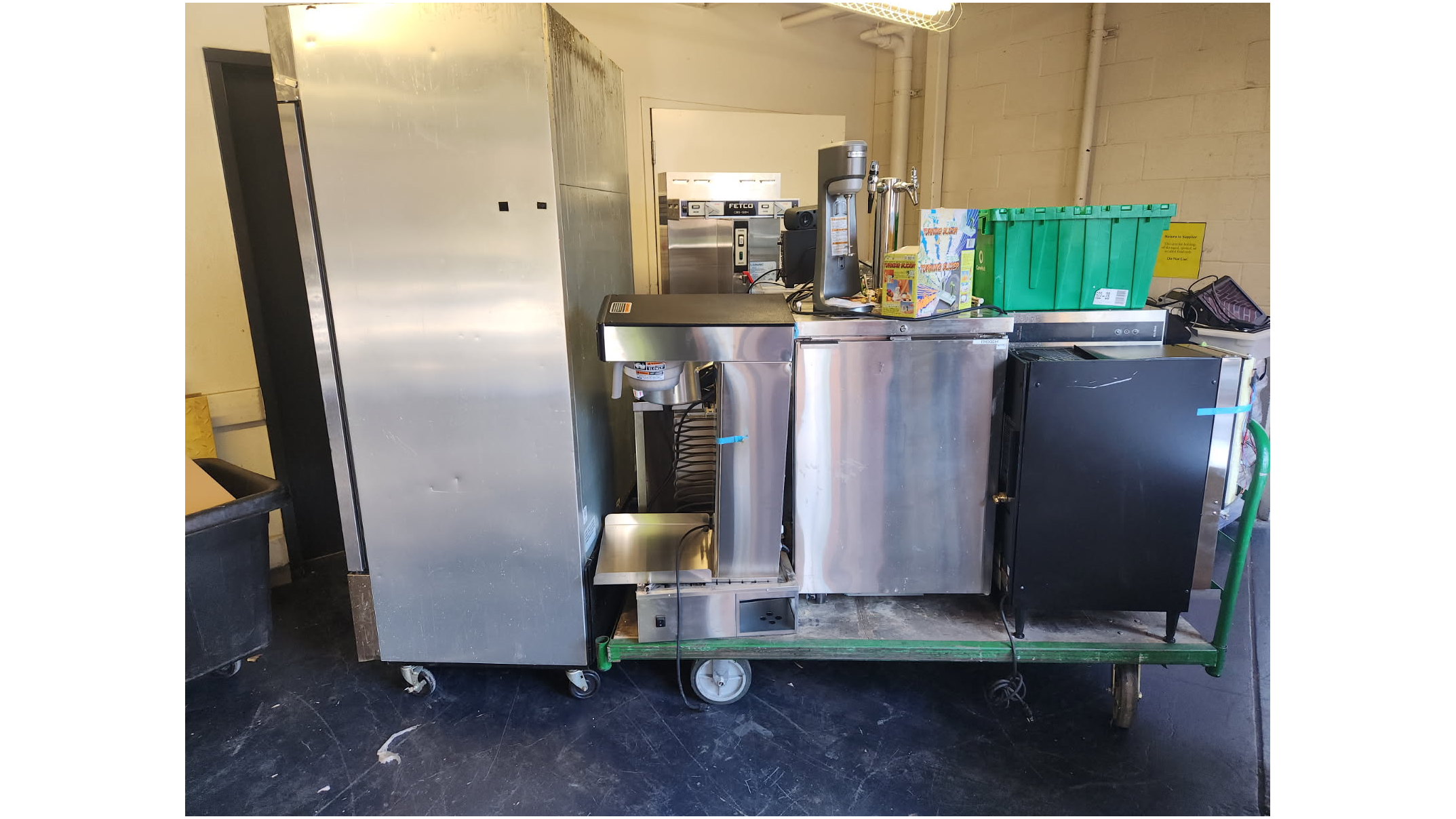
Clearing out an industrial or commercial facility is nothing like tidying up an office. The equipment is heavy, the timelines are tight, and the rules around disposal in Nevada are stricter than many business owners expect. Whether a facility is shutting down for good, moving across town, or undergoing a major renovation, the equipment left behind doesn't just disappear... and moving it the wrong way can create serious problems.
Reno isn't just a casino town. Over the past two decades, it has grown into a legitimate industrial hub, home to a diverse mix of warehousing, technology, mining, renewable energy, and advanced manufacturing operations. With booming activity and rapid expansion for artificial intelligence and tech infrastructure in the Tahoe-Reno Industrial Center (TRIC) and logistics and e-commerce fulfillment centers in the North Valleys, the business and job growth continues to transform the Greater Reno-Sparks area. That economic diversity is a strength - but it also means facilities in the area are often packed with large, heavy, and specialized equipment that doesn't lend itself to easy removal.
The scale of Reno's industrial presence is part of what makes equipment clearance so complex. A warehousing operation might have multi-level pallet racking running the length of a football field. A manufacturing plant might have conveyor systems, CNC machinery, and scrap metal scattered across thousands of square feet. When those facilities need to be cleared (for any reason), the challenge isn't just physical. It's also logistical and regulatory.
Standard commercial waste collection in Reno isn't built for this. According to Reno junk removal experts from Junk King Reno, the City of Reno operates under a franchise agreement with Waste Management for solid waste and recycling — and local ordinances are explicit about what that service covers, and what it doesn't.
Not every equipment removal job looks the same. The scope, urgency, and specific requirements shift depending on why the facility needs to be cleared in the first place. Three primary scenarios drive the need for a full or partial commercial equipment clearance in the Reno area.
A full facility closure is one of the most demanding clearance scenarios a business can face. When operations are shutting down permanently, everything from the production floor to the break room may need to go - and it usually needs to happen on a deadline tied to a lease end date or sale closing. There's no option to deal with it later.
Relocation is a different animal. Not everything makes the move - older equipment, oversized storage structures, or items that simply don't fit the new space get left behind. What looks like a clean situation at first can turn into a logistical headache when the equipment that's staying doesn't match the footprint of the new building, or when the timeline between vacating the old space and occupying the new one is tight.
Renovation projects bring their own clearance demands. A facility being converted from a distribution center to a light manufacturing space, for example, may need its entire racking and conveyor infrastructure stripped out before construction crews can begin. The renovation timeline depends on that clearance happening first - which means delays in equipment removal cascade into delays across the entire project.
One of the most common questions from facility managers planning a clearance is: what exactly can a junk removal company actually take? The answer, in the context of commercial and industrial cleanouts, covers a wider range than most people expect.
Pallet racking systems are the backbone of most warehousing operations, but they're also among the most cumbersome items to deal with during a clearance. Heavy-duty, multi-level racking structures often span the full height of a warehouse ceiling and require disassembly before removal. That's not something a standard crew with a pickup truck can handle.
Material handling equipment (conveyor systems, forklifts, pallet jacks, and the various mechanical components that keep a warehouse or distribution center moving) represents some of the heaviest and most awkward removal work in a typical cleanout. These items are rarely positioned near a loading dock for easy access. They're usually deep in the facility, sometimes partially disassembled, and often no longer operational.
HVAC removal is a recurring need in both renovation and closure scenarios. When systems are being upgraded, or a facility is being reconfigured, old ductwork, air handling units, fans, and ventilation components need to be extracted and removed. This type of equipment is often installed in hard-to-reach locations - suspended from ceilings, tucked into mechanical rooms, or routed through wall cavities.
Decommissioned manufacturing equipment and scrap metal accumulation are common in both closure and renovation scenarios. Production machinery (presses, lathes, welding equipment, processing units) can range from a few hundred to several thousand pounds. Scrap metal, whether from operations or demo work, adds up quickly and presents its own handling considerations.
Compliance is one of the most underestimated parts of a commercial equipment clearance. It's easy to assume that once equipment is out of the building, the responsibility ends. In Nevada, that's not how it works.
The Nevada Division of Environmental Protection (NDEP) defines a category of materials known as Special Waste. This classification covers a specific set of materials that can't be managed through standard solid waste disposal channels. According to NDEP, Special Waste includes construction and demolition debris, waste tires, waste oils, medical wastes, and asbestos-containing materials. Each of these categories carries specific management and disposal permit requirements.
Routine commercial trash collection in Reno has firm exclusions that catch many growing facilities off guard. Under standard municipal arrangements, routine collection does not cover heavy industrial machinery, structural scrap metal, construction and demolition debris, or oversized manufacturing assets. Trying to clear out a decommissioned facility using standard commercial services simply isn't an option, making specialized industrial removal services essential for compliance.
For a business in the middle of a facility clearance, this list creates real logistical gaps. Several of the items that naturally come out of a warehouse or manufacturing environment fall into one of these categories. Filling a dumpster and calling it done isn't always an option... and assuming otherwise can lead to rejected loads, fines, or worse.
The consequences of mishandling an industrial facility clearance go well beyond a simple delay. Improper equipment removal and unauthorized site clearing create a chain of operational and legal liabilities, including severe breach-of-lease penalties and massive structural damage risks. The operational risks are real—unprofessional asset dismantling can compromise facility integrity, disrupt surrounding operations, and lead to significant financial losses from missed project deadlines.
Regulatory fines are a separate but equally significant concern. State and federal environmental statutes (including those enforced under the EPA, the Clean Air Act, and the Clean Water Act) apply to businesses that generate commercial waste and bear responsibility for its proper management. That responsibility doesn't transfer to the junk hauler if the hauling company wasn't informed of what they were carrying. Working with a professional junk removal service that understands these requirements is the cleaner path in every sense of the word.
A facility clearance is rarely the main event. It's the prerequisite to something else. The closure, the move, the renovation, the repurposing: those are what matter to the business. The equipment sitting in the way is the obstacle between where things are and where they need to go.
Getting that obstacle removed efficiently and compliantly, without pulling internal resources off more critical tasks, is the whole point of working with a professional junk removal service. Reno's industrial sector doesn't slow down for a messy clearance, and neither do the timelines attached to commercial real estate transitions. Choosing a junk removal company that understands Nevada's Special Waste classifications upfront is the difference between a clean handover and a compliance problem that follows the business long after the keys are turned in.


