If your small closet feels impossibly cramped, you’re probably making the same mistake most people do—ignoring your vertical space. Princeton research reveals why this oversight creates daily stress, and accessory towers might be the surprisingly simple solution you’ve been missing.
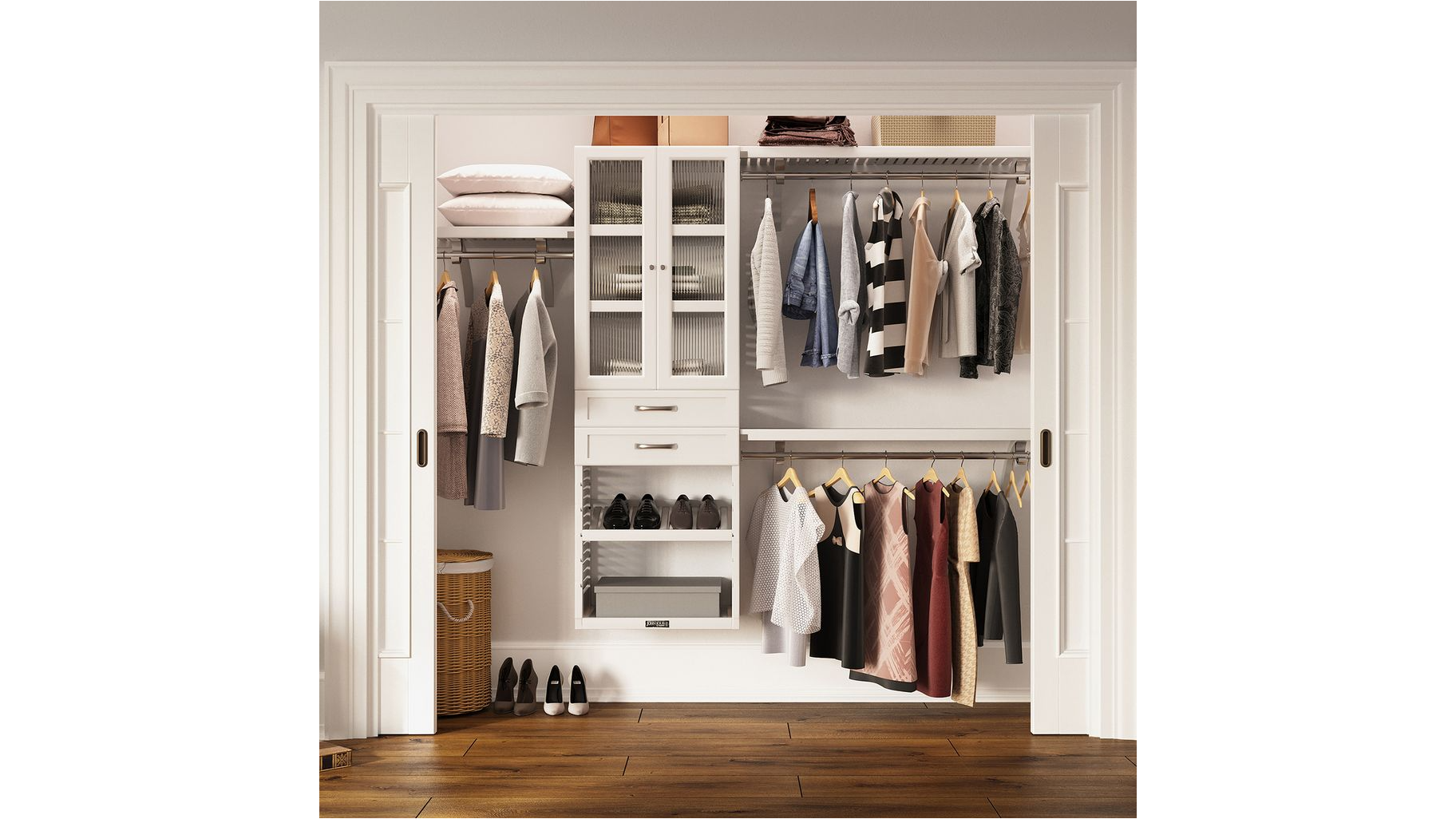
Living in a small apartment or home doesn't mean sacrificing organization or style. The secret to transforming cramped quarters lies not in expanding outward, but in thinking upward. Vertical space represents the most underutilized storage opportunity in small homes, yet most people continue to struggle with overflowing closets while entire walls remain empty.
Small closets waste significant available storage space by focusing solely on hanging rods and floor-level storage. Research from Princeton University's Neuroscience Institute, published in The Journal of Neuroscience in January 2011, found that visual clutter impairs cognitive function, making it harder to focus on daily tasks. This means an organized, vertically-optimized closet doesn't just store more items—it reduces daily stress and improves mental clarity.
Vertical storage pieces can double or triple available storage space in existing closets without requiring major renovations. The key lies in recognizing that walls, corners, and the space above eye level offer premium real estate for items used less frequently, while keeping everyday essentials within easy reach.
As John Louis Home explains, vertical storage solutions can significantly increase storage space, often providing substantial additional capacity—and they're sharing some tips on how to make the most of small spaces.
Corners represent some of the most valuable unused real estate in small closets. These areas can accommodate corner shelves or hanging rods that dramatically increase storage capacity without interfering with the main hanging space. Many people overlook these spaces because traditional closet thinking focuses on the center rod area.
Wall space above and below the primary hanging rod offers enormous potential for additional storage. Installing wall-mounted racks or hooks transforms these dead zones into functional storage areas for accessories, bags, and seasonal items that would otherwise create floor clutter.
Traditional closet organization relies heavily on floor-level solutions like shoe racks and storage bins. While these serve a purpose, they consume valuable floor space that could be used for walking or storing larger items. Floor-level storage also makes items harder to see and access, leading to the "forgotten pile" syndrome.
Vertical storage eliminates the need to bend down or dig through stacks, making every item visible and accessible. This visibility factor is crucial for maintaining organization long-term, as people are more likely to return items to designated spaces when those spaces are clearly defined and easy to reach.
Standard plastic hangers can consume up to 50% more hanging space than slim-profile alternatives. In a small closet, this difference translates to significantly fewer items that can be hung, forcing more clothing into drawers or onto shelves where it becomes less accessible and more prone to wrinkling.
Slim, space-saving hangers increase hanging capacity dramatically while providing better garment support. Velvet-coated or PVC-coated hangers prevent clothes from slipping while maintaining the slim profile necessary for maximum space efficiency.
Accessory towers represent the pinnacle of vertical storage efficiency, combining multiple storage functions in a single, space-saving unit. Accessory towers provide customizable configurations that adapt to changing storage needs over time.
The beauty of quality accessory towers lies in their adaptability. Adjustable shelving systems allow users to customize compartment heights based on the items being stored, whether that's folded sweaters, handbags, or shoe collections. This flexibility ensures the system remains useful as storage needs change.
Professional-grade accessory towers feature shelves that can be repositioned without tools, making seasonal adjustments simple and quick. This adaptability extends the useful life of the storage system and provides better value than fixed-shelf alternatives.
Small accessories like jewelry, ties, and undergarments require different storage solutions than larger clothing items. Built-in drawers within accessory towers provide dedicated spaces for these smaller items while keeping them easily accessible and visible.
Drawer compartments prevent the "junk drawer" effect that often plagues small-item storage. By providing designated spaces for different categories of accessories, drawers maintain organization and make it easier to find specific items quickly during busy mornings.
Integrated hook systems transform accessory towers into complete storage solutions. Multiple hooks can accommodate necklaces, bracelets, scarves, and belts while keeping these items tangle-free and visible. This prevents the common problem of accessories becoming tangled masses in drawers or boxes.
Multi-hook systems also serve as display areas, turning favorite accessories into design elements that add personality to the closet space. This dual function of storage and display encourages users to maintain organization since the system becomes part of the room's aesthetic appeal.
Over-the-door organizers provide storage without consuming any floor or wall space, making them perfect for extremely small closets. These systems can accommodate shoes, accessories, and cleaning supplies while remaining completely hidden when the door is closed.
Many over-the-door systems feature mesh compartments that allow air circulation, potentially preventing odors and moisture buildup. The transparent materials also make it easy to identify contents at a glance, reducing search time.
Stackable bins offer the flexibility to build custom storage towers that fit exact space requirements. Unlike fixed shelving systems, stackable solutions can be reconfigured as needs change, making them ideal for renters or people who frequently reorganize their spaces.
Quality stackable systems feature interlocking designs that prevent bins from shifting or toppling. Clear materials ensure contents remain visible, while sturdy construction supports the weight of stacked units without sagging or breaking over time.
Wall-mounted accessory racks position frequently used items at eye level, eliminating the need to search through drawers or boxes. This visibility factor is crucial for maintaining organization, as people are more likely to return items to clearly defined, easily accessible locations.
Vertical accessory racks against walls keep surfaces clutter-free while showcasing favorite pieces. This approach works particularly well for items like handbags, hats, or statement jewelry that serve as both functional accessories and design elements.
Corner spaces in closets often remain completely unused despite offering significant storage potential. Corner shelving systems or rotating organizers can transform these awkward spaces into highly functional storage areas without interfering with the main closet layout.
Proper corner utilization creates storage zones that feel separate from the main closet area, making the space appear larger and more organized. This psychological effect is important in small spaces, where the feeling of cramped conditions can create stress even when adequate storage exists.
The back of closet doors represents completely unused vertical space that can accommodate significant storage without reducing the closet's footprint. This zero-impact storage is particularly valuable in small apartments where every square inch matters.
Door-mounted storage keeps frequently used items easily accessible while maintaining the clean, organized appearance of the main closet space. This separation helps prevent the visual clutter that can make small closets feel overwhelming and chaotic.
The transformation from chaotic closet to organized wardrobe happens when vertical storage solutions work together as a coordinated system. Accessory towers serve as the anchor point for this transformation, providing substantial storage capacity while establishing organizational zones that make sense for daily use.
Successfully implemented vertical storage creates a closet that feels larger, functions better, and reduces daily stress. The key lies in selecting systems that can adapt to changing needs while maintaining their organizational effectiveness over time.


