Collisions with docks account for 56% of boating accidents, and on the Texas Gulf Coast, storm surge and sudden weather increase risks, as not all dock fender systems are built to withstand such conditions.
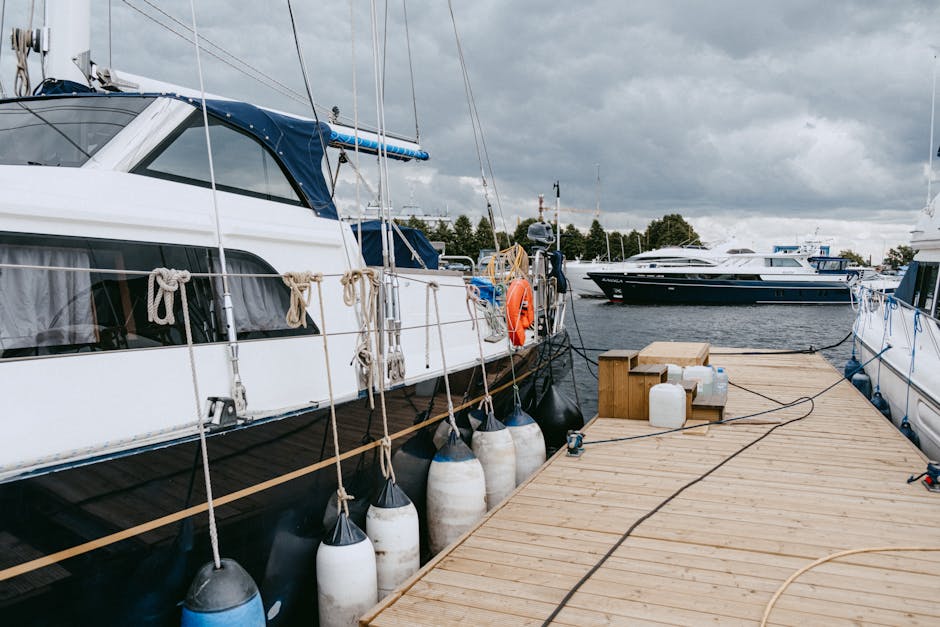
Every docking event is a controlled collision. Most go unnoticed. Some don't — and when protection systems fail, repair bills and liability exposure can climb quickly. For marina operators and commercial boat handlers working along the Texas Gulf Coast, the margin for error is especially thin. That's why choosing the right dock fender system is an important operational decision rather than a simple equipment purchase.
The numbers from the U.S. Coast Guard are hard to argue with. In 2024, collisions with vessels, fixed objects, or groundings accounted for 56% of all first-event recreational boating accidents — also responsible for 54% of injuries and 24% of fatalities recorded that year. A separate 2023 report logged 3,844 recreational boating incidents, generating roughly $63 million in property damage across the country.
These aren't freak events. The majority trace back to routine docking contact — the kind that happens dozens of times a day at any active marina. A boat comes in slightly fast, a line isn't cleated in time, a wake rolls through at the wrong moment. Without adequate dock protection in place, what should be a non-event becomes a gelcoat repair, a damaged dock finger, or a liability claim.
The practical implication for facility managers is straightforward: dock bumpers and fenders aren't optional accessories. They're the last line of defense between normal operations and expensive, avoidable damage. Houston-based Slammer Marine, which specializes in integrated dock fender systems for marinas and waterfront facilities, notes that dock protection should be evaluated as part of a long-term maintenance and risk-management strategy rather than as a standalone accessory purchase.
Operating a marina or commercial fleet anywhere has its challenges. Operating one on the Texas Gulf Coast introduces a specific set of environmental pressures that demand more from dock protection systems than calm-water installations ever would.
Along the Upper Texas Gulf Coast, normal tidal ranges are relatively modest, but storm surge and significant weather events can push water levels 2 to 4 feet above normal, fundamentally changing the geometry of every dock interaction. A bumper positioned correctly under normal conditions may be misaligned during elevated water levels — putting stress on hull contact points that weren't designed to absorb it.
Strong winds add another layer of risk. The region regularly experiences significant gusts during storms and frontal passages — conditions well-documented along the Upper Texas Gulf Coast, pushing vessels against dock structures even when properly tied. In busy channels — Galveston Bay, the Houston Ship Channel corridor, Clear Lake — recreational and commercial vessel wakes add a near-constant low-level battering to dock infrastructure. Dock fingers flex. Cleats strain. Bumpers either hold or they don't.
For marinas managing dozens of slips or operators running regular commercial trips, the cumulative load on dock protection systems is substantial. Undersized or improperly mounted bumpers degrade quickly under these conditions, leading to the kind of slow-build damage that doesn't show up until a haul-out inspection.
Texas weather has a well-earned reputation for turning without much warning. Coastal thunderstorms can develop quickly during the summer months, dropping conditions from manageable to dangerous in under an hour. In those windows, vessels that seemed secure at the dock begin to surge, yaw, and pound against dock structures with significantly more force than normal docking contact.
Storm surge events push bay waters higher and faster than tidal tables predict, and wave action along exposed dock faces can be severe. The unpredictable weather and sudden storms on the Texas Gulf Coast make a strong practical case for investing in purpose-built bumper and cleat systems — not as a precaution, but as a cost-control measure. Facilities that take the risk seriously tend to have fewer emergency repair bills after storm season.
The term commercial-grade gets used loosely in marine equipment marketing. In practice, it describes systems that perform under conditions consumer products were never designed to handle. Three factors separate real commercial performance from catalog descriptions.
A dock bumper's primary job is absorbing kinetic energy — slowing a vessel's contact with a dock structure without transferring that force directly to the hull or the dock framing. For that to work over thousands of docking cycles, the core material has to maintain its compression recovery. Foams that take a permanent set lose their ability to absorb impact and start transmitting load rather than dampening it.
Closed-cell foam is the standard for commercial applications because it doesn't absorb water, maintains consistent compression properties across temperature ranges, and resists the kind of creep deformation that hollow or open-cell alternatives develop over time. Systems built around highly impact-resistant, closed-cell foam cores retain their protective geometry through far more use cycles than consumer-grade alternatives.
The Texas Gulf Coast environment attacks unprotected materials from multiple directions simultaneously. Salt accelerates oxidation and degrades adhesives. UV exposure from intense Gulf sun breaks down polymer chains in vinyl and rubber products, causing surface cracking and eventual structural failure. Diesel and oil residue — unavoidable in working marinas — chemically attack materials not specifically formulated to resist hydrocarbon exposure.
Any system specified for coastal Texas service needs materials rated for all three: saltwater immersion, UV exposure, and oil and fuel resistance. This is the baseline for products that will still be functional after the first two summers on the water.
The true cost of dock protection isn't the purchase price — it's the total cost over a facility's operating life, including replacement frequency, installation labor, and downtime. Systems requiring annual or biannual replacement because of material degradation compound those costs quickly across a large marina installation.
The benchmark for well-built dock fendering is measured in years, not seasons. Original installations that remain functional after more than a decade of service represent a fundamentally different value proposition than budget systems that need cycling every 18 months. Facility managers making specification decisions should be asking vendors for real-world service life data, not just spec sheets.
The integrated dock fender system is built around a two-component design philosophy: engineer the core material for impact performance, and engineer the mounting system for long-term installation security. The result is a product that addresses the failure modes common to competing approaches.
The fender core is waterproof, closed-cell foam — the same material choice that marine engineers rely on when compression recovery and water resistance both matter. That core is encased in a premium PVC-coated fabric shell, which provides the abrasion and UV resistance that raw foam can't deliver on its own. PVC coatings resist hydrocarbon degradation, making this construction well-suited to working marinas where fuel exposure is routine.
The combination addresses the two most common failure modes in dock bumper systems: core deformation from water absorption and surface degradation from environmental exposure. The closed-cell structure physically prevents water ingress, and the coated shell maintains its surface integrity rather than chalking or cracking under UV load.
The fender insert slides into a proprietary mounting track system, rather than relying on through-bolting, adhesive, or compression fit alone. This approach solves a practical problem: dock bumpers installed with conventional hardware either loosen over time as dock lumber expands and contracts seasonally, or they're so permanently fixed that replacement becomes a half-day job.
The track system allows fender inserts to be replaced without disturbing the mounting hardware — a meaningful operational advantage for large marina installations where maintaining consistent dock protection across many slips matters. Installation uses basic tools and is designed to be straightforward, keeping initial setup costs manageable. Field reports from existing installations cite service life exceeding 12 years on original units, which reflects well on both the material choices and the mounting approach.
The question isn’t whether dock protection matters—the collision statistics and repair costs speak for themselves. What truly counts is whether your chosen system can withstand the harsh realities of marine environments year after year. When evaluating dock protection, boat owners and marina operators should prioritize durability, maintenance needs, installation flexibility, and long-term value—not just the price tag.
In the demanding conditions of the Gulf Coast, where saltwater, relentless sun, heavy vessel traffic, and unpredictable weather constantly test marine infrastructure, long-lasting boat fenders become essential. These robust solutions not only reduce damage and maintenance demands but also help prevent costly, unexpected repairs. Investing in the right fender system today means safeguarding both your vessel and dock for seasons to come — and in a coastal environment that punishes shortcuts, that decision is worth getting right.


