Most recreational padel players hit a wall when entering tournaments—and not in a good “contra-pared” way. Before signing up for a tournament, here’s the advice padel coaches give their teams when considering their first competitions.
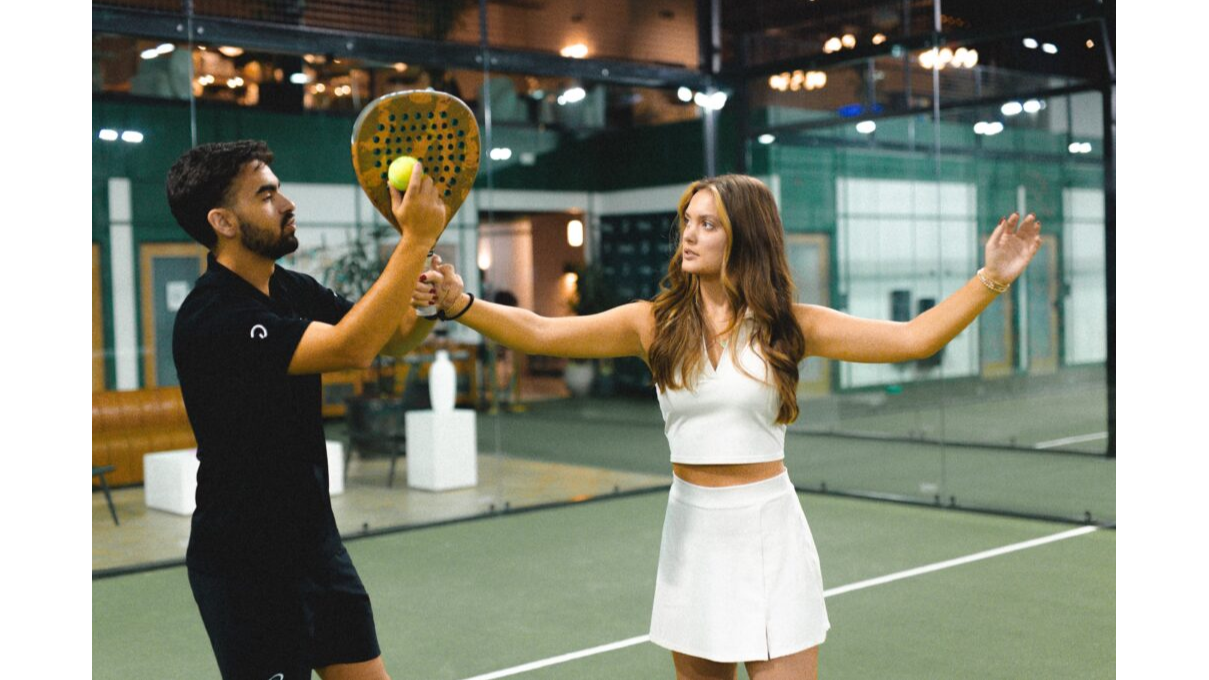
Competitive padel requires technical consistency, tactical awareness, and structured training. Mastering core shots and practicing on indoor courts with stable conditions supports reliable performance and prepares players for tournament-level play.
Transitioning from social padel to competitive tournaments requires more than improved fitness or more aggressive shot-making. Success is built on technical precision, tactical awareness, and the ability to perform consistently under pressure. These elements are developed through structured practice, repetition, and training in environments that reflect real competition conditions.
Competitive padel introduces a higher level of structure and discipline. While recreational matches often allow for improvisation, tournament play demands consistency and control. Points tend to last longer, rallies become more strategic, and unforced errors carry greater consequences.
Players at the competitive level rely less on power and more on placement, anticipation, and court awareness. Maintaining control of the net becomes a defining factor, as teams that dominate this position typically dictate the pace and outcome of rallies. Movement also becomes more demanding, with players required to react quickly, recover efficiently, and maintain positioning throughout extended exchanges.
Mental resilience plays a larger role as well. Competitive matches involve momentum shifts, pressure points, and the need for disciplined shot selection. Success depends on maintaining focus and executing high-percentage plays rather than attempting low-probability winners.
Indoor padel courts in Boca Raton provide a stable, climate-controlled environment that removes external variables such as wind, humidity, and temperature fluctuations. This consistency allows players to focus entirely on technique and execution.
Predictable conditions are especially important when preparing for tournaments. Repetition under identical circumstances helps refine timing, positioning, and shot selection, all of which are critical at higher levels of play.
Professional indoor courts are designed to deliver consistent ball response. The interaction between the surface, glass walls, and ball remains uniform, allowing players to develop accurate anticipation and timing.
Training on inconsistent surfaces can disrupt this process. Variations in bounce and speed force constant adjustment, making it more difficult to establish reliable muscle memory. Indoor facilities eliminate this variability, supporting more efficient technical development.
Indoor courts enable uninterrupted training schedules, which are essential for competitive progression. Regular practice under consistent conditions allows players to build and maintain form without disruption, particularly when preparing for events with fixed timelines.
Technical proficiency is the foundation of competitive padel. While advanced tactics and positioning are important, success begins with the ability to execute core shots consistently.
Mastery of these shots ensures that players can handle a wide range of scenarios without relying on risky or inconsistent techniques.
The Australian Formation represents a fundamental shift from recreational serving patterns. The approach allows players to maintain their strongest court sides during service games. Rather than switching positions after serving, each player remains on their preferred side, improving coverage and reducing vulnerability. This formation prevents opponents from exploiting weaker backhands or less mobile players by forcing returns to predetermined areas. Teams that master Australian Formation significantly reduce unforced errors while maintaining aggressive net positioning.
The split step is a fundamental movement technique used to prepare for incoming shots. Executed precisely as opponents strike the ball, this technique **pre-loads the muscles** for explosive directional changes. Elite players develop split-step timing that becomes automatic, enabling superior defensive recovery and offensive positioning.
Consistent split-step timing improves defensive recovery and allows players to respond effectively to fast-paced rallies. Poor split-step timing, however, leaves players vulnerable to quick direction changes.
La Nevera, or “the fridge,” is a tactical approach that targets the weaker player on the opposing team. By directing a majority of shots toward one player, teams can disrupt rhythm and increase the likelihood of errors. This strategy requires patience, control, and precise shot placement rather than aggressive, powerful play.
Competitive matches reward consistency over risk-taking. Players who prioritize high-percentage shots and maintain rally control are more likely to succeed under pressure.
Attempting low-probability winners often leads to unforced errors, particularly in critical moments. Maintaining composure and selecting the right shot is essential.
Clear communication is a key component of successful doubles teams. Simple, consistent verbal cues help players coordinate movement and avoid confusion during fast exchanges.
Common calls include:
Effective communication improves court coverage and supports better decision-making under pressure.
Developing competitive-level skills requires more than repetition; it requires the right environment. Training on professional indoor courts provides the consistency and structure necessary to refine technique and apply tactical concepts effectively.
Facilities designed for high-performance play — like those available in Boca Raton — support skill development through stable conditions, quality surfaces, and access to structured programs. This allows players to focus on improvement without the distractions or inconsistencies often found in recreational settings.
Improvement in padel is a cumulative process that combines technical skill, tactical awareness, and mental discipline. Players preparing for competition benefit from focusing on fundamentals, refining core shots, and training in environments that replicate tournament conditions.
Balancing structured practice with match experience allows players to apply skills in realistic scenarios while continuing to build consistency. Over time, this approach leads to more confident decision-making and improved performance in competitive settings.
Serious competitors recognize that facility quality directly impacts improvement rates and competitive readiness. The difference between social play and tournament success often lies in the training environment's ability to simulate actual competitive conditions consistently.


