Most homeowners don’t realize the numbers printed on their filter frame aren’t the actual measurements. This industry sizing trick causes endless frustration and poor-fitting filters that let dirty air bypass your system entirely, damaging expensive equipment and compromising the air your family breathes daily.
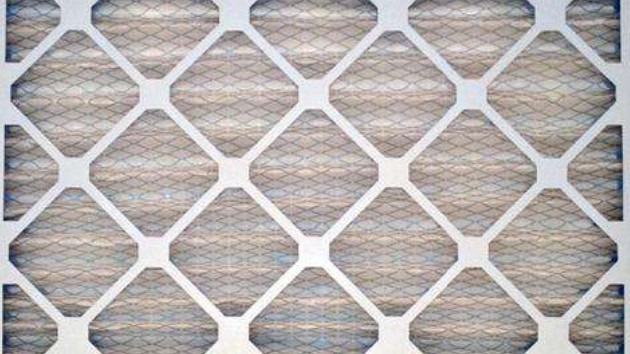
Many homeowners replace their furnace filters only to find that the new one doesn’t fit tightly, letting unfiltered air slip past the edges. This issue is more common than people realize, and custom-size options often solve the problem. The real cause comes from the mismatch between labeled filter sizes and actual HVAC system openings, which rarely follow universal standards.
The numbers on your filter frame don't show exact measurements. The HVAC industry uses a sizing system with built-in differences between advertised and true dimensions. A filter labeled 20x25x1 inches doesn't actually measure those exact dimensions when you use a tape measure.
Manufacturers use "nominal sizing" for the rounded numbers printed on filter frames. The actual physical dimensions run about 0.5 inches smaller on each side. This means your 20x25x1 filter truly measures closer to 19.5x24.5x0.75 inches. This difference exists to let the filter slide into its housing without binding.
The challenge grows when homeowners measure their filter slot directly and order based on those measurements. They're working with actual dimensions while retailers list products by nominal size. Someone who measures a 19.5-inch opening and searches for a 19.5-inch filter won't find it. That size doesn't exist in standard nominal terminology, and they actually need the 20-inch nominal size.
The idea that all homes use common filter sizes breaks down when you look at residential construction across different decades. Builders and HVAC contractors often worked with available materials or made field modifications for specific space constraints. This resulted in filter housings that don't align with today's mass-produced filter dimensions.
Older homes present particular challenges. Construction standards have changed significantly over the past several decades. Many systems were built before the industry attempted meaningful standardization of filter sizes. Custom ductwork installations, renovations, and alterations to original HVAC setups, and regional building practices all created filter openings outside the typical range.
Even newer construction doesn't guarantee standard sizing. Builders sometimes specify particular HVAC configurations to meet energy codes or architectural requirements that need non-standard filter dimensions. Many homeowners discover their filter needs don't match the limited selection at local retailers.
Gaps between your filter and housing create serious performance issues beyond simple inefficiency. Unfiltered air flows around the filter media rather than through it. When this happens, dust and debris accumulate on sensitive HVAC components, including the blower motor and evaporator coil. This leads to expensive repairs that a proper filter fit could prevent.
Undersized filters present the most obvious problem. Visible gaps around the filter perimeter provide a direct pathway for particles to enter your system. Even small gaps measuring just 0.25 inches allow enough bypass airflow to reduce your filter's effectiveness significantly.
Oversized filters create their own complications. Forcing a too-large filter into a housing can bend or damage the filter frame and potentially warp the cardboard edges. This damage compromises the filter's structural integrity and creates channels where air slips past the media.
Getting accurate measurements requires more than eyeballing your filter slot. Small errors compound into significant problems when working with tolerances that matter in fractions of an inch. The most reliable approach starts with examining your current filter. The printed dimensions provide an immediate reference point.
When no existing filter is available, measuring the filter slot itself becomes necessary. You need to measure 3 distinct dimensions for any filter. Measure the length of the shorter side, the width of the longer side, and the depth or thickness.
After recording your actual measurements, round each dimension up to the nearest whole inch. This gives you the nominal size to order from retailers. Someone measuring 19.5 inches by 24.5 inches by 0.75 inches would round up to order a 20x25x1 filter.
Certain homes require filter dimensions that fall completely outside products stocked by typical retailers. No amount of searching through hardware store aisles will yield an appropriate solution. These non-standard dimensions appear most frequently in older homes, custom-built residences, or properties where renovations modified the original HVAC configuration.
The gap between what's available and what's needed becomes particularly frustrating. Homeowners measure their filter slot only to discover their dimensions don't match any standard size. Trying to force a close-but-not-quite-right filter leads to bypass problems. Leaving the slot empty provides no filtration and risks serious damage.
Manufacturing capabilities now allow filter production in virtually any dimension. Precise measurements translated into exact filter dimensions ensure the tight seal necessary for efficient operation. This maintains the airflow characteristics your HVAC system was designed to handle.
Filter thickness represents a critical specification that homeowners often overlook when focusing on length and width measurements. Using the wrong depth creates problems just as serious as incorrect length or width. HVAC systems are engineered to work with specific filter depths that balance filtration capacity against airflow resistance.
The most common residential filter depths include 1-inch, 2-inch, and 4-inch options. Actual measurements run slightly smaller than these nominal specifications. 1-inch filters dominate in most homes due to widespread compatibility and a reasonable balance between filtration and airflow.
Upgrading to a thicker filter without verifying your system's compatibility can restrict airflow. Your HVAC unit struggles to move enough air through the denser media. This potentially causes the blower motor to overheat or the system to freeze up.
Beyond physical fit, the filter's efficiency rating plays a crucial role in system performance. The MERV scale rates filters from 1 to 20 based on their ability to trap particles. Higher numbers indicate finer filtration but also greater resistance to airflow.
Most residential systems work best with filters rated between MERV 8 and MERV 13. This provides effective filtration of common household contaminants without creating excessive airflow restriction. Jumping to filters with MERV ratings above 13 can actually harm your system if the equipment wasn't designed to handle increased resistance.
The temptation to buy the highest-rated filter must be balanced against your system's capabilities and manufacturer recommendations. A MERV 16 filter that chokes off airflow provides worse overall performance than a properly-matched MERV 11 filter. Check your HVAC manual before investing in filters that might compromise your system's operation.
Some situations call for expert evaluation rather than DIY measuring and ordering. This is particularly true when dealing with unusual configurations or persistent fitting problems. A qualified HVAC technician can identify whether your filter housing has been damaged, modified incorrectly, or requires a non-standard solution.
Homes with recurring filter fit issues might have filter housings improperly installed during original construction or previous renovations. This creates openings that don't align with any standard or custom filter size. Modifying the housing itself might prove more cost-effective than continuously struggling with filters that never fit.
Systems that go through filters unusually quickly or show dust accumulation despite regular changes might be experiencing significant bypass airflow. Professional inspection can pinpoint whether sizing issues or housing problems are responsible. They can recommend solutions addressing the root cause.
Success in finding properly fitting filters starts with careful measurement and accurate interpretation according to industry sizing conventions. Taking time to measure correctly saves money and frustration compared to ordering multiple wrong sizes. Keep a record of your correct filter size in an easily accessible location.
Many homeowners photograph their filter label or store the dimensions in their phone's notes app. This creates a permanent reference that eliminates guesswork for future replacements. For homes with non-standard dimensions, made-to-measure filters ensure proper fit and optimal system performance without compromise.


