Choosing a portable oxygen concentrator seems straightforward until you realize Medicare coverage requirements are stricter than most people expect—and the wrong device choice could leave you paying thousands out of pocket.
Selecting the right portable oxygen concentrator transforms daily life for individuals requiring supplemental oxygen therapy. With multiple Inogen models available, each offering distinct advantages in weight, battery performance, and flow settings, making an informed choice requires understanding both medical requirements and lifestyle priorities.
dominate the market through innovative pulse dose technology and exceptional portability. Unlike traditional oxygen tanks that require constant refills and create logistical challenges, Inogen devices generate medical-grade oxygen by extracting nitrogen from ambient air. This process eliminates the need for tank replacements while providing an endless oxygen supply as long as power remains available.
The company's Intelligent Delivery Technology® adapts oxygen delivery based on changing respiratory rates through pulse-dose algorithms designed to minimize missed breaths, ensuring consistent therapeutic benefits during both rest and activity. All Inogen models produce 40dBA or less noise on Setting 2, comparable to a library's ambient sound level, allowing users to maintain social interactions without distraction.
Inogen's pulse dosing system delivers oxygen bursts only during inhalation, significantly extending battery life compared to continuous flow alternatives. This efficiency enables users to maintain active lifestyles without frequent charging interruptions, while the lightweight construction ensures comfortable portability for extended periods.
Federal regulations classify portable oxygen concentrators as medical devices requiring physician prescriptions. The qualification process begins with pulse oximetry testing, where a fingertip sensor measures oxygen saturation levels in blood hemoglobin. Normal oxygen saturation ranges from 95% to 100%, though readings may be somewhat lower for individuals with lung diseases like COPD, with readings below 90% indicating potentially dangerous hypoxemia requiring immediate medical attention.
Following initial screening, physicians typically order arterial blood gas (ABG) studies to measure precise oxygen and carbon dioxide levels. This invasive test draws blood from the radial artery in the wrist, providing a detailed lung function assessment. Normal arterial blood gas oxygen measurements range between 75 and 100 mm Hg (millimeters of mercury), with lower readings triggering supplemental oxygen prescriptions.
Flow rate prescriptions specify the exact amount of supplemental oxygen required, measured in liters per minute (LPM). However, the numbered settings on Inogen concentrators (1, 2, 3, 4, 5, or 6) do not correspond directly to LPM measurements. These manufacturer settings represent pulse dose delivery levels, with actual oxygen output varying based on breathing patterns and respiratory rate.
Most lightweight portable concentrators, including Inogen models under 6 pounds, deliver maximum flows between 1.25 and 1.5 LPM. Patients requiring higher continuous flows may need to consider heavier units or home-based continuous flow systems. Understanding this distinction prevents disappointment and ensures the selected model meets prescribed therapeutic requirements.
Pulse dose delivery conserves oxygen by releasing measured bursts only during inhalation, triggered by detecting breath initiation. This technology extends battery life while reducing device weight, making pulse dose units ideal for active lifestyles. However, users must breathe deeply enough to trigger bolus delivery, as shallow breathing can potentially reduce therapeutic effectiveness.
Continuous flow systems provide steady oxygen streams regardless of breathing patterns, beneficial for patients with irregular respiratory rates or very shallow breathing. While Inogen's portable models focus on pulse dose technology, their At Home concentrator offers continuous flow for patients requiring this delivery method during rest periods or sleep.
The Inogen One G4 represents the ultimate in portability, weighing just 2.8 pounds with its standard battery configuration. This ultra-lightweight design makes it the smallest oxygen concentrator available, ideal for users prioritizing minimal carrying burden during extended activities. The G4 offers three pulse dose settings (1, 2, and 3) with a maximum oxygen output suitable for many prescribed flow rates.
Battery performance varies by flow setting, with the single battery providing up to 2.7 hours of operation on Setting 1. The double battery configuration extends runtime to approximately 5 hours, though higher flow settings reduce these durations. The G4's compact design includes Inogen Connect capability, enabling smartphone monitoring of device status, battery levels, and maintenance requirements.
The Inogen One G5 delivers exceptional battery performance, offering up to 13 hours of operation with its double battery system on Setting 1. This extended runtime makes it ideal for long-distance travel, all-day activities, or users requiring consistent oxygen therapy without frequent charging breaks. The G5 weighs 5.7 pounds with the 16-cell double battery, balancing portability with extended operational capacity.
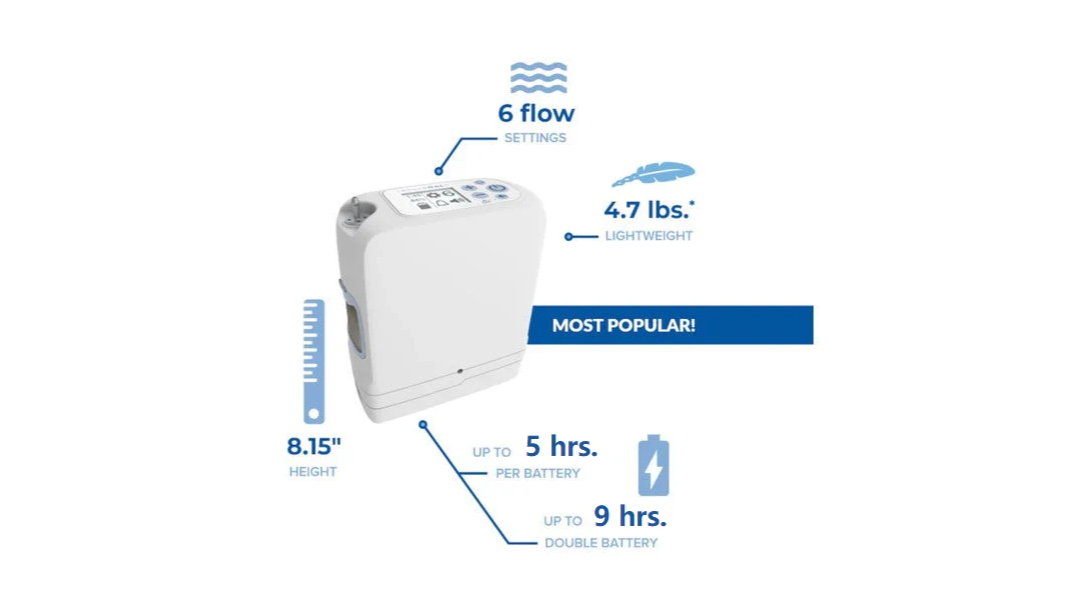
Six pulse dose settings (1 through 6) provide wide flow rate coverage for varying therapeutic needs. The single battery configuration delivers up to 6.5 hours on Setting 1, while higher settings proportionally reduce battery life. Advanced Inogen Connect features enable remote monitoring and troubleshooting through dedicated smartphone applications.
The Inogen Rove 6 combines impressive battery endurance with user-friendly operation, delivering up to 12 hours and 45 minutes of runtime with its extended battery on Setting 1. This model bridges the gap between ultra-portable units and extended-capacity systems, weighing approximately 7.5 pounds with the extended battery configuration.
Six pulse dose settings accommodate diverse flow rate prescriptions, while the intuitive LCD provides clear status information and settings confirmation. The Rove 6's design emphasizes durability and reliability for users requiring dependable oxygen therapy during demanding activities or travel situations.
Battery performance decreases as flow settings increase, creating important trade-offs between therapeutic oxygen delivery and operational duration. Setting 1 typically provides maximum battery life, while higher settings can reduce runtime by 30-50% depending on the specific model. Users should discuss activity-based flow rate adjustments with their physicians to optimize battery performance during different daily situations.
Environmental factors significantly affect battery performance, with temperatures below 40°F or above 95°F reducing operational capacity. Similarly, charging batteries in temperatures exceeding 75°F can damage cells and reduce overall lifespan. Planning charging schedules around temperature conditions ensures maximum battery reliability and longevity.
The Inogen Connect application transforms device management by providing real-time monitoring through Bluetooth connectivity. Users can check battery levels, monitor filter status, access maintenance reminders, and receive software updates directly through their smartphones. This technology reduces anxiety about device performance while ensuring optimal therapeutic delivery.
Advanced features include usage tracking, troubleshooting guides, and direct access to customer support resources. The application also provides exclusive discounts and promotional offers, adding value beyond basic device monitoring. However, users uncomfortable with technology can operate Inogen concentrators effectively without smartphone connectivity.
All Inogen models produce minimal operational noise, with the G5 generating 38 decibels on Setting 2 and the Rove 6 producing 39 dBA at Setting 2, equivalent to the noise of a quiet library or gentle stream. This acoustic performance enables comfortable use during social gatherings, religious services, restaurants, and entertainment venues without creating disturbances or drawing unwanted attention.
Higher flow settings may increase noise levels slightly, though Inogen's engineering maintains acceptable sound levels across all operational parameters. The quiet operation contributes significantly to user confidence and social integration, reducing the psychological barriers often associated with medical equipment dependency.
The Federal Aviation Administration approves all Inogen portable oxygen concentrators for commercial flight use, provided they display proper labeling indicating compliance with acceptance criteria. This approval covers the device itself, but individual airlines maintain specific policies regarding battery quantities, charging procedures, and in-flight usage protocols.
Altitude changes affect oxygen requirements, with higher elevations potentially increasing supplemental oxygen needs beyond ground-level prescriptions. Passengers should consult their physicians about flow rate adjustments for air travel and verify airline-specific requirements well before departure dates. Most airlines require advance notification and may request medical documentation confirming the necessity of oxygen therapy.
Inogen offers specialized carrying cases designed to distribute device weight comfortably while protecting sensitive components during transport. Options include shoulder bags, backpacks, and wheeled cases accommodating different mobility preferences and physical capabilities. Properly fitted carrying accessories significantly reduce fatigue during extended use periods.
Additional accessories like external battery chargers, DC power adapters for vehicle use, and protective covers improve device versatility and user independence. These accessories enable extended travel, emergency power options, and environmental protection, expanding the situations where portable oxygen therapy remains practical and reliable.
Medicare coverage for portable oxygen concentrators requires meeting specific eligibility criteria, including documented medical necessity through physician certification and blood oxygen testing results. Coverage typically applies to the rental of equipment rather than outright purchase, with monthly rental fees paid directly to approved suppliers.
Qualifying conditions include COPD, pulmonary fibrosis, heart failure, and other diagnoses resulting in chronic hypoxemia. Medicare requires periodic reassessment to confirm ongoing medical necessity, with documentation demonstrating continued therapeutic benefit. Private insurance policies may offer different coverage terms, including purchase options or extended rental periods.
Standard Inogen warranties provide three years of device protection, covering manufacturing defects, component failures, and normal wear-related issues. This extensive coverage period reflects the company's confidence in product reliability while protecting users from unexpected repair costs during the most critical ownership period.
Battery warranties typically extend for one year, acknowledging that rechargeable cells naturally degrade through use cycles. Extended warranty options, including lifetime coverage through Freedom Packages, provide additional protection for users requiring maximum security against repair costs. These extended programs often include expedited service, replacement units during repairs, and priority customer support access.
For expert guidance on selecting the perfect Inogen portable oxygen concentrator for specific medical and lifestyle needs, contact a with personalized healthcare consultations and support services.


