Your Apple Watch Ultra deserves a band that wears in, not out. Discover how one full-grain leather strap can elevate your style for years.
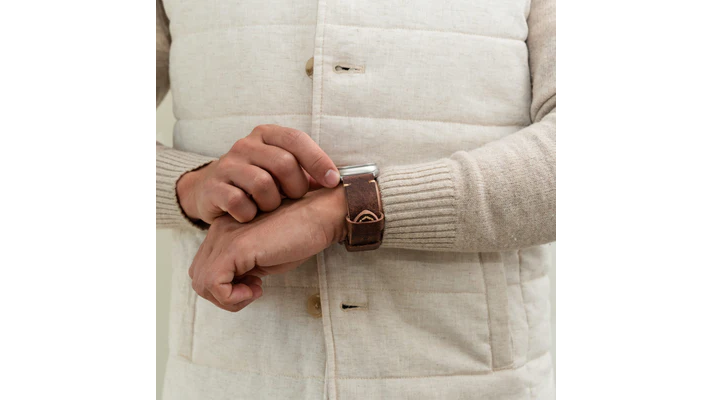
You don't need a drawer of options to look considered. One well‑made, full‑grain leather band can carry your Apple Watch Ultra from client pitch to red‑eye flight, from Friday dinner to a Sunday hike. Here's how to pick the right one, avoid common mistakes, and make it last—using insights from brands like Robust Goods that build leather to be lived in, not replaced.
You buy a "leather" band that looks great on day one—then it cracks, peels, or smells (the worst) after a few months. That's almost always because it isn't full‑grain, well-tanned leather, or the build is thin with fragile hardware. With a 49mm Apple Watch Ultra, those shortcuts show up fast: the case is bold; the strap needs presence, structure, and breathable comfort.
Most people go wrong with the material. "Leather" can mean anything from bonded scraps to full‑grain hide. The former looks good in the box and falls apart by month three. The latter softens, gains character, and becomes unmistakably yours. What you should be looking for here is patina — the gradual change in appearance because of wear.
If you want a benchmark to browse against, companies like Robust Goods show full‑grain hide bands and stainless hardware for the 49mm Ultra; see their leather line of watch straps for reference.
Two routes make the Ultra look instantly intentional. The first is the quiet power move: a clean full‑grain strap with restrained stitching and a measured profile. It doesn't shout; it sharpens.
The second is heritage sport: a perforated leather strap inspired by mid‑century motorsport. The airflow is practical on warm commutes; the attitude is relaxed but still grown‑up. Both begin at the same place—good leather—and end with different moods: executive without trying, or off‑duty with a knowing wink.
Care is uncomplicated if you treat leather like the natural material it is. Give it a quick wipe after long days. Let leather dry thoroughly between wears. Condition sparingly a few times a year to keep fibers supple. If drenched, pat dry, lay flat, and avoid heat. A monthly glance at the hardware—are the adapters snug, the clasp firm?—is five seconds well spent.
Rather than listing features, look for philosophy. Brands positioned as experts talk about material grade, long‑term wear, and responsible build choices. For example, Robust Goods frames leather as a durable, repair‑friendly choice over disposability, using full‑grain hides, stainless hardware, and cuts sized for the 49mm Ultra. A leather watch band collection should be able to cover "boardroom to backcountry" with two products instead of ten.
If you're buying online, pay attention to the details: look for premium Italian full‑grain leather with stainless steel or titanium hardware (the brands that care about durability tend to be up front about the materials they use) and a broader profile to balance the Ultra case.
Colors that work wonders: Black with monochrome and sharp lines. Brown with denim, navy, and everyday tailoring. Olive when you want polish with a hint of field jacket. Tan when the light is bright and you're keeping everything else airy and neutral. Like the best outfit formulas, the goal isn't to impress—it's to feel inevitable.
Choose a leather strap that wears in, not out, and let the patina do the talking. If you want a simple place to start, compare full‑grain finishes side by side and pick the one that already feels like you. Then let the patina do the talking.


