Think those trendy massage guns are just a wellness fad? The science behind 48kg strike force and 12-16mm tissue penetration reveals why professional athletes swear by percussion therapy for muscle recovery—and the results might surprise you.
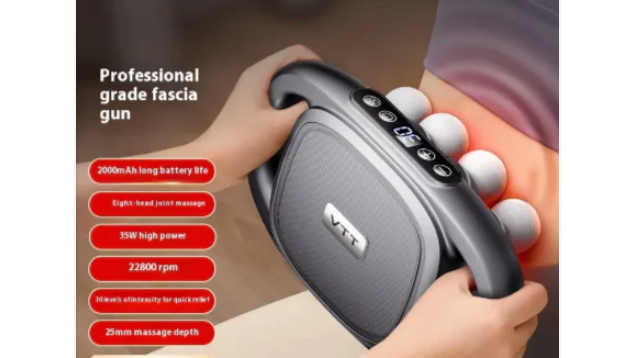
Muscle pain affects everyone from weekend warriors to professional athletes, but percussion therapy offers a scientifically-backed solution that goes beyond surface-level relief. Understanding the mechanics behind this powerful treatment method reveals why massage guns have become essential tools for serious muscle recovery.
Percussion therapy works by delivering rapid, concentrated pulses directly to targeted muscle areas, creating mechanical vibrations that penetrate deep into tissue layers. Unlike traditional massage techniques that work primarily on surface muscles, percussive force reaches the deeper fascial layers where chronic tension and adhesions typically form.
The key lies in the strike mechanics - high-quality percussion devices generate sustained force ranging from 30-48kg, with the most effective units achieving penetration depths of 12-16mm into muscle fibers. Profiler Digital's 16-Head Deep Tissue Massage Gun utilizes 48kg strike strength to ensure even the most resistant muscle adhesions receive adequate therapeutic pressure. This level of force allows the percussive action to break through layers of tension that manual massage simply cannot reach effectively.
The mechanical advantage of percussion therapy becomes apparent when examining muscle fiber response. Each strike creates a controlled disruption that forces tight muscle bundles to release, while the rapid succession of pulses prevents the muscle from contracting defensively between impacts. This process effectively "resets" dysfunctional muscle patterns and restores normal fiber alignment.
Research demonstrates that percussion massage combines traditional soft tissue manipulation with high-frequency pulsations up to 57Hz, creating a unique therapeutic environment that addresses multiple pain mechanisms simultaneously. The science reveals three primary pathways through which percussive therapy delivers measurable relief.
Percussive therapy dramatically increases local blood circulation, delivering essential oxygen and nutrients to oxygen-starved muscle tissue. The rapid pulsations create a pumping action that forces fresh blood into compressed capillaries while simultaneously pushing metabolic waste products out of the treatment area. This improved circulation accelerates the natural healing process and reduces inflammation markers that contribute to persistent muscle pain.
Studies show that percussion massage increases intramuscular temperature, which further promotes vasodilation and nutrient exchange. The improved blood flow continues for hours after treatment, providing sustained benefits that extend well beyond the immediate massage session.
Muscle adhesions form when injured or overused tissue develops abnormal connections between muscle fibers and surrounding fascia. These "knots" create restricted movement patterns and persistent pain signals. Percussion therapy addresses muscle adhesions through controlled mechanical disruption, promoting the remodeling process that restores normal tissue architecture.
The percussive action breaks down cross-linked collagen fibers that form these adhesions, while the increased blood flow brings in the cellular components necessary for proper tissue repair. This dual mechanism explains why percussion therapy often provides lasting relief rather than temporary symptom masking.
Percussion therapy activates the body's natural pain control mechanisms through two distinct neurological pathways. First, the rapid mechanical stimulation overwhelms nerve endings with non-painful sensory input, effectively blocking pain signals from reaching the brain - a phenomenon known as the gate control theory of pain management.
Simultaneously, the percussive stimulation triggers the release of endorphins, the body's natural pain-relieving compounds. These neurochemicals provide both immediate pain relief and a sense of well-being that can last for hours after treatment. This dual neurological response explains why percussion therapy can provide both acute pain relief and longer-term pain management benefits.
Athletic performance depends heavily on efficient muscle recovery, and percussion therapy offers targeted solutions for both pre-competition preparation and post-exercise recovery. The timing and application of percussive treatment can significantly impact training outcomes and competitive performance.
Using percussion therapy before exercise serves as an advanced warm-up technique that primes muscles for optimal performance. The percussive action increases blood flow and muscle temperature more rapidly than traditional warm-up methods, improving muscle flexibility and reducing injury risk. Athletes report improved mobility and decreased muscle stiffness when incorporating 2-5 minutes of percussion therapy into their pre-workout routines.
The mechanical stimulation also activates proprioceptors - specialized nerve endings that provide positional feedback to the brain. This improved neuromuscular awareness contributes to better movement coordination and reaction times during athletic activities.
Delayed onset muscle soreness represents one of the most significant barriers to consistent training progression. Percussion therapy applied within 30 minutes after intense exercise can significantly reduce DOMS severity by maintaining elevated blood flow and preventing the accumulation of inflammatory byproducts.
The percussive action helps maintain muscle pump activity that would normally decline rapidly after exercise cessation. This sustained circulation removes lactate and other metabolic waste products while delivering the nutrients necessary for muscle repair and adaptation. Athletes using post-workout percussion therapy often experience substantially less muscle soreness compared to passive recovery methods.
Effective percussion therapy requires precise control over treatment parameters, as different muscle groups and conditions respond optimally to specific intensity levels and application techniques. High-quality devices offer extensive customization options that allow users to fine-tune their treatment approach.
Modern percussion devices provide multiple speed settings ranging from gentle activation (1200 RPM) to intense deep tissue work (3200+ RPM). The ability to adjust percussion frequency allows users to match treatment intensity to their specific needs - lower speeds for sensitive areas and initial treatment sessions, higher speeds for deep muscle work and chronic adhesions.
Three distinct intensity modes typically include relaxation (low amplitude, moderate frequency), recovery (moderate amplitude, varied frequency), and activation (high amplitude, high frequency). This variability ensures that users can progress from gentle introduction to intensive therapeutic treatment as their tolerance and needs evolve.
Different muscle groups require specialized treatment approaches, which is why advanced percussion devices include multiple attachment heads designed for specific applications. Large ball heads work effectively on major muscle groups like quadriceps and hamstrings, while bullet-point attachments target trigger points and smaller muscles around joints.
Flat heads provide broad surface area coverage for large muscle groups, while fork attachments allow treatment around the spine and Achilles tendon without applying direct pressure to sensitive structures. This variety ensures that every muscle group receives appropriately targeted treatment for maximum therapeutic benefit.
Successful percussion therapy requires understanding both session duration and specific application techniques for different muscle groups. Proper application maximizes therapeutic benefits while minimizing the risk of overtreatment or tissue irritation.
Research indicates that 2-5 minutes of percussion therapy is typically sufficient for pre-workout preparation, while post-workout sessions may extend to 10-15 minutes per muscle group for optimal therapeutic benefits. Sessions longer than 15 minutes may actually impair recovery by creating additional muscle stress, while shorter sessions often fail to achieve meaningful tissue changes.
The treatment should begin with 2-3 minutes at lower intensity to prepare the tissue, followed by 5-8 minutes of therapeutic intensity, and conclude with 2-3 minutes of gentle percussion to promote relaxation and circulation. This progression ensures maximum tissue response while maintaining comfort and safety.
Each muscle group responds best to specific attachment selection and movement patterns. Large muscle groups like the quadriceps benefit from broad, sweeping movements with large ball attachments, while smaller muscles like the peroneals require precise, localized treatment with bullet-point heads.
Movement technique significantly impacts treatment effectiveness - slow, deliberate passes allow for deeper tissue penetration, while faster movements provide broader coverage with less intensity. Athletes learn to combine attachment selection with appropriate movement speed to customize their treatment approach for specific training demands and recovery needs.
The effectiveness of percussion therapy ultimately depends on device quality and user technique, with high-quality equipment providing the power, precision, and durability necessary for consistent therapeutic results. Professional-grade devices often demonstrate superior outcomes compared to basic consumer models.
Quality percussion devices maintain consistent strike force throughout extended treatment sessions, ensuring that therapeutic benefits don't diminish as battery power decreases. The motor quality, strike consistency, and amplitude control found in professional units directly translate to more effective pain relief and faster recovery times. Athletes and fitness enthusiasts who invest in quality percussion therapy equipment report significantly better results and higher satisfaction compared to those using entry-level alternatives.
Learn more about professional-grade percussion therapy solutions and discover how Profiler Digital combines cutting-edge technology with practical design to deliver effective muscle recovery tools for athletes and fitness enthusiasts.


