Think your massage sessions aren’t intense enough? Professional massage guns now deliver up to 48kg of percussive force—that’s nearly 106 pounds of striking power hitting your muscles 40 times per second to break through tension that manual therapy simply can’t touch.
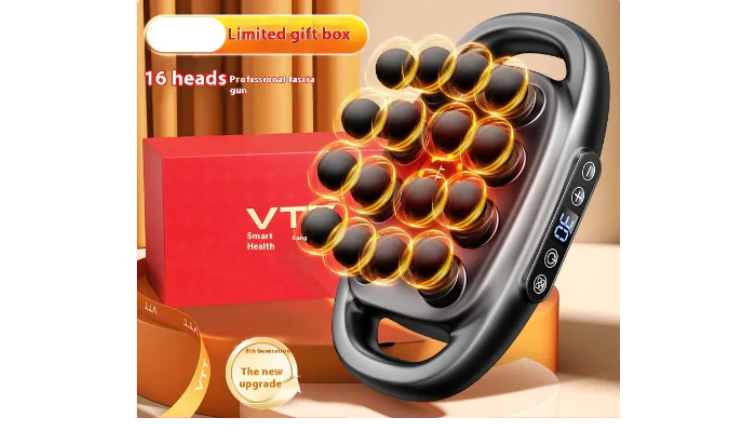
Muscle tension doesn't stand a chance against the raw power of percussive therapy. Modern massage guns harness significant striking force to deliver therapeutic benefits that manual massage simply cannot match, transforming how athletes and fitness enthusiasts approach recovery.
The foundation of effective percussive therapy lies in stall force—the maximum pressure a massage gun can maintain before its motor stops. High-quality devices deliver 30-36kg (66-80lbs) of sustained force, creating the deep muscle impact necessary to break through stubborn tension and knots.
This significant force penetrates far beyond surface-level muscle tissue, reaching depths of 12-16mm into muscle fibers. Profiler Digital claims their massage guns utilize 48kg strike strength to ensure even the most resistant muscle adhesions receive adequate therapeutic pressure.
The key difference between high-force massage guns and their weaker counterparts becomes apparent during treatment of dense muscle groups like the quadriceps, glutes, and upper back. Lower-force devices often stall when encountering significant muscle tension, while professional units maintain consistent percussive action throughout the entire treatment session.
Percussive therapy operates on a simple yet powerful principle: rapid, concentrated pressure pulses stimulate muscle tissue at frequencies that manual techniques cannot achieve. Research shows that 20-40 percussions per second create optimal therapeutic conditions for muscle recovery and tension relief.
These rapid pulses work by overwhelming pain receptors through the gate control theory of pain, essentially "closing the gate" on pain signals traveling to the brain. The high-frequency vibrations also activate mechanoreceptors in muscle tissue, triggering the body's natural healing responses and promoting cellular repair mechanisms.
The percussive action creates a pumping effect within muscle tissue, dramatically increasing local blood circulation. This increased blood flow serves two functions: delivering fresh oxygen and nutrients to damaged muscle fibers while simultaneously mobilizing metabolic waste products like lactic acid.
Studies indicate that massage guns can reduce muscle soreness through increased blood flow to tissues, potentially allowing the body to more efficiently clear metabolic byproducts from intense physical activity. The improved circulation also accelerates the delivery of healing compounds to areas of muscle damage or inflammation.
Muscle adhesions—areas where muscle fibers stick together abnormally—create restriction points that limit flexibility and cause persistent discomfort. The mechanical action of percussive therapy may help address these adhesions through controlled stimulation that promotes the remodeling process.
The combination of direct pressure and rapid vibration helps separate adhered tissue layers, potentially restoring normal muscle fiber alignment and improving overall tissue quality. This process shows particular promise for addressing trigger points and chronic tension areas that resist other treatment methods.
The round ball attachment serves as the workhorse for general muscle treatment, distributing percussive force across a broad surface area. Its spherical design makes it ideal for addressing large muscle groups like the quadriceps, hamstrings, and glutes where tension often accumulates after intense training sessions.
The ball head's effectiveness comes from its ability to deliver consistent pressure without creating sharp contact points that might cause discomfort. This makes it perfect for longer treatment sessions on major muscle groups that require sustained therapeutic pressure.
Trigger points—those painful knots that refer discomfort to other areas—require precise, concentrated pressure to release effectively. The bullet head's pointed design focuses percussive force into a small contact area, creating the intensity needed to break up these stubborn tension spots.
This attachment works well for treating areas like the upper trapezius, IT band, and plantar fascia where localized tension creates widespread discomfort. The concentrated force delivery allows for targeted treatment without affecting surrounding healthy tissue.
The unique two-pronged design of the fork head allows treatment along linear structures like the spine and Achilles tendon while avoiding direct pressure on bones or sensitive areas. This specialized shape distributes force on either side of anatomical structures, providing therapeutic benefit without risk of injury.
Athletes commonly use the fork head for addressing tension in the erector spinae muscles along the spine and for treating tight calf muscles around the Achilles tendon. The dual-point contact creates a bracketing effect that releases tension from multiple angles simultaneously.
Sensitive areas like the neck, chest, and areas recovering from injury require gentle yet effective treatment. The flat head distributes percussive force across the largest surface area, reducing pressure intensity while maintaining therapeutic benefit.
This attachment proves valuable for treating areas that cannot tolerate the concentrated pressure of other heads, making it important for muscle care routines that address both robust and delicate muscle groups.
Gentle percussive therapy at 1200-1800 RPM provides therapeutic benefit for sensitive muscle areas and individuals new to percussive therapy. This speed range allows tissues to adapt to the mechanical stimulation while still promoting increased blood flow and mild tension release.
Low-speed settings are particularly effective for warm-up routines, treating areas near joints or bones, and for individuals with chronic pain conditions who require gradual introduction to percussive therapy. The reduced intensity prevents tissue irritation while building tolerance for more aggressive treatment.
The medium speed range serves as the sweet spot for most therapeutic applications, providing sufficient force to address common muscle tension without overwhelming sensitive tissues. This setting effectively treats everyday muscle soreness from exercise, prolonged sitting, or general physical stress.
Most users find medium speeds ideal for post-workout recovery sessions and daily maintenance routines. The balanced intensity promotes muscle relaxation and improved circulation without causing excessive tissue stimulation that might interfere with recovery.
Stubborn muscle knots and chronic tension areas often require maximum percussive intensity to achieve meaningful therapeutic results. High-speed settings deliver the mechanical force necessary to break through resistant tissue and promote significant structural changes in muscle fiber organization.
Advanced users and athletes with significant muscle density benefit most from high-speed treatments, particularly when addressing areas like the IT band, upper trapezius, or deep gluteal muscles that resist lower-intensity interventions.
Some modern massage gun engineering has solved the noise problem that plagued earlier percussive devices. Advanced brushless motors operate at whisper-quiet levels of 40-50dB—comparable to a quiet library—allowing for focused treatment without disturbing others or creating audio fatigue during longer sessions.
The quiet operation enables use in shared spaces like gyms, offices, or homes without concern for noise disruption. This accessibility factor significantly increases compliance with recovery routines, as users can incorporate percussive therapy into their daily schedules without environmental restrictions.
The reduced noise also allows users to concentrate on treatment sensations and muscle responses, improving the overall therapeutic experience and enabling better self-assessment of tension areas that require additional attention.
Quality massage guns incorporate high-capacity lithium batteries that provide extended operation per charge cycle. This runtime eliminates the frustration of devices that die mid-treatment and ensures availability for multiple users or extended therapy sessions.
The substantial battery capacity supports the high power demands of percussive motors while maintaining consistent performance throughout the entire charge cycle. Users can complete full-body treatment routines multiple times before requiring recharge, making these devices practical for both personal and professional use.
Smart battery management systems prevent over-discharge and extend overall battery life, ensuring reliable operation over months and years of regular use. Fast-charging capabilities typically restore full power within 2-3 hours, minimizing downtime between intensive training periods.
Clinical research supports the effectiveness of percussive therapy for reducing delayed-onset muscle soreness (DOMS) when applied immediately after exercise or 24-72 hours post-exercise, though some studies show mixed results. Research demonstrates improvements in muscle flexibility and reductions in musculoskeletal pain following consistent percussive therapy protocols.
The measurable benefits extend beyond subjective pain relief to include objective improvements in range of motion, muscle activation patterns, and recovery timeframes. Athletes using percussive therapy report faster return to training and reduced need for traditional pain management interventions.
Professional sports teams and physical therapy clinics increasingly integrate percussive therapy into standard treatment protocols, recognizing its ability to accelerate recovery processes and maintain peak muscle function. The technology bridges the gap between passive recovery methods and intensive manual therapy techniques.
The combination of powerful percussive force, targeted attachment options, and user-friendly features makes modern massage guns valuable tools for anyone serious about muscle health and recovery. Profiler Digital reports specializing in advanced percussion therapy devices that deliver professional-grade muscle recovery solutions.


