If you’ve ever Googled your business and found three different phone numbers listed, you’re not the only one noticing. Search algorithms see those conflicts too, and according to one study, 80% of potential customers will simply move to a competitor when spotting inconsistent information online.
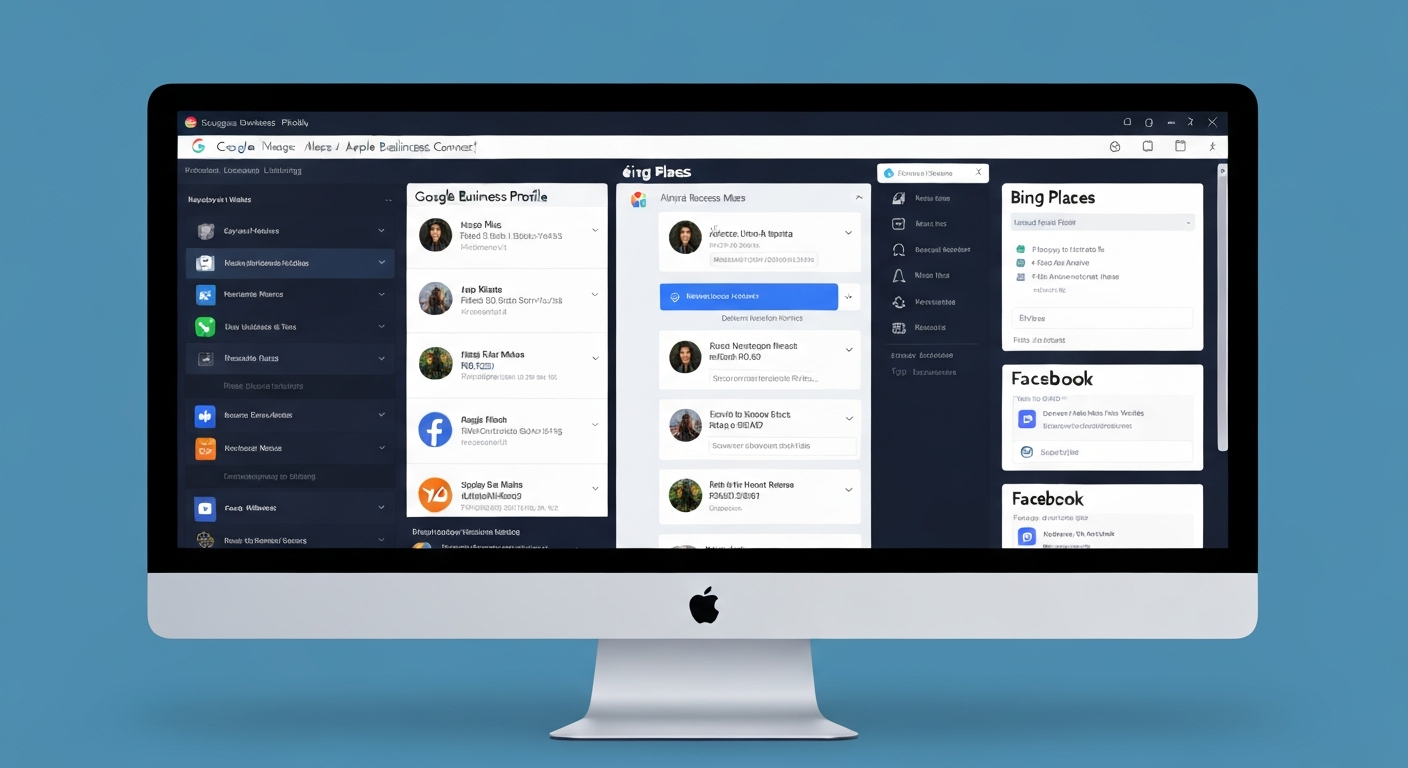
Most small business owners assume that as long as their website looks good, they're covered online. But search engines don't just look at websites - they look at everything. Every directory listing, every map pin, every citation across the web is data that algorithms use to decide whether a business is legitimate and worth showing to searchers. When that data conflicts, the algorithm loses confidence - and the business loses rankings.
The numbers here are hard to ignore. According to a BrightLocal study, 80% of consumers lose trust in a local business if they find incorrect or inconsistent information online. That's not a small slice of the audience - that's the vast majority of potential customers who might find a wrong phone number, an old address, or a mismatched business name and simply move on to a competitor.
Search engines are doing essentially the same thing: scanning listings, comparing data points, and deciding how trustworthy a business is based on consistency. When a customer and a search algorithm both can't determine whether a business is at "123 Main St" or "123 Main Street, Suite 200," nobody wins. Profit Acuity works directly with small businesses on exactly this problem, and their team at profitacuity.com has seen firsthand how listing chaos quietly kills local visibility.
Search engines like Google are essentially trust machines. They surface businesses they can verify. When a business's information is clean and consistent across the web, Google can confidently say: "Yes, this is a real, established business at this location." When the data conflicts - different phone numbers on Yelp vs. Google, a slightly different business name on Facebook - that confidence drops.
Google's local algorithm cross-references business information from dozens of sources: directories, review platforms, social media profiles, data aggregators, and the business's own website. When those sources disagree, the algorithm can't fully verify the business's identity. The result is lower placement in local search results and Google Maps, even if the business itself is excellent. Local SEO agencies consistently identify NAP consistency as one of the very first fixes in any local optimization strategy - it's that foundational.
Duplicate listings are an equally damaging problem. When two or three versions of the same business exist across directories - often created automatically by data scrapers - the authority that should belong to one listing gets split across multiple, weaker entries. Instead of one strong, trusted signal, the algorithm sees noise. Businesses that standardize NAP across all online profiles consistently report meaningful gains in local search visibility. The fix isn't advertising or content - it's data hygiene.
NAP stands for Name, Address, and Phone number - the three core data points that identify a business online. NAP consistency means that every listing, profile, and mention of the business across the internet uses the exact same version of those three pieces of information.
Algorithms are more literal than most people expect. The following examples look minor to a human but register as conflicts to a search engine:
Pick one format for each and use it everywhere - in listings, on the website, in email signatures, and even on printed materials, since data scrapers pull from anywhere they can find text.
Inconsistencies don't always live where businesses think to look. Many listings were created automatically - by data aggregators pulling from old phone books or other directories - and they may have never been claimed or corrected.
Not all directories carry equal weight. Prioritize the platforms that algorithms and customers rely on most:
Claim every unclaimed profile, then align the NAP, website URL, hours, and categories to a single master record.
A frequently overlooked source of inconsistency is the business's own website. If the address in the footer uses a different abbreviation than the Google Business Profile, or the phone number is only embedded in an image (which algorithms can't read), the website becomes a source of conflicting signals rather than a source of authority. NAP information should always appear in plain HTML text - in the footer, on the contact page, and anywhere else it naturally belongs - so both search engines and AI systems can extract it reliably.
Fixing inconsistencies starts with knowing what's actually out there. A simple search of the business name, address, and phone number in Google will surface many existing listings - including ones the business owner never created. From there, it's about building a system.
The most important first step is choosing one official version of the business name, address, and phone number - and committing to it. Create a simple spreadsheet with columns for each platform: site name, current NAP listed, correct NAP, and status. This becomes the source of truth that every other listing gets measured against. Every time something changes - a new suite number, a new phone line - the master record gets updated first, and then every listing follows.
Manually updating dozens of directories is time-consuming and easy to let slide. Listing management tools like BrightLocal, Whitespark, Moz Local, and Yext can push consistent data to many directories simultaneously, dramatically reducing the manual workload. For businesses with multiple locations or frequent changes, keeping a centralized master record synced to these tools is the most reliable way to stay consistent over time. A quarterly audit - checking for new duplicate listings, auto-generated profiles, or user-edited changes on Google Business Profile - keeps things from drifting back into chaos.
Local SEO has always mattered, but AI-powered search is changing the game in a significant way. Platforms like Google's generative search results, ChatGPT, and Perplexity don't just match keywords - they synthesize information from multiple sources to construct answers. That means they need clean, consistent, structured data to confidently recommend a business in a response.
When a business's online data is scattered or conflicting, AI systems either surface a competitor with cleaner data or omit the business entirely. The businesses winning in AI search aren't necessarily the biggest - they're the ones whose information is the most organized and trustworthy across the web.
One of the most effective ways to communicate clearly with AI search engines is through LocalBusiness schema markup - a block of structured code added to a website that explicitly tells search engines the business's name, address, phone number, hours, services, and service area. Where a human reader understands context, an AI needs explicit labels. Schema provides those labels, making it far easier for generative AI tools to pull accurate information and feature the business in relevant answers. Adding FAQ schema and Review schema alongside LocalBusiness schema further strengthens the signals that AI systems use to evaluate authority and trustworthiness.
Local search rankings aren't arbitrary. They're the output of algorithms that are simply trying to identify the most credible, verifiable businesses in a given area. Inconsistent listings introduce doubt into that process - and doubt costs rankings, visibility, and customers.
The businesses that show up consistently at the top of local search aren't necessarily spending more on ads or building flashier websites. They've done the unglamorous work: picking one official NAP, claiming and correcting every major listing, and keeping the data clean over time. In a local market where 80% of consumers will walk away from a business with inconsistent information, that kind of data hygiene isn't optional - it's the foundation everything else is built on.
To see how Profit Acuity helps small businesses manage their local presence and visibility, visit Profit Acuity


