Think your treadmill workouts have plateaued? Research reveals that a simple 10% incline can more than double your calorie burn… and there’s a specific way to harness this metabolic boost that most people miss entirely.
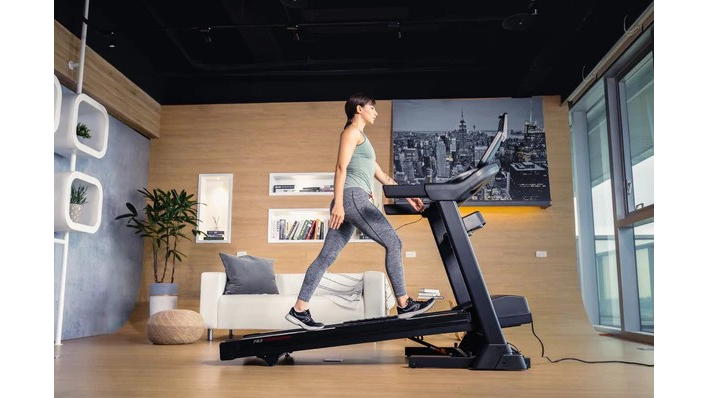
Traditional flat treadmill workouts eventually hit a plateau where muscles adapt and calorie burn stagnates. Incline treadmill training breaks through these limitations by forcing the body to work against gravity, creating a metabolic challenge that transforms ordinary cardio into an advanced fat-burning system.
The science behind incline training reveals dramatic metabolic changes that flat treadmill users never experience. Research with sixteen subjects demonstrates that the metabolic cost of movement increases by 52% at a 5% incline and soars by over 100% at a 10% incline. This exponential increase means a 150-pound person burns approximately 10 additional calories per mile for every 1% of uphill grade.
These findings explain why incline walking at 3 mph can match or exceed the calorie burn of flat running at higher speeds. The body recruits additional muscle fibers to overcome gravitational resistance, creating an energy demand that continues even after the workout ends. SOLE Fitness treadmills use this metabolic advantage with precision incline control that maximizes calorie expenditure at every fitness level.
Incline training fundamentally changes how muscles work during cardio exercise. Unlike flat treadmill walking that primarily engages the quadriceps and hip flexors, incline training creates a lower-body strengthening workout that targets multiple muscle groups simultaneously.
Walking on an incline significantly increases activation of the glutes, hamstrings, and calves compared to flat surface training. These posterior chain muscles work harder to propel the body upward against gravity, creating a strength-building component that flat cardio cannot match. The glutes, in particular, show dramatically increased activation rates during incline walking, helping to correct muscular imbalances common in sedentary lifestyles.
This enhanced posterior chain activation translates to improved posture, reduced lower back pain, and better athletic performance in other activities. The calves also experience increased workload, developing the lower leg strength needed for explosive movements and injury prevention.
Incline training increases quadriceps engagement while simultaneously challenging stabilizer muscles throughout the trunk and legs. This dual activation creates functional strength that transfers to daily activities and sports performance. The body must maintain balance and stability while working against the inclined surface, recruiting deep core muscles and smaller stabilizing muscles that remain largely inactive during flat treadmill exercise.
Research shows that incline walking strengthens major muscle groups in the trunk and legs, providing enhanced stability and decreasing injury risk. This muscle engagement explains why incline training builds lean muscle mass more effectively than traditional flat cardio workouts.
Contrary to common assumptions, incline training can reduce joint stress compared to flat surface running when used at moderate grades. The biomechanical changes that occur during incline exercise create a more joint-friendly training environment that allows for higher intensity with less wear and tear.
A slight incline of 1-3% shifts foot strike patterns, reducing repetitive impact forces that accumulate during flat running. This biomechanical adjustment occurs naturally as the inclined surface changes the angle at which the foot contacts the treadmill belt. The modified foot strike distributes impact forces more evenly throughout the lower extremity, reducing concentrated stress on vulnerable joints.
The altered foot strike pattern also promotes a more natural running gait that mimics outdoor terrain. Flat treadmill running can create artificial movement patterns, but incline training encourages proper biomechanics that translate to improved outdoor running performance and reduced injury risk.
Studies confirm that walking uphill reduces anterior knee loading, meaning less strain on the knee joint compared to walking on flat or downhill surfaces. This reduction in knee stress occurs because incline training shifts the workload to larger, more powerful muscle groups like the glutes and hamstrings, taking pressure off the knee joint.
For individuals with knee concerns or previous injuries, moderate incline training offers a pathway to high-intensity cardio without aggravating joint issues. The reduced anterior knee loading allows for longer, more comfortable training sessions while still achieving superior fitness results.
Incline training provides unmatched versatility in workout intensity adjustment. Unlike flat treadmill exercises, where increasing intensity requires higher speeds that might exceed comfort levels or technical ability, incline adjustment allows precise intensity control while maintaining manageable walking or running speeds.
This intensity customization is particularly valuable for beginners who may not yet possess the cardiovascular fitness for high-speed running, but can achieve excellent training stimulus through incline walking. Advanced athletes also benefit by using steep inclines to maintain high intensity during recovery periods when high-speed running might compromise technique or increase injury risk.
The ability to adjust intensity through incline rather than speed also accommodates different training goals within the same workout. Athletes can focus on power development during steep incline intervals, then shift to endurance training at moderate inclines, all while maintaining consistent, comfortable speeds.
High-Intensity Interval Training (HIIT) protocols get significantly more effective when incorporating incline variations. The ability to rapidly adjust incline creates interval training possibilities that flat treadmills just can't match, leading to superior fitness adaptations and calorie burn.
Research demonstrates that HIIT treadmill workouts with incline variations can increase calorie burn compared to steady-state walking. This improvement takes place because incline intervals create greater metabolic disruption, forcing the body to work harder during both work and recovery phases of the interval protocol.
The variability in incline grades prevents metabolic adaptation, keeping the body challenged throughout the entire workout. Traditional flat HIIT protocols can become predictable, but incline variations ensure continued progression and metabolic stimulation.
Cardiovascular response to incline training shows remarkable improvements in training stimulus. A 2013 study found that a 2 to 7% incline increased heart rate by almost 10% compared with running on a flat surface, showing just how effectively this method challenges the cardiovascular system without requiring any increase in speed.
The heart rate response to incline training demonstrates how effectively this method challenges the cardiovascular system. This measurable cardiovascular benefit proves that incline adjustments provide significant training advantages over flat surface exercise.
Incline treadmill workouts excel at building lean muscle mass in the lower body, which increases metabolism and calorie burn at rest. Unlike traditional cardio that can actually reduce muscle mass over time, incline training provides a strength component that preserves and builds lean tissue.
This muscle-building effect creates a metabolic boost that goes far beyond the actual workout. Each pound of lean muscle tissue burns approximately 6-7 calories per day at rest, meaning the muscle gained through consistent incline training continues burning calories 24/7, even during sleep.
The effectiveness of incline training depends heavily on equipment capabilities. Not all treadmills offer the same incline range or precision, making equipment selection important for maximizing training results.
Standard treadmills typically max out at 15% incline, which limits training progression and intensity options. High-end incline trainers reach 40% maximum incline, opening training possibilities that turn ordinary cardio into mountain-climbing simulation. This extended incline range allows for progressive overload that keeps workouts challenging as fitness improves.
The difference between 15% and 40% maximum incline represents a significant leap in training versatility. Athletes can simulate everything from gentle hills to steep mountain climbs, creating workout variety that prevents boredom and promotes continued adaptation.
Advanced incline trainers also offer decline capabilities, typically ranging from -3% to -6% grade. Decline training provides unique benefits for speed development and muscle strengthening that complement uphill training. Running or walking on decline surfaces improves eccentric muscle control and develops the specific strength needed for acceleration and speed changes.
Decline training also adds another dimension to interval workouts, allowing athletes to incorporate downhill recovery periods that maintain movement while providing active recovery. This combination of incline and decline capabilities creates the most complete training environment possible on a treadmill.
Modern companies have engineered their treadmill lineups to maximize the metabolic and muscular benefits of incline training. Precision incline systems deliver smooth, accurate grade adjustments that allow users to target specific heart rate zones and training intensities with scientific precision.
SOLE treadmills, for example, maintain consistent speed and smooth operation even at maximum incline levels, ensuring that users can focus on their workout intensity rather than equipment limitations. The robust construction handles the additional stresses of incline training while providing the stability needed for safe, effective workouts.
SOLE Fitness's incline training systems also integrate seamlessly with heart rate monitoring and workout programming, allowing users to create customized protocols that maximize calorie burn and fitness improvements. Whether the goal is weight loss, cardiovascular conditioning, or athletic performance improvement, SOLE's incline capabilities provide the training stimulus needed to achieve superior results.


