Invisalign straightens teeth through a sequence of small, carefully planned adjustments — using digital scans, custom aligners, and the body’s natural response to gentle pressure.
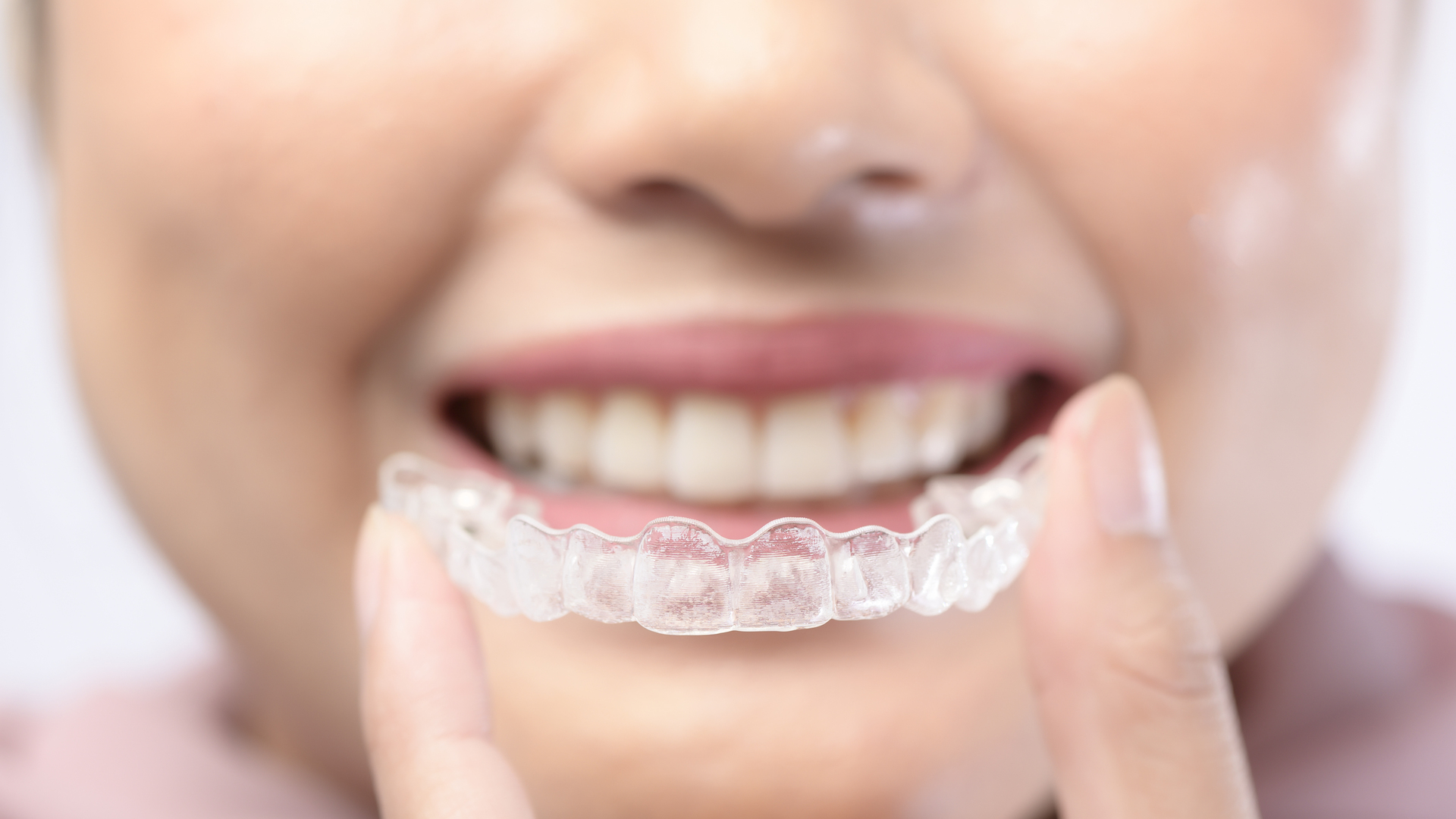
Imagine trying to steer a ship across the ocean by making one giant turn. It would be chaotic, inaccurate, and likely unsuccessful. Instead, ships reach their destination through hundreds of small course corrections made over time.
Invisalign works in much the same way.
Rather than moving teeth dramatically all at once, Invisalign uses a carefully planned sequence of small adjustments. Each aligner makes a tiny correction, gradually guiding teeth toward their intended positions. The changes may seem subtle from week to week, but over time they can produce a significant transformation.
As clear aligners continue to grow in popularity among adults and teenagers, many people ask the same question: how does Invisalign actually work?
The answer involves a combination of digital technology, customised treatment planning, and the body's natural ability to adapt to gentle pressure.
Invisalign is a clear aligner system used to straighten teeth and improve bite alignment without traditional metal brackets and wires.
Instead of fixed braces, patients wear a series of removable transparent trays that fit closely over the teeth. Each aligner is designed specifically for the individual patient and forms part of a larger treatment sequence.
The aligners are manufactured from a clear thermoplastic material designed to be durable, comfortable, and discreet. Because they are removable, patients can take them out for eating, drinking, brushing, and flossing.
This flexibility is one of the reasons Invisalign has become a popular alternative to conventional braces.
The fundamental principle behind Invisalign is surprisingly simple.
Each aligner is slightly different from the one before it. When a new aligner is inserted, it does not fit perfectly because it has been designed around the next stage of tooth movement rather than the current tooth position.
This creates gentle pressure on specific teeth.
That pressure triggers a biological response within the tissues that support the teeth. Over time, the surrounding bone and ligament structures adapt, allowing the teeth to gradually shift into their new positions.
Once the teeth have moved enough to match the current aligner, the patient switches to the next aligner in the sequence, and the process repeats.
Dozens of these small adjustments can ultimately create significant changes in tooth alignment.
Modern Invisalign treatment typically begins with digital imaging rather than traditional dental impressions.
Using advanced intraoral scanners, dentists create a highly detailed three-dimensional model of the patient's teeth and bite.
These digital scans allow clinicians to assess:
The digital model is then used to create a customised treatment plan that maps the planned movement of each tooth from its current position to its intended final position.
This planning stage is one of the reasons Invisalign treatment can be highly personalised.
Rather than relying on a one-size-fits-all approach, every aligner is manufactured specifically for the individual patient.
After the treatment plan has been approved, the aligners are manufactured using advanced digital production methods.
The process combines:
Each aligner is designed to perform a specific stage of treatment.
Patients typically receive several aligners at a time and progress through them according to the treatment schedule recommended by their dentist or orthodontist.
Because every aligner is created from the digital treatment plan, each stage builds upon the previous one.
One of the most common Invisalign questions concerns aligner changes.
Most patients wear each aligner for approximately two weeks before switching to the next one, although treatment schedules may vary depending on the case.
The reason is simple: teeth need time to respond to the pressure being applied.
Moving too quickly could place excessive stress on supporting tissues, while moving too slowly may unnecessarily extend treatment time.
The two-week interval gives the body time to adapt before the next stage begins.
This gradual progression helps maintain predictable tooth movement throughout treatment.
Another common question involves wear time.
Most Invisalign providers recommend wearing aligners for approximately 20-22 hours per day.
Many patients initially underestimate how important this requirement is.
The aligners can only move teeth while they are actually being worn. If they spend long periods out of the mouth, treatment effectiveness may decrease, and progress can slow.
Think of it like exercising. Going to the gym once every few weeks will not deliver meaningful results. Consistency matters.
The same principle applies to Invisalign.
Patients who wear their aligners as instructed are generally more likely to remain on schedule and achieve the intended outcome.
Some Invisalign patients require small attachments to help guide more complex tooth movements.
Attachments are tiny tooth-coloured shapes temporarily bonded to selected teeth.
Although they are usually subtle, they can sometimes be visible at close range.
These attachments act as additional grip points for the aligners and allow greater control over specific movements.
For example, attachments may assist with:
Not every patient needs attachments, but they play an important role in expanding the range of cases Invisalign can treat.
Many patients expect Invisalign to be painful.
In reality, most people describe the sensation as pressure rather than pain.
When a new aligner is inserted, it may feel tight for the first day or two. This is usually a sign that the aligner is actively working.
The sensation often decreases as the teeth begin adapting to the new position.
Patients may notice:
These experiences are generally considered normal parts of treatment.
Invisalign is often associated with cosmetic improvements, but treatment can address a wide range of orthodontic concerns.
Depending on the individual case, Invisalign may be used to treat:
When teeth overlap due to insufficient space, cleaning becomes more difficult, and oral hygiene can suffer.
Excess spacing can affect appearance and sometimes influence bite function.
An overbite occurs when the upper teeth excessively overlap the lower teeth.
An underbite occurs when the lower teeth extend beyond the upper teeth.
Crossbites involve incorrect positioning between upper and lower teeth.
An open bite occurs when certain teeth do not meet properly when the mouth closes.
Treatment suitability varies from patient to patient, which is why professional assessment remains essential.
One of the most frequently searched questions is: How long does Invisalign take?
Unfortunately, there is no universal answer.
Treatment duration depends on factors such as:
Mild cases may require fewer aligners, while more complex orthodontic problems may involve longer treatment plans.
The most important factor patients can control is compliance with wearing their aligners.
Straightening teeth is only part of the process.
Once treatment is complete, retainers are usually recommended to help maintain results.
Teeth naturally tend to drift over time. Retainers help prevent unwanted movement and protect the investment patients have made in their treatment.
Without retention, even successfully aligned teeth may gradually begin shifting.
Many dental practices now use advanced digital workflows to support Invisalign treatment planning.
According to the Nottingham experts at Arnold Dental & Implant Centre, digital scanning technology and customised treatment planning are central to how Invisalign works — allowing detailed models of a patient's teeth to be created and treatment to be fully mapped before any aligners are manufactured.
The growing popularity of clear aligners reflects a broader shift toward personalised, technology-driven dental care.
Invisalign may appear simple on the surface, but the treatment process combines sophisticated digital planning, customised manufacturing, and carefully controlled tooth movement.
The clear aligners themselves are only one part of the system. Behind each tray is a detailed treatment plan designed around gradual, predictable changes over time.
For patients considering a discreet alternative to traditional braces, understanding how the process works removes much of the uncertainty. At its core, Invisalign relies on countless small adjustments — each one a step closer to a healthier, better-aligned smile.


