Heavy Texas rain can leave your yard flooded and your foundation at risk. Here’s how French drains work, what they cost, and why local contractors say they’re one of the most effective solutions for long-term drainage problems.
If you live in Texas, you know how quickly a backyard can turn into a shallow pond after a storm. The culprit is often clay soil, which doesn't absorb water the way sandy or loamy soil does. When inches of rain fall in just a few hours, water has nowhere to go. The result: standing water, muddy patches, and, over time, structural risks.
Pooling water near a home doesn't just create an eyesore. It seeps into foundations, accelerates erosion, and can lead to repair bills running into the thousands. Add in the damage from aggressive tree roots — which crack driveways, plumbing, and even foundations in their search for water — and drainage becomes more than a landscaping concern. It's a major property risk.
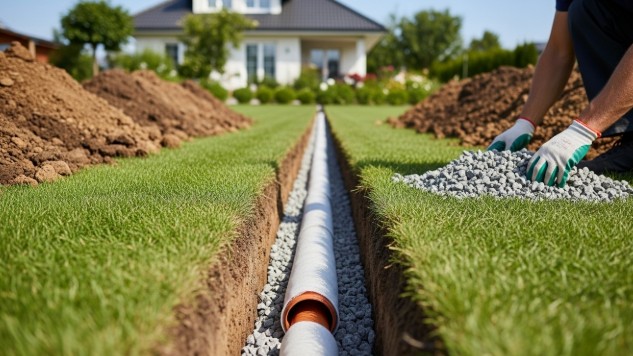
One of the most reliable solutions for yard flooding is the French drain. At its core, it's a trench filled with gravel or rock that contains a perforated pipe. Water flows into the pipe through small openings, then gets redirected away from the home or yard.
A surrounding layer of geotextile fabric keeps soil from clogging the pipe and prolongs the system's lifespan. "Think of it like an underground gutter," professional contractors at League City Drainage & Irrigation explain. "Quietly moving excess water away before it has the chance to pool."
Research shows French drains can cut waterlogging and erosion by up to 50% in certain soil conditions (Farmonaut, 2025). Effectiveness depends on local factors such as soil permeability and groundwater levels (FDOT, 2024).
For homeowners weighing the investment, installation costs in Texas generally range between $25 and $50 per linear foot. The final price depends on yard size, soil type, and the complexity of the system.
Costs typically include trenching, pipe and gravel materials, and labor. Additional expenses may arise if landscaping needs restoration afterward, or if the yard requires complex grading. Local contractors also recommend adding geotextile fabric to prevent clogging — a step that ensures long-term system performance.
Because many Texas properties sit on clay soil, French drains are often customized to redirect water flow based on specific slopes and layouts. Professionals stress that no two installations look exactly the same as designs should match the property's water flow patterns to be effective.
The benefits extend beyond keeping shoes dry after a storm. French drains help:
Tree root barriers can also play a role. These protective systems redirect root growth away from foundations, driveways, and underground utility lines while allowing trees to remain healthy. League City Drainage & Irrigation explains that root barrier installations can be paired with drainage systems for comprehensive protection.
"Property owners face significant costs when drainage issues weaken foundations or cause flooding," a specialist at the Texas-based company explains. "The key is identifying the root cause and implementing a solution that prevents the problem from coming back."
Well-designed French drains protect homes and support sustainable water management. When paired with controlled drainage practices, they can reduce strain on local ecosystems while keeping yards healthier.
These systems remain one of the most effective defenses against flooding in Texas yards, especially where clay soils and heavy rains are the norm. Costs vary, but the investment can save homeowners thousands in avoided repairs.
If you're considering a French drain, consulting with experienced local contractors — such as League City Drainage & Irrigation — ensures the design matches your property's conditions and delivers lasting results.


