Most companies are deploying AI wrong. They automate random tasks and wonder why productivity barely budges. The real question isn’t whether to use AI employees, it’s knowing exactly which work belongs to machines versus humans. Organizations that figure this out are outperforming competitors by 44%.
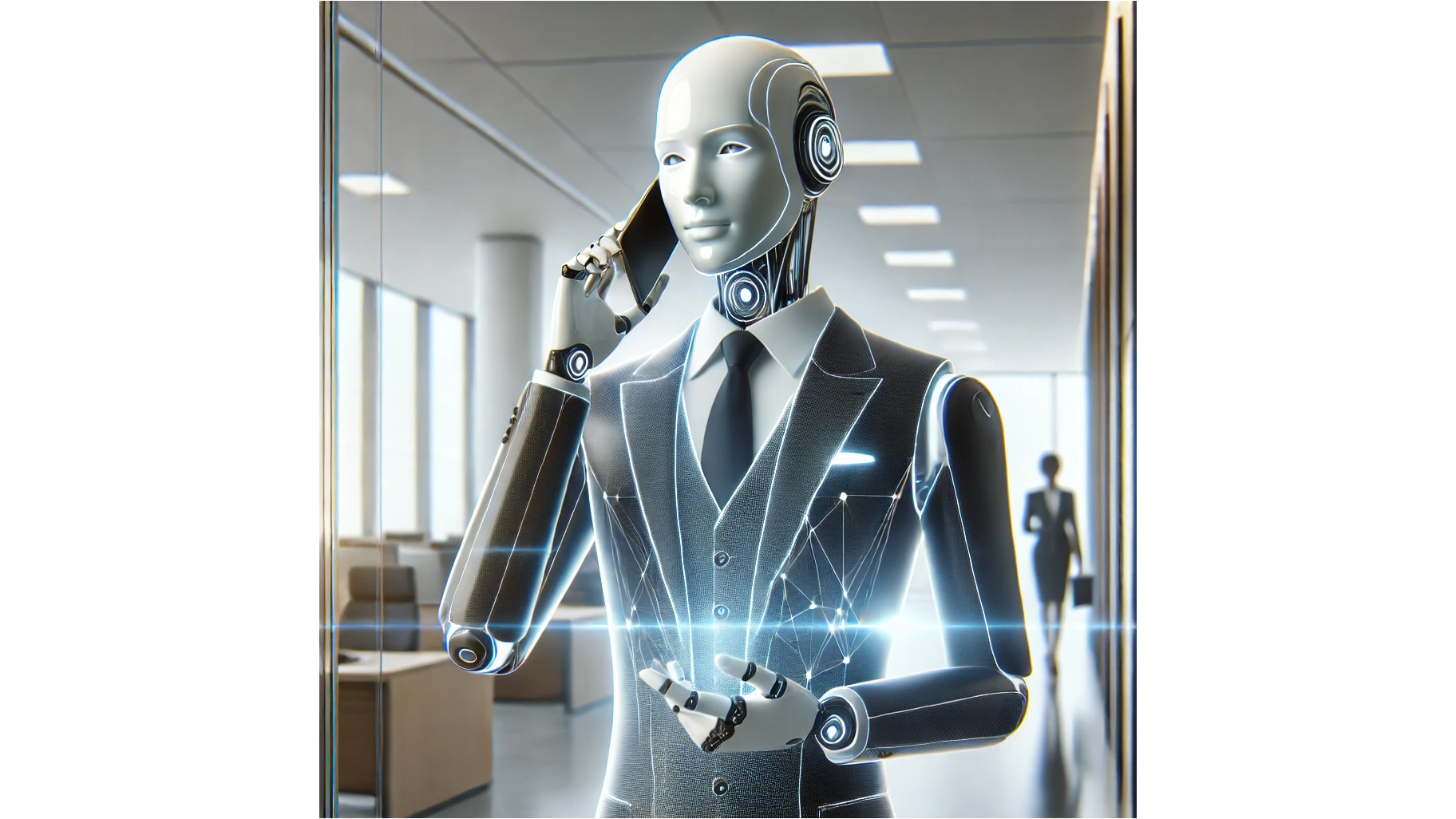
The conversation about AI in the workplace has moved well past "is it coming?" - it's already here. But knowing AI exists and knowing how to actually divide work between humans and machines are two very different things. That gap is where most organizations lose ground.
Research consistently shows that companies integrating AI and human collaboration effectively can achieve significant productivity gains - but those gains rarely appear where leadership first expects them.
Rather than wholesale job replacement, measurable wins tend to emerge at the task level: fewer hours spent on data entry, faster report generation, quicker first-response times in customer service. The MIT Sloan Management Review and BCG found that organizations drawing on multiple types of interaction and feedback between humans and AI are six times more likely to report significant performance improvements compared to those treating AI as a standalone tool. The differentiator isn't the technology itself - it's how deliberately the work gets divided.
The term "AI employee" gets thrown around loosely. Pinning down what it actually means is the first step toward using these systems well.
There's a meaningful difference between AI assistants and autonomous AI agents, and conflating the two leads to misplaced expectations.
AI assistants - tools embedded in productivity software - respond to prompts, summarize documents, draft communications, and surface data on request. They augment a human's workflow but wait to be asked. Autonomous agents, by contrast, execute multi-step processes independently, interact with external systems, and can operate with minimal human oversight once deployed. They don't wait for direction on every step - they pursue a defined goal.
IBM describes agentic AI as systems that "call on external data sources and retain memory over time," allowing them to improve performance continuously. That self-improving loop is what separates a sophisticated chatbot from a true AI employee.
AI agents are no longer confined to tech companies running experimental pilots. Across industries, they're handling real workloads:
These agents are purpose-built for specific business functions - each designed around a defined set of tasks rather than a generic AI layer dropped onto existing workflows.
AI's natural home is high-volume, rule-bound, data-intensive work - tasks where speed and consistency matter more than contextual judgment, and where human attention is genuinely wasted.
Effective task allocation for AI typically includes:
AI adoption is spreading well beyond any single department. Marketing teams use it for audience segmentation and campaign personalization; finance teams apply it to real-time spend analysis; HR uses it for training recommendations and retention risk scoring; and operations teams rely on it for predictive maintenance and supply chain optimization. The World Economic Forum's Future of Jobs Report 2023 estimates 75% of companies will adopt AI, machine learning, or big data analytics by 2027 - making cross-departmental AI allocation a near-universal planning priority.
There's a category of work AI cannot reliably own - and misassigning it creates real risk. Decisions involving ambiguous tradeoffs, stakeholder relationships, ethical exposure, or novel circumstances still require human reasoning. AI systems trained on historical data can perpetuate past biases and optimize confidently in the wrong direction when underlying data is flawed or incomplete.
Hiring is a clear example: AI can efficiently screen hundreds of applications, but if past hiring patterns contained bias, the model learns and repeats it. Human review of final decisions isn't bureaucratic friction - it's a necessary check.
IBM frames this transition clearly: workers are shifting "from creation to curation and direction." Human contributors increasingly spend less time producing from scratch and more time reviewing, refining, and steering AI-generated outputs.
This shift moves human contribution up the value chain. A marketer who once spent a day drafting campaign copy now guides an AI through multiple iterations in an hour, then applies brand judgment and strategic nuance the model can't replicate. The output improves; the human's role becomes more consequential.
Consider how a financial institution might integrate AI into its fraud detection workflow. The AI handles high-volume pattern recognition - scanning millions of transactions in real time and flagging anomalies that match known fraud signatures. Human analysts are freed from that first-pass triage entirely.
In well-documented deployments of this type, false positives drop and overall efficiency increases. Analysts don't disappear - they shift to investigating complex, ambiguous cases that require contextual judgment the AI can't provide. The AI filters the noise; the humans handle the hard calls. Neither could achieve this outcome alone.
Here's the friction point most business leaders encounter: an AI tool delivers genuine efficiency gains on a specific task, but the organization-wide productivity needle barely moves. Task-level automation doesn't automatically redesign the workflow around it. If AI speeds up report generation but the downstream approval process remains unchanged, the bottleneck just shifts.
Unlocking broader gains requires rethinking the entire workflow, not just swapping in AI for one step. IBM's Institute for Business Value found that organizations deploying AI at an operational level - rather than a skills-based level - outperformed peers by 44% on metrics including revenue growth and employee retention.
AI outputs are only as reliable as the data they're trained on. Incomplete, outdated, or biased datasets produce confident-sounding but wrong results. As AI becomes embedded in daily decisions, overreliance becomes a genuine organizational hazard - teams stop questioning AI outputs, and errors compound quietly over time. The mitigation is straightforward: maintain human review on consequential decisions, audit AI outputs regularly, and build a culture where questioning AI-generated recommendations is encouraged, not treated as friction.
Stanford's 2026 AI Index confirmed that AI-related skills are appearing more frequently in job postings - and demand is accelerating faster than most training programs are moving. Two capabilities are rising to the top of that list:
These aren't purely technical skills - they're operational ones, as fundamental to modern knowledge work as knowing how to run a spreadsheet was a generation ago. Organizations that invest in broad AI literacy across roles - not just in technical teams - see faster adoption, fewer errors, and stronger returns. IBM research shows that 67% of CEOs say corporate differentiation increasingly depends on having the right expertise in the right positions.
The businesses pulling ahead aren't necessarily the ones with the most AI tools - they're the ones with the clearest thinking about how to divide the work. That means identifying which tasks genuinely benefit from automation, protecting the human judgment layer where it matters most, investing in workforce readiness, and redesigning workflows rather than simply overlaying AI on existing ones.
This is why businesses of all sizes are seeking support for how to best adapt AI for their company. The World Economic Forum estimates that the skills required to do work will change by 39% to 44% over the next five years. That's an active planning horizon, not a distant forecast. The organizations treating human-AI allocation as a strategic discipline today are the ones that will hold a durable advantage tomorrow.


