If you’ve ever been told you’re “too sensitive” and have ADHD, there’s a neurological reason why a delayed text or neutral facial expression can feel like emotional devastation. Up to 70% of ADHD adults experience this—and it’s wildly misdiagnosed.
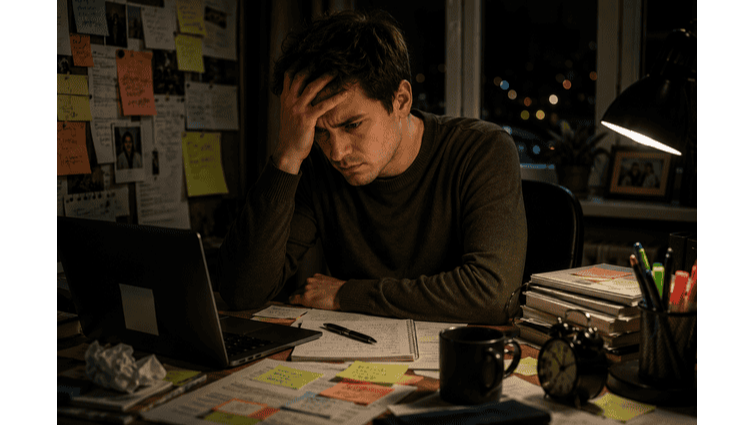
For anyone with ADHD who has ever been told they're "too sensitive" or "overreacting," there is a good chance that Rejection Sensitive Dysphoria is part of the picture. It's one of the most disruptive — and least talked about — features of ADHD in adult life. What follows is a clear, honest look at what RSD actually is, what sets it off, how it quietly damages relationships, and which therapy approaches genuinely help.
Most people have heard of ADHD. Far fewer have heard of Rejection Sensitive Dysphoria — and yet for the majority of adults with ADHD, it shapes daily life in profound ways. Research suggests that up to 70% of adults with ADHD experience heightened emotional sensitivity and rejection-related pain, with clinical estimates indicating that 99% report greater-than-average sensitivity to criticism.
RSD is not a mood disorder. It is not a personality quirk. It is a neurologically driven response — a core feature of ADHD — rooted in the brain's impaired ability to regulate emotion. When the emotional "braking system" of the brain is slower to engage, feelings arrive at full intensity before there is any chance to modulate them. The result is pain that feels completely disproportionate to what caused it, but is entirely real to the person experiencing it.
Understanding this distinction matters enormously — both for people with ADHD and for those who love or live alongside them. ADHD therapy in Brighton & Hove, as offered at The Hove Counselling Practice, often begins exactly here: with the recognition that what looks like oversensitivity on the outside is a measurable neurological experience on the inside.
Rejection Sensitive Dysphoria is characterised by extreme emotional sensitivity and pain triggered by the perception of being rejected, criticised, or having failed — even when that perception does not reflect reality. The operative word is perception. RSD does not require an actual rejection to occur. A facial expression, a change in tone, or a silence where a response was expected can be enough.
People who experience RSD often describe it as an emotional sucker-punch — sudden, overwhelming, and completely out of proportion to what happened. It can manifest as:
RSD tends to be short-lived but extremely intense. Unlike depression, which is sustained, RSD episodes can resolve within hours — which is part of what makes it so confusing both to experience and to witness.
The ADHD brain processes emotion differently. Neurological research points to dysfunction in a striato-amygdalo-medial prefrontal cortical network — the circuit responsible for identifying emotional stimuli and applying the brakes before a reaction takes hold. In practical terms, this means the ADHD brain skips the critical fraction of a second between feeling an emotion and acting on it.
This is sometimes described as a missing "stopgap" — the pause that allows a neurotypical brain to register, assess, and moderate its emotional response. Without it, rejection-related feelings hit at full force, immediately. This is not wilful behaviour. It is not immaturity. It is a structural difference in how the brain handles emotional input, and it is present across all three ADHD subtypes.
Because this sensitivity has often been present since childhood, many adults with ADHD have simply assumed it is "just how they are" — never connecting it to ADHD at all. That assumption, left unchallenged, tends to make things significantly worse over time.
The intensity of RSD-driven mood shifts is genuinely striking. Clinicians unfamiliar with ADHD's emotional dimension often interpret the rapid cycling between baseline and emotional overwhelm as evidence of rapid-cycling bipolar disorder or borderline personality disorder (BPD). The surface-level presentations do overlap: dramatic emotional episodes, impulsive responses, periods of withdrawal.
The key difference lies in the trigger and the duration. RSD episodes are typically tied to a specific perceived rejection or criticism, and they tend to resolve relatively quickly — often within hours. Bipolar episodes, by contrast, are not triggered by external events in the same direct way, and last considerably longer. BPD, while sharing emotional intensity, carries a different pattern of relational and identity disturbance.
Misdiagnosis is not just a labelling problem — it leads to mismatched treatment. Mood stabilisers and antipsychotics prescribed for bipolar disorder, for example, do very little for RSD. Years can be lost in the wrong therapeutic direction before the correct picture emerges.
RSD is not always triggered by dramatic events. In fact, the triggers that do the most quiet damage are often the ones that would barely register for someone without ADHD.
Consider these everyday moments:
None of these situations involve an actual rejection. But the ADHD brain — without the neurological stopgap to interrupt and reassess — responds to the perception as though it were confirmed fact. This is the core cruelty of RSD: the suffering is entirely genuine, but the cause is a misreading of neutral or ambiguous information.
Once the RSD response is triggered, there are typically two directions it travels: inward or outward. Some people collapse inward — retreating into shame, self-criticism, and sudden low mood. Others explode outward — reacting with defensive anger that appears to come from nowhere. Both responses are attempts to manage pain that arrived too fast and too hard to process calmly.
The spiral can take hold very quickly. A perceived slight triggers shame or anger, which leads to a disproportionate reaction, which then triggers guilt about the reaction itself — and another loop of self-criticism begins. For the people on the receiving end of these responses, the experience is deeply confusing. They did not intend to hurt anyone. They often do not know what they did. And yet the emotional fallout can last for hours.
RSD's impact on relationships is one of the least visible, yet most corrosive, dimensions of ADHD. It does not announce itself. It accumulates — layer by layer — until both partners are operating from a place of chronic low-grade anxiety about the next emotional eruption, or the next inexplicable withdrawal.
The relational pattern tends to follow a recognisable loop. The ADHD partner perceives a rejection — a sigh, a quiet response, a moment of inattention. Their emotional pain spikes immediately and intensely. They react: withdrawing, becoming defensive, or expressing hurt in a way that seems disproportionate. The non-ADHD partner — who may have simply been tired, distracted, or saying something entirely benign — is suddenly faced with an emotional crisis they don't understand.
Over time, the non-ADHD partner begins to walk on eggshells. They over-explain innocent comments, soften their phrasing, avoid expressing their own needs for fear of triggering a reaction. This protective behaviour is understandable, but it creates a new problem: the non-ADHD partner starts to feel invisible and silenced, while the ADHD partner, sensing the distance, finds further evidence of rejection. "Over months and years the relationship hardens around the loop rather than the love."
RSD does not tend to plateau or self-resolve. Without treatment, episodes typically become more frequent, triggers more sensitive, and the relational fallout more entrenched. Each cycle of perceived rejection and emotional shutdown deposits a layer of protective distance that both partners build, unconsciously, to avoid being hurt again.
The ADHD partner may begin avoiding situations where rejection feels possible: turning down invitations, withdrawing from friendships, avoiding professional risks. The cumulative effect on self-esteem is significant. Without intervention, what began as episodic emotional intensity can quietly become a life arranged around the avoidance of pain — smaller, safer, and far less connected.
The encouraging news is that RSD responds well to targeted therapeutic approaches. No single therapy does everything, but three evidence-based modalities — DBT, EFT, and CBT — each address a distinct layer of the RSD experience. Used together by a skilled integrative therapist, they can produce meaningful, lasting change.
Dialectical Behaviour Therapy (DBT) was originally developed for borderline personality disorder, but its core skill set maps directly onto the challenges of ADHD emotional dysregulation. DBT teaches four foundational skill areas: mindfulness, emotional regulation, distress tolerance, and interpersonal effectiveness.
For RSD specifically, the distress tolerance and emotional regulation modules are particularly valuable. DBT introduces techniques such as:
In essence, DBT builds the stopgap that the ADHD brain lacks — not by suppressing emotion, but by creating a learnable pause between feeling and acting.
Emotionally Focused Therapy (EFT) works at a deeper level than skills-based approaches. Rather than focusing on what to do differently in the moment, EFT addresses the underlying attachment needs that contribute to the RSD cycle. The core therapeutic insight is that withdrawal, anger, and emotional shutdown are not character failures — they are attachment responses: attempts to protect oneself from a threat that feels very real.
In the context of RSD, EFT helps individuals and couples understand the emotional logic of their reactions. When the ADHD partner shuts down after a perceived rejection, that shutdown is not indifference — it is the response of someone whose nervous system has signalled danger. EFT creates a safe space to articulate those underlying needs and, where possible, to reach toward the other person rather than away from them. Over time, this work can shift how connection and perceived threat are processed within the relationship.
Cognitive Behavioural Therapy (CBT) targets the thinking patterns that sit between a trigger and a reaction. For RSD, this is particularly relevant because a great deal of the suffering is generated not by the event itself, but by the story the brain tells about it — instantly, automatically, and with complete conviction.
CBT provides tools to identify and challenge these automatic interpretations. A neutral text response does not mean contempt. A change in tone does not confirm rejection. Through structured techniques, CBT helps to slow the interpretive process down, introduce alternative readings of ambiguous situations, and reduce the negative self-talk that amplifies RSD pain. Research supports CBT's effectiveness for adults with ADHD in reducing core symptoms and supporting improvements in self-esteem.
Finding a therapist who genuinely understands RSD — not just ADHD broadly — makes a significant practical difference. A therapist who does not recognise RSD may inadvertently reinforce the idea that the person is simply "too emotional," which deepens shame rather than resolving it. The most effective ADHD therapists approach emotional dysregulation as a neurological feature, not a behavioural failing — and build their treatment approach accordingly.
Claire Sainsbury BSc MA MBACP (Accred), lead therapist at The Hove Counselling Practice, brings an unusually broad depth of clinical training to this specific area. Her qualifications span several of the modalities most directly relevant to RSD:
The practice is based at 126 Shirley Street, Hove, BN3 3WG, with sessions available Monday to Friday between 10am and 9.30pm — including evenings, which makes it accessible for people who cannot attend during working hours. Both in-person and online sessions are offered, with online therapy extending reach across Sussex.
What distinguishes the approach at The Hove Counselling Practice is the integration of these modalities. Rather than offering DBT or EFT or CBT in isolation, Claire draws on all three simultaneously — matching the therapeutic combination to the specific shape of each person's difficulties. For RSD, which operates across emotional, cognitive, and relational dimensions at once, this integrative depth matters.
There is something genuinely significant that happens when a person first hears the term Rejection Sensitive Dysphoria and recognises themselves in it. For many adults with ADHD, it is the first time a lifetime of emotional experiences — of being told they overreact, of losing relationships they valued, of arranging their lives around the avoidance of perceived rejection — has been given a coherent, neurological explanation.
That recognition does not fix everything. But it reframes everything. The pain was not a character flaw. The reactions were not evidence of being fundamentally difficult or unlovable. They were the predictable output of a brain wired for intensity, operating without the emotional regulation tools that therapy can provide.
RSD is treatable. The combination of DBT's practical skills, EFT's attachment-focused work, and CBT's cognitive reframing offers a genuinely thorough approach — not to eliminate emotion, but to bring it within manageable reach. The first step is always the same: naming what is actually happening.
To find out more about specialist ADHD therapy and support for Rejection Sensitive Dysphoria in the Brighton & Hove area, The Hove Counselling Practice offers expert, integrative therapy for individuals and couples working through the real challenges of ADHD in everyday life.


