Organizations facing space constraints can dramatically increase their storage capacity without costly expansions by implementing mobile storage technology that eliminates wasted aisle space and maximizes existing floor areas.
Your organization is bursting at the seams with files, inventory, or equipment, but expanding your facility would cost hundreds of thousands of dollars. What if there was a way to triple your storage capacity using the exact same floor space you already have?
Many facility managers face this exact dilemma. They see rows of traditional shelving units separated by permanent aisles and assume they're maximizing their space efficiently. In reality, up to 50% of their floor area is dedicated to walkways that only serve one purpose: providing access to storage units.
Traditional static shelving creates a fundamental inefficiency. Every storage unit requires its own dedicated aisle for access, whether someone needs to reach that particular section or not. This means half your valuable floor space sits empty most of the time, generating zero storage value while still costing you rent, utilities, and maintenance.
The problem compounds in facilities where storage needs grow over time. Organizations often resort to expensive solutions like leasing additional space, constructing new buildings, or renting off-site storage facilities. These approaches solve the immediate problem but create ongoing costs that strain budgets for years.
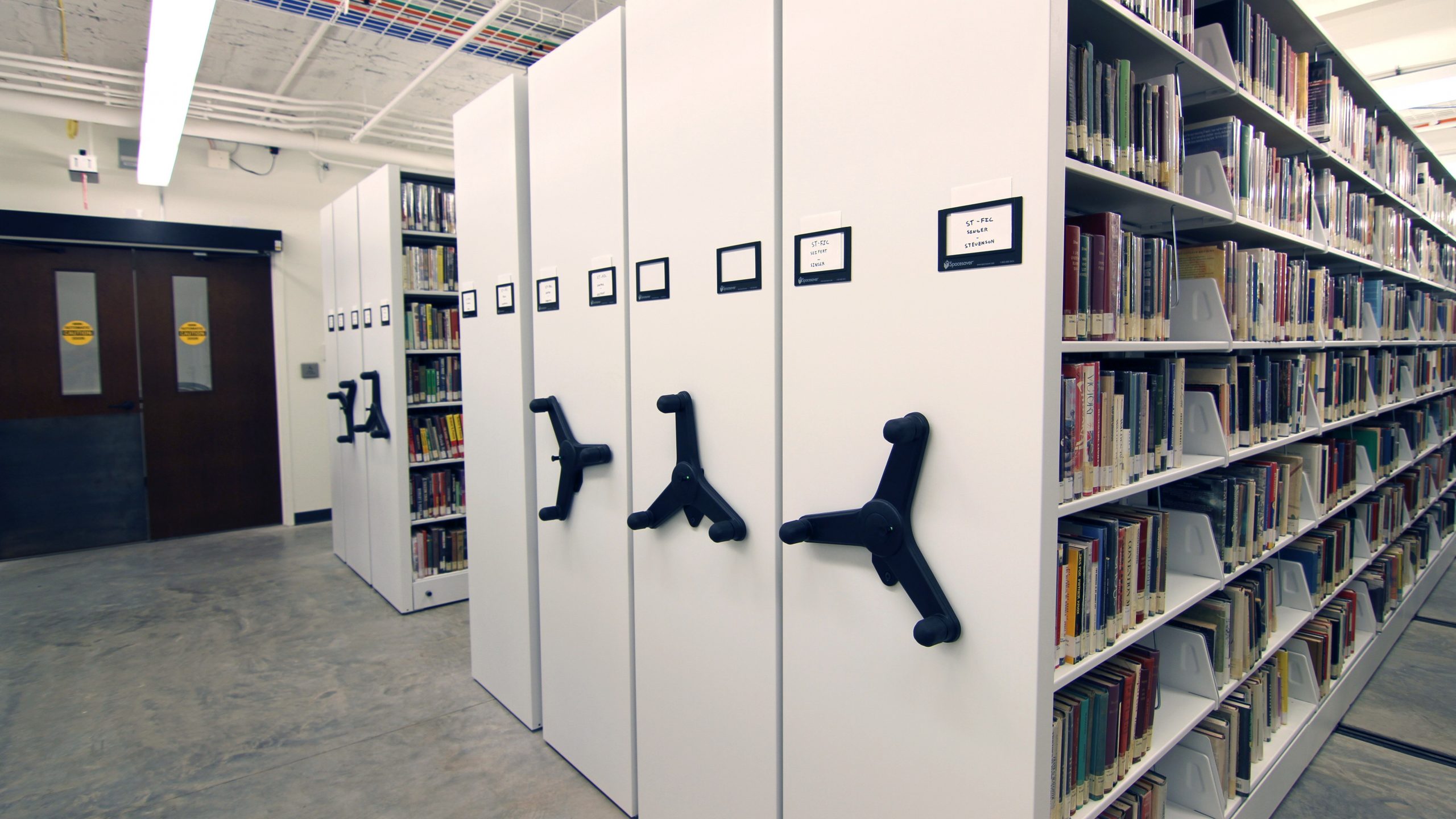
High-density mobile storage systems (also called compact or movable storage) work on a simple but powerful principle: eliminate permanent aisles by making storage units movable. Instead of fixed shelving with dedicated walkways, storage units are mounted on wheeled carriages that travel along floor rails. Users can create an aisle wherever they need access while keeping all other storage units compressed together.
Here's how the space math works out:
While the concept seems straightforward, proper implementation requires expertise in space planning, load calculations, and safety considerations.
Professional installers handle critical details like floor preparation, rail alignment, and system calibration. They also provide training to ensure staff can operate systems safely and efficiently from day one.
Educational institutions use mobile storage for library collections, allowing them to house more books in existing spaces or free up areas for student collaboration zones. Healthcare facilities store medical records and supplies more efficiently, keeping critical items accessible while maximizing valuable clinical space. Corporate offices compress filing systems to create more workspace for growing teams.
Manufacturing and distribution operations particularly benefit from mobile storage's ability to organize inventory and parts in compact areas. The space savings often allow companies to avoid warehouse expansion projects that would disrupt operations and require significant capital investment.
Ready to explore how mobile storage could transform your space efficiency? A professional space assessment can reveal exactly how much additional capacity your facility could gain without expanding your footprint. Most storage specialists offer complimentary evaluations that provide specific recommendations based on your unique requirements and constraints.


