While less than 20% of institutional investors are ready for AI adoption, a new production-tracking token just launched with custody infrastructure processing $14 trillion in transactions. Here’s how it measures AI’s actual impact on global manufacturing—and why traditional indices are missing the multiplier effect.
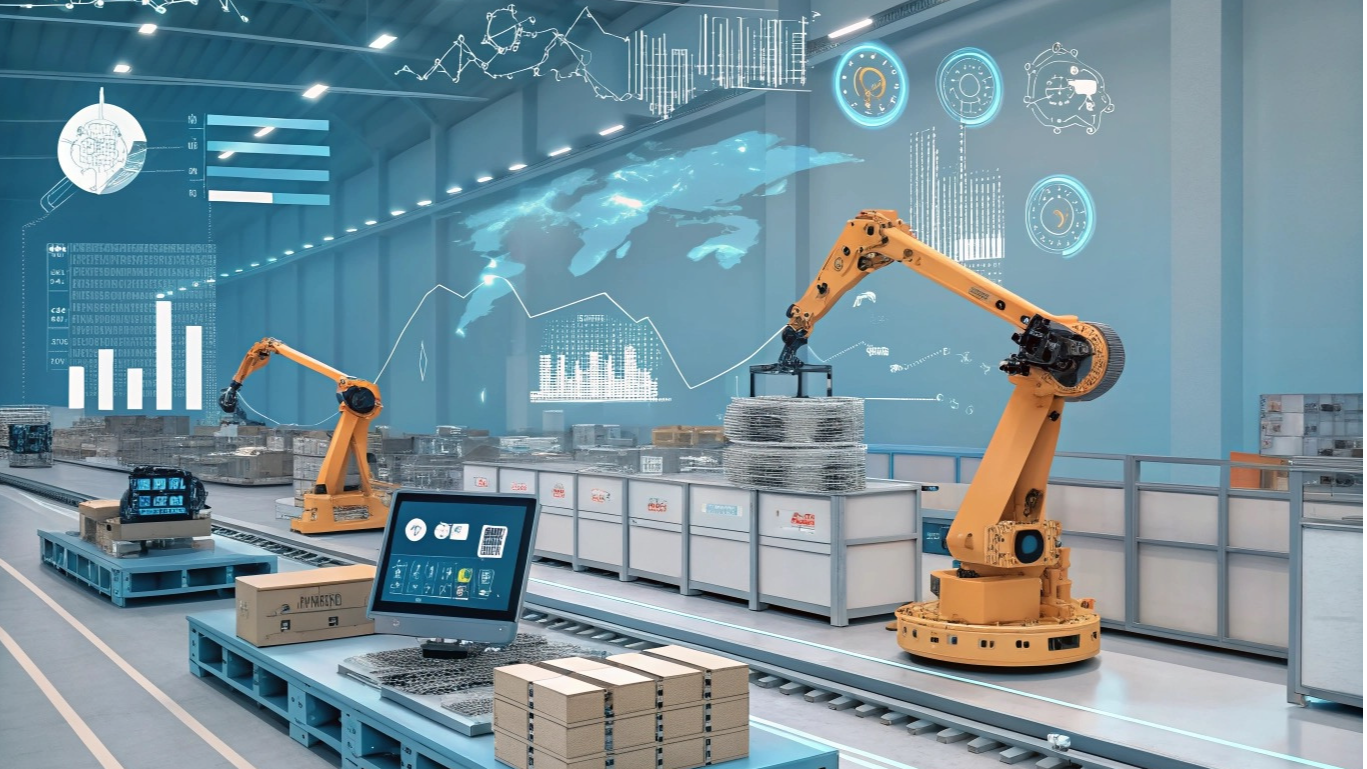
The digital asset landscape gained a new institutional instrument when Global Production Coin LLC launched GPC:AI, an ERC-20 token designed to convert AI-enhanced global production volumes into a programmable digital macro instrument. Unlike traditional digital assets, GPC:AI functions as a production-correlated tracking token that gives institutional investors direct exposure to AI-driven manufacturing efficiency multipliers.
The token operates as the AI-enhanced layer of the Phoenom Coin Group, a family of production-correlated digital macro instruments. Rather than functioning as a security, stablecoin, or yield-bearing instrument, GPC:AI serves as a general-purpose utility token structured specifically for institutional macro exposure to AI production dynamics. Global Production Coin LLC designed the token to address what the company identifies as a structural gap in institutional macro toolkits.
Traditional instruments like equity indices, commodity baskets, and sovereign debt fail to capture the AI-driven efficiency multiplier being applied to global production processes. The IMF's April 2026 World Economic Outlook projects global GDP growth of 3.1% for 2026, with AI-intensive sectors accounting for a disproportionate share of that expansion. Research from the St. Louis Federal Reserve estimates that AI contributed approximately 0.97 percentage points to U.S. GDP growth across the first three quarters of 2025.
The Global Production Volatility Index (GPVI) aggregates five weighted components designed to capture AI's impact on manufacturing and industrial output. Published monthly, all components are normalized against a GPC Global Baseline established as of January 1, 2024, providing consistent measurement standards across global markets.
The GPVI incorporates Manufacturing PMI Composite data alongside the Industrial Output Index to track traditional production metrics. These components provide the foundational layer for measuring global manufacturing activity, establishing baseline production volumes before AI enhancement factors are applied. Manufacturing PMI data captures purchasing managers' sentiment and forward-looking production indicators across major economies.
The AI Productivity Multiplier component quantifies efficiency gains from artificial intelligence implementation across manufacturing processes. This metric works in conjunction with Semiconductor Throughput measurements, recognizing that chip production capacity directly correlates with AI deployment capabilities. Industries with higher AI exposure are experiencing faster productivity growth, job creation, and wage increases, particularly where AI complements human workers in professional workflows.
Energy-Production Correlation forms the fifth component, tracking energy consumption patterns that indicate AI-enhanced manufacturing intensity. This framework recognizes that AI-driven production processes often exhibit different energy signatures compared to traditional manufacturing, providing an additional verification layer for production volume measurements.
The launch addresses critical infrastructure limitations facing institutional investors seeking AI production exposure. Current market instruments struggle to provide direct correlation with AI-enhanced manufacturing output, leaving institutions without appropriate tools for macro positioning around artificial intelligence's economic impact.
Existing equity indices capture stock price movements but fail to isolate AI's productivity contribution to underlying businesses. Commodity indices track raw material prices without accounting for AI-driven efficiency improvements in processing and manufacturing. This measurement gap becomes increasingly problematic as artificial intelligence demonstrably improves manufacturing industry Global Value Chain position by enhancing production efficiency, fostering technological innovation, and reducing trade costs.
Institutional investors face a significant readiness gap in AI adoption, with less than 20% prepared to incorporate AI effectively despite the potential for tenfold ROI across investment returns, operational efficiency, and risk management. This preparation deficit creates substantial market opportunity for instruments that provide AI production exposure without requiring internal AI infrastructure development. AI tools are expected to increase disparities in investor returns, favoring large institutional investors with superior access to high-quality data and advanced AI tools.
GPC:AI's institutional infrastructure uses established digital asset service providers to deliver enterprise-grade security and compliance capabilities. The token's custody and settlement arrangements meet institutional requirements for regulatory compliance and operational risk management.
Institutional placement operates through Axis Velo Ltd, a British Virgin Islands-regulated manager specializing in alternative investment opportunities. All institutional investors undergo KYC/AML reviews and confirmation of qualified investor status in their respective jurisdictions. Axis Velo's algorithmic strategy background provides additional expertise in managing risk-calibrated returns across global time zones.
Custody services use Fireblocks Vault Technology, employing multi-party computation key management and institutional-grade cold storage protocols. Fireblocks connects over 2,400 institutions and has facilitated over $14 trillion in digital asset transactions since inception, providing proven infrastructure for institutional digital asset custody. Settlement operations run through BMO (Bank of Montreal).
Market forecasts indicate explosive growth potential for AI manufacturing applications, creating the economic foundation that supports production-correlated digital instruments. These projections suggest substantial value creation opportunities as AI deployment accelerates across global manufacturing sectors.
Conservative estimates project the global AI manufacturing market growing from $7 billion in 2025 to $35.8 billion by 2030, representing significant economic expansion in AI-driven production capabilities. More aggressive projections suggest the market could reach $155 billion by 2030, driven by accelerating adoption rates and expanding AI applications across manufacturing processes. The digital instrument cluster market, including advanced measurement and control systems, is projected to reach $15.8 billion by 2033, driven by AI and IoT integration for enhanced efficiency and accuracy.
Hyperscalers are making historic capital deployments into AI infrastructure, with global AI infrastructure markets expected to grow to hundreds of billions by 2030, signaling a massive industrial buildout. These infrastructure investments create the foundation for widespread AI manufacturing deployment, supporting the production volume increases that GPC:AI is designed to track. The scale of capital deployment indicates institutional confidence in AI's transformative impact on global production capabilities.
The token represents convergence between established digital asset infrastructure and emerging production economics driven by artificial intelligence. By using proven blockchain technology standards and institutional service providers, GPC:AI creates a bridge between traditional macro investing and AI-enhanced production tracking.
Understanding correlation principles remains fundamental for investors managing risk and maximizing returns in volatile markets, enabling construction of diversified portfolios that account for asset price movements. GPC:AI's production correlation provides institutions with a new tool for portfolio diversification and macro positioning around AI's economic impact. The token sits above GPC:Global in the Phoenom Coin Group's architecture, with GPC:Friction and GPC:Crisis completing the four-instrument risk-factor framework designed for institutional macro exposure.
NAV Fund Services, managing over $45 billion in digital assets provides third-party administration services, ensuring institutional-grade operational standards. Secondary market access for eligible retail participants operates through Uniswap v3, though transactions may be subject to regulatory restrictions depending on jurisdiction and investor qualification status.
For institutional investors seeking exposure to AI-enhanced global production dynamics, Global Production Coin LLC offers detailed information about GPC:AI token mechanics and institutional access requirements. Institutional inquiries at Axis Velo Ltd
Connect with Global Production Coin here:
Telegram | You Tube | TikTok | Pinterest|Spotify
Disclaimer: This content is directed to institutional and qualified investors only and does not constitute investment advice, an offer, or a solicitation to buy or sell any security or token. Legal characterization, distribution controls, transfer restrictions, and jurisdiction-specific treatment depend on applicable law and final transaction documentation. The insights provided here are for informational purposes only.


