Think your home gym needs to sacrifice performance for space? Modern foldable treadmills now pack 4.25 CHP motors and 14 mph speeds into compact designs, but there’s one crucial factor most buyers completely overlook when choosing between folding and traditional models.
Key Takeaways:
The fitness equipment landscape has undergone great change in recent years, with foldable treadmills emerging as serious contenders to their traditional, non-folding counterparts. What was once a compromise between convenience and capability has evolved into a sophisticated category that challenges long-held assumptions about space-saving fitness equipment.
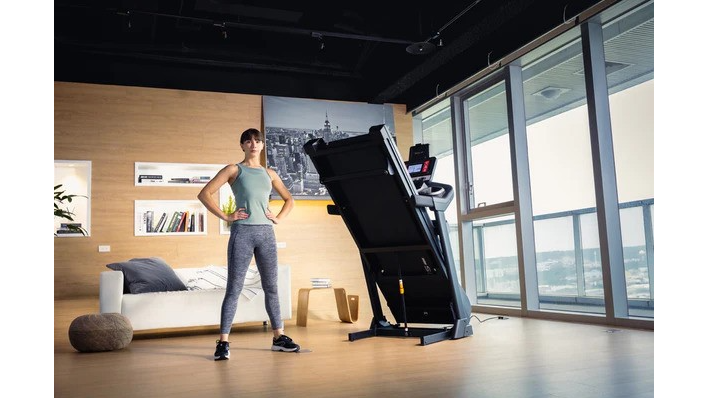
Modern folding treadmills are achieving performance metrics that would have been impossible just a few years ago. The engineering breakthroughs driving this evolution include advanced motor designs that pack more power into compact frames, innovative folding mechanisms that maintain structural integrity, and smart technology integration that rivals premium gym equipment. Several brands, including SOLE Fitness, have been instrumental in developing foldable models that deliver professional-grade performance without compromising on space efficiency.
The most impressive aspect of 2025's foldable treadmill market is how manufacturers have managed to enhance performance while maintaining (and often improving) space efficiency. This achievement stems from three critical technological advances that have redefined what's possible in compact fitness equipment.
The heart of any treadmill's performance lies in its motor, and folding models have made remarkable strides in this area. Contemporary foldable treadmills now feature continuous-duty motors ranging from 3.0 to 4.25 CHP (Continuous Horsepower), putting them on par with many commercial-grade units. These motors utilize advanced cooling systems and efficient power delivery mechanisms that allow them to maintain peak performance even in confined spaces.
The SOLE F85, for example, incorporates a 4.0 CHP motor that delivers consistent power across its entire speed range while fitting into a frame that folds to just 44 inches in length. Such motor technology ensures smooth operation whether users are walking at 1 mph or sprinting at maximum speed, eliminating the performance gaps that once plagued folding models.
One of the most significant compromises in early foldable treadmills was deck size, but modern engineering has largely eliminated this limitation. Today's premium folding models offer running surfaces that match or exceed those found on traditional treadmills, with many featuring decks measuring 20 inches wide by 60 inches long or larger.
Some models, like the SOLE F85, also offer similar generous deck dimensions. This surface area accommodates users of all heights and running styles, ensuring that the folding mechanism doesn't restrict natural movement patterns or compromise workout quality.
Performance parity goes beyond motor power and deck size to include the full range of workout parameters that serious fitness enthusiasts demand. Modern foldable treadmills routinely offer speed ranges from 0.5 to 12+ mph, with some premium models reaching speeds up to 14 mph. Incline capabilities have similarly expanded, with many units providing up to 12% grade simulation and some offering decline settings for training.
These specifications enable everything from gentle rehabilitation walking to high-intensity interval training, making foldable treadmills suitable for users across the entire fitness spectrum. The combination of wide speed ranges and substantial incline options means that workout progression and variety are no longer limited by equipment capabilities.
The feature sets available in 2025's foldable treadmills represent a convergence with traditional models that few could have predicted even two years ago. This parity extends across three crucial categories that define the modern treadmill experience.
Contemporary folding treadmills have embraced digital fitness with enthusiasm, often surpassing traditional models in connectivity options. WiFi integration, Bluetooth compatibility, and app ecosystem support are now standard features rather than premium add-ons.
These smart features completely change the home workout experience by providing the motivation and variety that users might otherwise seek in commercial gyms. The ability to stream entertainment, participate in virtual group runs, or follow personalized training programs makes folding treadmills compelling alternatives to traditional gym memberships.
Programming sophistication has reached new heights in folding treadmills, with many models offering dozens of pre-programmed workouts alongside unlimited customization options. These programs span the full spectrum from beginner-friendly walking routines to advanced interval protocols designed for serious athletes.
The integration of heart rate monitoring, automatic speed and incline adjustments, and progress tracking creates a fitness ecosystem within the folding treadmill platform. Users can set specific goals, monitor their improvement over time, and adapt their workouts based on real-time biometric feedback: capabilities that were once exclusive to high-end gym equipment.
Perhaps the most crucial advancement in folding treadmill technology concerns structural integrity and long-term reliability. Manufacturers have addressed early concerns about folding mechanisms compromising durability through reinforced hinges, upgraded frame materials, and improved engineering tolerances.
Key durability features now standard in quality folding treadmills include continuous-duty motors designed for extended use, reinforced frames capable of supporting at least 300 pounds (with some models exceeding this capacity), multi-layered walking belts that resist wear, and accessible service points for maintenance. These improvements ensure that the convenience of folding doesn't come at the expense of equipment longevity.
Selecting the right foldable treadmill requires understanding how different features align with specific fitness goals and usage patterns. Smart prioritization ensures that the investment delivers maximum value over years of use.
Motor selection should align with intended use patterns and user characteristics. For walking and light jogging by users under 200 pounds, a 2.5-3.0 CHP motor provides adequate power with good longevity. Heavier users or those planning regular running sessions should target 3.5+ CHP motors to ensure smooth operation and extended equipment life.
The continuous horsepower rating matters more than peak horsepower, as it represents sustained performance capability rather than short-burst maximums. Users planning high-intensity interval training or frequent speed changes should prioritize models with higher continuous ratings to avoid motor strain and premature wear.
Structural integrity determines long-term satisfaction with folding treadmill purchases. Key durability indicators include weight capacity ratings (aim for at least 50 pounds above user weight), frame material quality (look for heavy-gauge steel construction), and folding mechanism design (hydraulic assist systems generally outlast manual mechanisms).
Additional durability factors include belt construction (multi-ply designs resist stretching and wear), deck thickness (minimum 1-inch for adequate support), and component accessibility (easy access to belts and motors facilitates maintenance). Warranty coverage often reflects manufacturer confidence in build quality, with premium brands offering lifetime frame coverage and extended parts warranties.
The relationship between storage convenience and performance capability requires careful consideration based on available space and fitness priorities. Ultra-compact folding treadmills may sacrifice motor power or deck size to achieve minimal storage footprints, while performance-oriented models typically require more storage space despite their folding capability.
Measure available storage space carefully, considering both folded dimensions and clearance requirements for safe folding and unfolding. Some models fold to under 10 inches thick but may be 6+ feet tall when stored vertically, while others maintain more moderate dimensions in all directions. The ideal choice balances space constraints with performance requirements without compromising safety or usability.
The evidence overwhelmingly supports the conclusion that 2025's foldable treadmills have achieved genuine performance parity with traditional models in most meaningful categories. Motor power, running surface dimensions, speed ranges, incline capabilities, and feature sets now match or exceed what users expect from non-folding alternatives.
All this marks a fundamental shift in how the fitness equipment industry approaches the space-versus-performance equation. Home fitness enthusiasts no longer need to choose between workout quality and living space functionality, as modern folding treadmills deliver both without meaningful compromise.
The success of this equipment category reflects broader trends in home fitness, where convenience, technology integration, and space efficiency drive purchasing decisions as much as traditional performance metrics. As urban living spaces continue to shrink and home fitness adoption accelerates, foldable treadmills are positioned to capture an increasing share of the residential fitness market.


