Three professors at Newman University are transforming education beyond their classrooms through million-dollar grants, community partnerships, and innovative teaching methods. But the real story lies in how they’re preparing students for challenges that don’t exist yet.
Universities measure success through graduation rates and career placements, but the most profound educational transformations happen when faculty members extend their influence beyond individual classrooms into the broader community. These educators shape not only what students learn, but how they understand their place in the world and their capacity to create meaningful change.
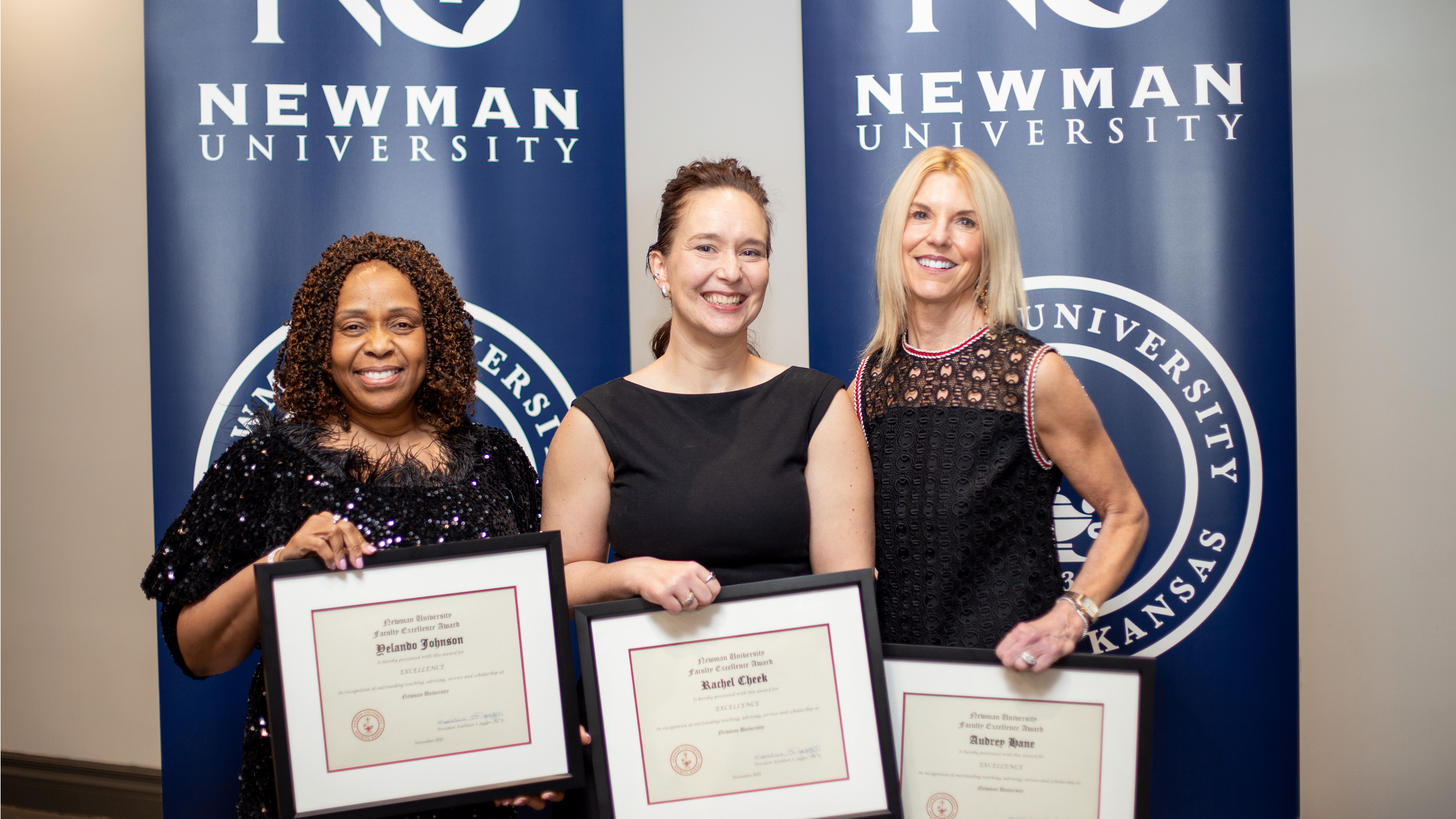
Newman University recently celebrated three exceptional educators whose work exemplifies teaching excellence that radiates far beyond traditional classroom boundaries. The 2025 Faculty Excellence Awards, presented on November 14, 2025, recognized faculty members who have transformed their students' academic journeys while creating ripple effects throughout the university and surrounding community.
These award recipients represent a growing understanding that faculty excellence involves more than delivering course content. Today's most impactful educators serve as mentors, community leaders, curriculum innovators, and advocates who help students discover their vocations while addressing real-world challenges. Their recognition highlights how individual faculty members can amplify their influence through strategic partnerships, grant acquisition, and innovative teaching methods.
The selection process evaluated candidates based on their teaching effectiveness, student mentoring, community engagement, and contributions to institutional mission. Review committees consistently noted how these educators create safe spaces for academic risk-taking while maintaining high standards that challenge students to grow in confidence and competence.
Professor Rachel Cheek joined Newman University in 2022 and has quickly established herself as a transformative educator in the School of Healthcare Professions. Teaching both Nursing Care of Childbearing Families and Community Health courses, she brings a unique perspective shaped by her ongoing clinical practice as a certified nurse-midwife at a low-income community clinic.
Cheek's teaching philosophy centers on making complex nursing concepts accessible while creating environments where students feel safe to take academic risks. Students consistently report feeling "seen and supported" in her courses, with one reviewer noting that she "takes material that can be complex, even intimidating and makes it clear, approachable, and deeply meaningful."
Her approach balances high expectations with human, encouraging presence. "I teach because I care about my patients," Cheek explains. "I have seen firsthand the terrible harm that comes from ignorance and bias in healthcare providers. When nurses are incompletely trained, they are a danger to themselves, to everyone they care for, and to everyone they encounter."
Beyond individual courses, Cheek represents the School of Healthcare Professions on the University Curriculum Committee, where she has been instrumental in designing Newman's new core curriculum. She also serves on critical nursing program committees including Admissions and Progression and Assessment/Curriculum, helping shape curriculum revisions that will take effect in Fall 2026.
Her favorite teaching moments occur "walking up to a student after they have watched their first birth in clinical." She describes how some students "have this look in their eyes, and I know they have just found the thing they want to do for the rest of their life."
Dr. Yelando Johnson serves as Division Chair, MSW Program Director, and Associate Professor, bringing 12 years of dedicated service to Newman University. Her leadership exemplifies how faculty can amplify their impact through strategic program development, community partnerships, and innovative curriculum design.
Johnson has secured major grants, including a $2.3 million HRSA award to launch the Behavioral Health Workforce Education and Training Program and a $100,000 grant from the Kansas Behavioral Health Center of Excellence.
Representing Newman University nationally, she presented at the Harvard Faculty Club on “Allyship as a Leadership Skill: Supporting Underrepresented Colleagues,” contributing to the discourse on inclusive leadership and equity. Her leadership, scholarship, and commitment to student development exemplify Newman University’s mission to prepare ethical, socially responsible leaders who create lasting community impact.
Through active participation in the Faculty Council, Deans and Chairs Council, and Center for Teaching & Learning Community of Practice, Johnson helps build consensus and implement institutional change. She also led efforts for the City of Wichita to recognize the MSW Program for Social Work Month 2024 with an official proclamation, demonstrating how faculty can elevate their institution's community profile.
Dr. Audrey Hane, Professor of Communication, has served Newman University for 29 years in various roles including department chair, division chair, graduate school dean, and program director. Her longevity reflects deep commitment to helping students "discover their purpose and voice" through compassionate teaching and innovative strategies.
Hane stays at the forefront of educational innovation, integrating project-based learning and AI-informed instruction into her teaching practice. She actively pursues professional growth through teaching fellowships and learning communities, then shares these insights with colleagues to advance campus-wide teaching excellence.
Her courses are carefully designed so students understand both what they're doing and why it matters. As one student reflected: "Talking about the link between the course goals and our assignment made it feel more relevant because it showed why the assignment actually matters. Instead of just being another task, it became a way to build real skills like clear communication or critical thinking."
Hane extends her expertise beyond campus through community workshops and board service with the Wichita Family Crisis Center. This engagement exemplifies Newman's mission to transform society through purposeful communication while providing students with real-world examples of how their education can serve others.
"My teaching has always been rooted in the belief that communication and leadership skills can transform lives," Hane explains. "Helping students learn to cultivate healthy relationships and to live with intention by serving others is sacred work."
The recognition of these three educators reflects broader research about how exceptional faculty transform student experiences and outcomes. Their approaches demonstrate key principles that research consistently links to student success and engagement.
Faculty members are uniquely positioned to build trusting relationships with students through regular interaction and mentoring. Research shows that positive faculty-student interactions significantly influence students' perceptions of institutional support while improving both academic and professional outcomes.
Effective faculty relationships involve learning students' names, holding regular office hours, providing constructive feedback, and creating inclusive classroom environments where students feel valued. These seemingly small actions accumulate into transformative educational experiences that extend far beyond individual course completion.
As one expert notes, faculty play a crucial role in shaping students' academic and personal development by fostering environments where students can thrive academically, socially, and emotionally. The award recipients exemplify this through their holistic approaches to student mentoring and support.
Faculty who integrate community engagement into their teaching create multiple benefits for students and communities. Service-learning approaches increase student retention of course material, raise awareness of community issues, and promote innovative instructional methods.
Students participating in service-learning programs develop stronger civic and social responsibility, demonstrate increased academic aptitude, and build stronger relationships with faculty members. These outcomes align perfectly with the approaches demonstrated by Newman's award recipients, who consistently connect classroom learning to real-world application and community service.
University faculty volunteering in schools and community organizations enriches educational experiences for all participants while strengthening connections between universities and society. This reciprocal relationship ensures that academic knowledge addresses genuine community needs while providing students with meaningful learning contexts.
These faculty recognition stories illuminate how individual excellence can amplify institutional mission and community impact. Newman's emphasis on transforming society through education becomes tangible when faculty members like Cheek, Johnson, and Hane demonstrate how academic expertise can address real-world challenges while developing students' professional capabilities and personal character.
The challenges facing higher education—declining enrollment, political polarization, mental health epidemics, and artificial intelligence disruption—require faculty who can adapt while maintaining core educational values. As keynote speaker Ken Stoltzfus noted at the awards ceremony on November 14, 2025, faculty must help students "learn that a rich life is a life rich in thought, not clicks" while developing "the capacity to make the world a better place."
Modern faculty excellence involves more than content delivery; it requires mentoring students toward confidence and purpose while modeling intellectual courage and community engagement. The work of these award recipients demonstrates how individual faculty members can create lasting institutional and societal impact through intentional relationship-building, innovative teaching, and strategic community partnerships.


