Your entryway probably feels like a chaotic dumping ground for coats, shoes, and daily essentials. But there’s a surprisingly simple three-category system that professional organizers swear by—and it starts with choosing the right wood furniture pieces.
The entryway sets the tone for an entire home, yet it often becomes a dumping ground for shoes, coats, bags, and daily essentials. Transforming this chaotic space into an organized, welcoming area doesn't require a complete overhaul—it needs the right combination of functional furniture and smart storage solutions.
Wood furniture offers the perfect balance of durability, style, and functionality for entryway organization. Unlike plastic storage units that can look cheap or metal pieces that feel cold, wooden elements bring natural warmth while handling the daily wear and tear of family life. The key lies in selecting pieces that serve multiple purposes while maintaining visual appeal.
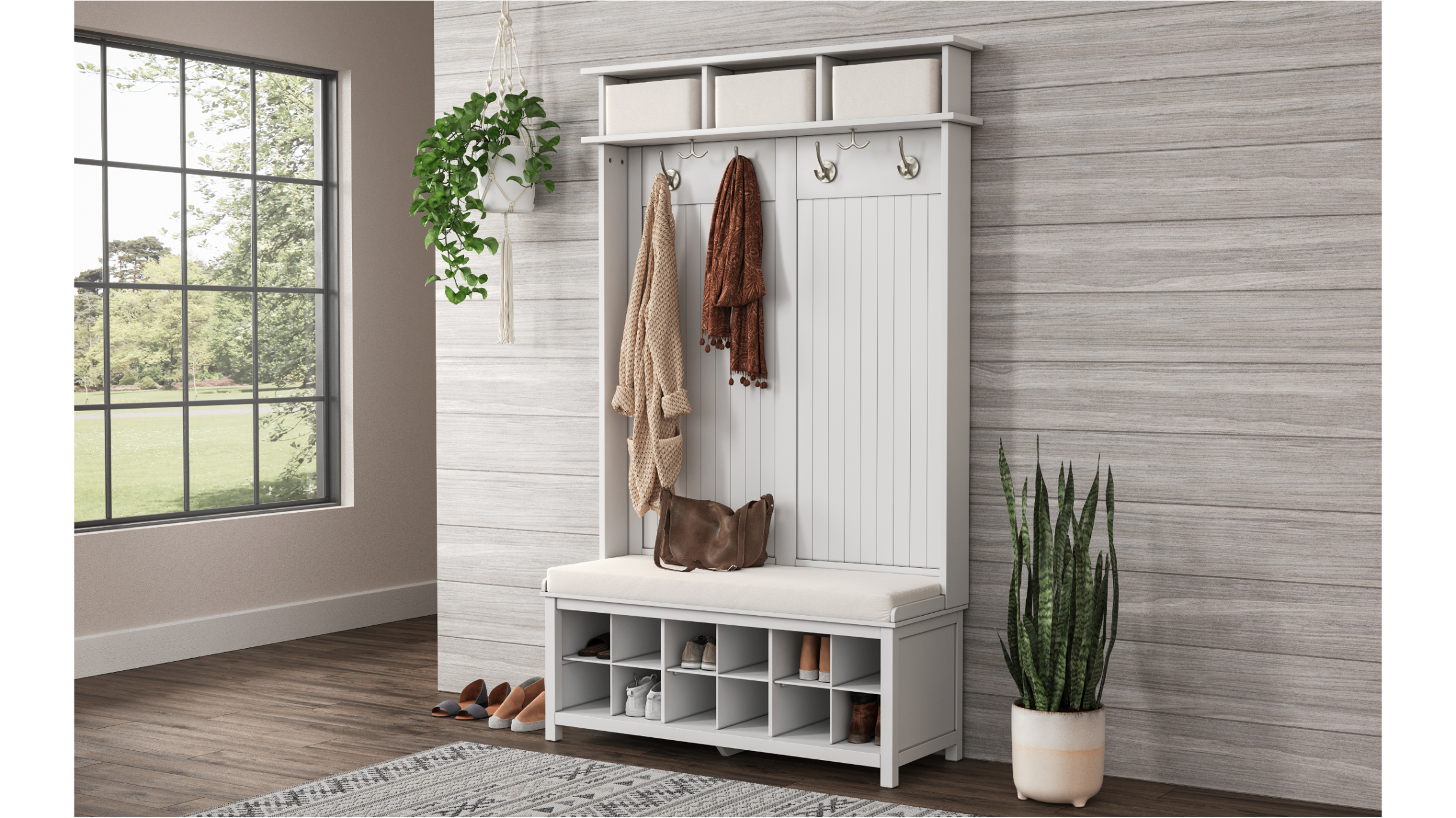
Professional organizers consistently recommend focusing on three main storage categories: hanging items (coats, bags), footwear, and small essentials (keys, mail). Quality hall trees with integrated bench seating address all three categories in one elegant piece, explains John Louis Home, experts in solid wood storage solutions. The most successful entryway transformations combine vertical storage with floor-level organization, creating zones for different family members and their belongings.
Storage benches serve as the foundation of organized entryways by providing both seating and hidden storage space. These versatile pieces solve the common problem of balancing on one foot while putting on shoes, especially valuable for families with children or elderly members. The interior storage compartment keeps seasonal items, extra linens, or sports equipment out of sight while maintaining easy access.
Modern storage benches often feature cushioned tops for comfort during shoe changes, with some models incorporating weather-resistant materials for mudroom installations. The bench height typically ranges from 15 to 20 inches, providing comfortable seating for most adults while creating substantial storage volume underneath. Adding decorative baskets inside the bench helps organize smaller items and prevents them from shifting during daily use.
Hall trees were introduced in the early 1800s and became increasingly popular in the 19th century, evolving from simple coat racks to elegant furniture pieces with ornate moldings, mirrors, and seating. Today's hall trees typically feature multiple hanging levels to accommodate different heights, making them accessible for both adults and children. The upper hooks handle coats and jackets, while lower pegs work perfectly for children's backpacks and lunch boxes.
The most effective hall trees include shoe storage at the base, creating a complete organization system in one footprint. Some designs feature adjustable shelving that adapts to different shoe sizes and seasonal needs. The vertical nature of hall trees makes them ideal for narrow entryways where floor space is limited, effectively creating a mini closet without requiring wall installation.
Hall trees can serve as a separation between the entrance and the rest of the home, creating defined entry zones even in compact spaces. This psychological boundary helps establish organizational habits by providing a designated spot for belongings rather than allowing them to migrate into living areas.
Console tables bring sophistication to entryway organization while providing practical surface area for daily essentials. The top surface accommodates decorative plants, framed photos, or a stylish bowl for keys and loose change. Models with drawers keep items like sunglasses, dog leashes, and mail organized but hidden from view.
The standard console table height typically falls between 28 to 36 inches, which works well with wall-mounted mirrors or artwork above, creating an attractive vignette that welcomes guests. Tables with lower shelving provide additional storage for baskets, books, or seasonal decorations. The narrow profile of most console tables, typically 12 to 16 inches deep, makes them suitable for hallways and tight spaces where deeper furniture would obstruct traffic flow.
Wall-mounted hooks represent the most cost-effective way to add immediate organization to any entryway. Individual hooks allow customization of spacing and height to accommodate different family members and their belongings. Installing hooks at varying heights ensures everyone can hang up their own items independently. For adults, a height of 60-66 inches is recommended, while for children, 42-48 inches is more suitable.
The key to successful hook installation lies in proper wall anchoring, especially for heavier items like winter coats or loaded backpacks. Hooks mounted into wall studs can support significantly more weight than those using only drywall anchors. Strategic placement near the main entrance door encourages immediate use rather than dropping items on floors or furniture.
Multi-level hook systems solve the common problem of children unable to reach adult-height hooks, leading to clothes dropped on floors. These systems typically feature a horizontal board with hooks at two or three different levels, creating designated spots for various family members. The lower hooks work perfectly for children's jackets, while upper hooks handle adult coats and accessories.
Some multi-level systems incorporate shelving above the hooks, providing additional storage for hats, gloves, or decorative items. The combination of hooks and shelves in one unit maximizes vertical space efficiency while maintaining a cohesive appearance. Installation typically requires locating and securing into at least two wall studs for proper weight distribution.
Overhead shelving utilizes the often-wasted upper wall space in entryways for storing items used less frequently. These shelves work well for seasonal accessories, extra linens, or decorative storage baskets that add visual interest while hiding clutter. Installing shelving at a height that provides ample clearance for daily activities while creating substantial storage volume depends on ceiling height and user reach, but commonly ranges between 6 and 8 feet.
Floating shelves maintain a clean, modern appearance, while traditional bracket systems can support heavier loads. Combining overhead shelving with lower hooks and benches creates a complete storage wall that handles multiple organizational needs.
Small entryways require furniture that works overtime, making compact benches with built-in storage vital for tight spaces. These streamlined pieces typically measure 24 to 36 inches wide, fitting into narrow hallways while providing both seating and storage functionality. The reduced footprint doesn't compromise storage capacity, with many models offering surprisingly spacious interior compartments.
Corner benches maximize awkward spaces that often go unused in small entryways. These angular pieces fit perfectly into corners while providing the same dual functionality as straight benches. Some corner models feature triangular storage compartments that efficiently use the available space while maintaining easy access to stored items.
Vertical storage systems prove vital in small entryways where floor space is at a premium. These tall, narrow units typically combine hanging space, shelving, and sometimes small drawers in one compact footprint. By building upward rather than outward, vertical systems provide substantial storage capacity without overwhelming small spaces.
Tower-style storage units often feature adjustable shelving that adapts to changing storage needs throughout seasons. The narrow profile, usually 18 to 24 inches wide, fits into tight spaces while providing multiple storage zones. Some models include doors or curtains to hide contents, maintaining a clean appearance in formal entryways.
Hall trees excel at creating defined entry zones in homes without dedicated entryways or mudrooms. These standalone pieces establish a psychological boundary between the entrance and living spaces, encouraging family members and guests to organize belongings before proceeding further into the home. The vertical structure naturally draws attention and creates a focal point that defines the space's function.
In open floor plans, hall trees serve as room dividers that separate the entry area from adjacent spaces without blocking sightlines or natural light. This separation helps contain clutter to the designated entry zone rather than allowing it to spread throughout the home. The self-contained nature of hall trees makes them ideal for renters who cannot install permanent storage solutions.
Farmhouse-style wood furniture brings rustic charm to entryway organization while maintaining practical functionality. These pieces often feature distressed finishes, visible wood grain, and simple, sturdy construction that complement both traditional and modern home styles. Farmhouse wood crates add authentic vintage appeal while providing flexible storage for outdoor accessories, pet supplies, or seasonal items.
The casual style of farmhouse pieces blends traditional accents with modern organization needs, creating approachable storage solutions that feel welcoming rather than formal. Some farmhouse-style wood furniture includes weather-resistant finishes that make these pieces suitable for mudrooms and high-traffic areas where moisture and dirt are common concerns. The sturdy construction typical of farmhouse designs ensures longevity despite daily use by active families.
Natural wood finishes possess the unique ability to complement virtually any decorating style, from minimalist modern to ornate traditional. The organic variations in grain patterns and color tones add visual interest without overwhelming small spaces. Light woods like oak and maple brighten dark entryways, while darker finishes like walnut add sophistication to formal spaces.
The timeless appeal of natural wood means entryway furniture investments remain stylistically relevant through changing decor trends. Wood's ability to age gracefully means minor scratches and dings often add character rather than detract from the piece's appearance. This durability makes wood furniture particularly suitable for high-traffic entryways where daily use would quickly show wear on less sturdy materials.
Well-organized entryways save precious time during busy mornings by providing designated spots for frequently used items, says John Louis Home. When keys, wallets, sunglasses, and other essentials have specific homes, the frantic searching that often accompanies rushed departures becomes unnecessary. This systematic approach to organization benefits busy families by streamlining daily routines.
The psychological benefits of organized entryways extend beyond time savings to include reduced stress and improved mood when arriving home. A tidy, welcoming entry space creates a positive transition between the outside world and the peaceful sanctuary of home. This visual calm helps family members decompress after stressful days while setting a positive tone for guests visiting the home.
First impressions matter tremendously in home environments, and the entryway provides the initial glimpse into the family's lifestyle and values. An organized, thoughtfully designed entry space suggests attention to detail and pride in the home, while chaotic, cluttered areas can create negative impressions before guests even enter the main living spaces. The investment in quality organizational furniture pays dividends in both daily functionality and social perception.


