Living in an apartment doesn’t mean giving up your drumming dreams, but even electronic kits can get you evicted if you don’t know the one vibration problem that standard setups completely ignore.
Key Takeaways:
Living in an apartment doesn't mean giving up drumming dreams. Modern electronic drum kits offer apartment dwellers a realistic path to practice without generating neighbor complaints or lease violations. The key lies in understanding that electronic kits solve multiple noise challenges simultaneously – from pad impact sounds to floor vibrations that travel through building structures.
Practice pads serve a purpose for basic stick technique, but they fall short for serious drumming development. Electronic drum kits provide the complete drumming experience apartment dwellers need – realistic cymbal response, proper hi-hat technique, and bass drum coordination that practice pads simply cannot replicate.
The dynamic response of mesh heads allows drummers to develop proper stick control and volume variations. Unlike rubber practice pads that offer limited feedback, electronic kits respond to subtle playing nuances. This means apartment practice sessions translate directly to acoustic kit performance, maintaining skill development that would otherwise stagnate.
Modern electronic kits also have metronome functions, play-along tracks, and recording capabilities, transforming apartment practice into productive learning sessions. Brands like Sam Ash feature a wide selection of electronic drum kits designed specifically for space-conscious drummers.
The choice between mesh heads and rubber pads significantly impacts both sound quality and neighbor relations. Understanding these differences helps apartment drummers make informed decisions about their practice setup.
Mesh drum heads generate substantially less acoustic noise than rubber pads. The woven fabric construction absorbs stick impact energy rather than creating sharp percussion sounds. This reduction makes the difference between practice sessions that sound like construction work versus quiet tapping that barely penetrates apartment walls.
Mesh heads also provide authentic stick rebound, which helps develop proper technique. The natural bounce encourages relaxed playing styles and prevents the tension that develops from practicing on hard surfaces. Professional drummers consistently recommend mesh heads for apartment practice because they maintain muscle memory for acoustic kit transitions.
Textured silicone surfaces, like those found on Yamaha's TCS pads, provide quieter operation than rubber while offering different tactile feedback than mesh. These surfaces reduce stick wear and provide consistent response across temperature changes – important considerations for apartment storage conditions.
Silicone pads typically cost less than full mesh head systems while delivering superior noise reduction compared to standard rubber. This makes them attractive options for budget-conscious apartment drummers who prioritize quieter operation over absolute authenticity.
Bass drum vibrations present the most serious challenge for apartment drummers. Even electronic kick pads generate floor vibrations that travel through building structures, creating noise complaints from neighbors below.
Every kick pedal strike transfers energy directly into the floor through the pedal base and kick pad contact. This energy travels through building joists and concrete structures, amplifying in neighboring units. Standard carpet provides minimal vibration dampening, allowing bass frequencies to transmit clearly to other apartments.
The problem intensifies with playing intensity. Harder strikes generate exponentially more vibration transmission, making dynamic bass drum playing nearly impossible without proper isolation. This limitation severely restricts practice effectiveness for apartment drummers.
Professional-grade anti-vibration mats can significantly reduce bass drum transmission when properly implemented. Dense rubber mats specifically designed for drum applications outperform generic gym mats or carpet padding. The key lies in mat thickness and density – thin mats provide minimal isolation while thick, dense materials effectively absorb vibration energy.
Platform systems elevate the entire kit above floor contact points, using springs or rubber isolators to decouple vibration transmission. These systems handle the full dynamic range of bass drum playing while maintaining pedal responsiveness. Professional isolation platforms may cost more initially, but they eliminate noise complaints that could result in lease termination.
Hi-hat pedals create consistent floor contact that generates low-frequency vibrations. Pedal mats designed specifically for hi-hat applications reduce this transmission while maintaining proper pedal response. Placing the entire hi-hat stand on an isolation platform eliminates direct floor contact entirely.
Some drummers modify hi-hat pedals with rubber feet or dampening materials. While these modifications help, they risk affecting pedal performance and warranty coverage. Purpose-built isolation solutions provide better results without compromising equipment functionality.
Space constraints force apartment drummers to prioritize compact designs without losing essential playing features. The best apartment-friendly kits balance small footprints with full-size playing surfaces and professional sound quality.
The Alesis Nitro Max features mesh heads and a compact design for under $400, making it accessible for apartment drummers on tight budgets. The 10-inch dual-zone snare pad offers realistic playing response while maintaining quiet operation. Eight-inch mesh tom pads provide sufficient practice surface without overwhelming small apartment spaces.
The included kick pedal and lightweight rack system allow quick setup and breakdown for drummers who need flexible practice arrangements. While cymbal pads remain basic single-zone designs, the overall package delivers serious practice capability at apartment-friendly prices.
The Yamaha DTX6K-X features textured cellular silicone (TCS) technology that reduces acoustic noise while providing natural stick response. The DTX-PRO module includes 40 preset kits and 200 custom slots, offering extensive sound customization for apartment practice sessions.
Triple-zone ride cymbal functionality and high-quality drum samples recorded from acoustic Yamaha kits provide a professional playing experience in compact apartment setups. The lightweight design and small footprint make it ideal for bedroom or living room practice spaces.
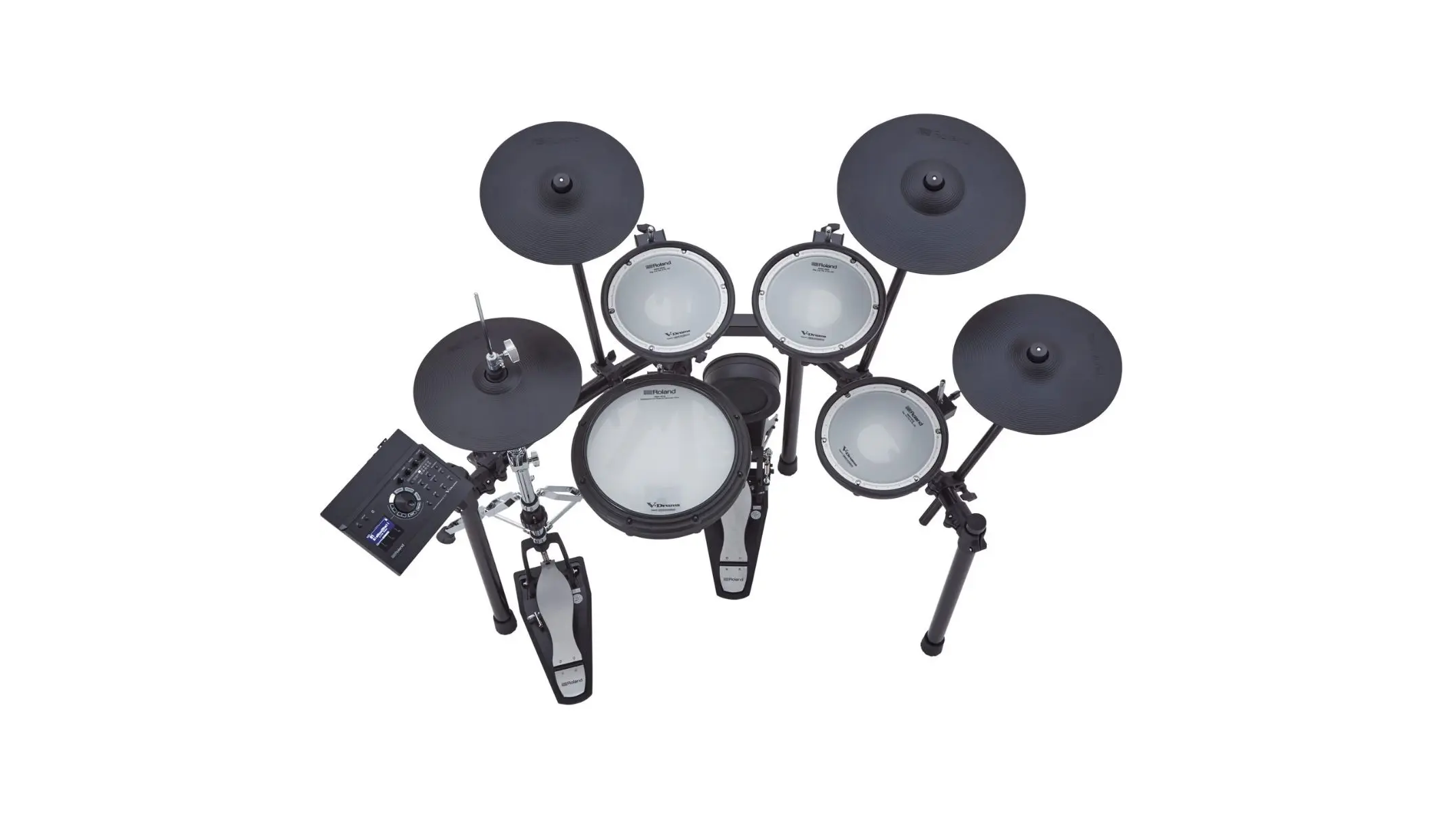
The Roland TD-17KVX2 delivers a near-acoustic playing experience with 12-inch dual-zone snare and 10-inch tom pads that provide ample playing surface for advanced techniques. The VH-10 hi-hat mounts on standard hi-hat stands, offering realistic pedal response crucial for proper technique development.
Thin cymbal pad technology provides an authentic cymbal feel while maintaining apartment-appropriate noise levels. The TD-17 module features coaching functions and Bluetooth connectivity for play-along practice, keeping apartment sessions engaging and productive.
Budget-conscious apartment drummers can significantly reduce noise transmission using common materials and simple construction techniques. These DIY solutions offer professional-level isolation at a fraction of the cost of a commercial noise reduction product.
Tennis ball risers are a DIY method for vibration isolation, where tennis balls are placed under a platform to reduce floor contact. Cut tennis balls in half and place them under a plywood platform to create spring-like isolation that absorbs bass drum vibrations.
This method is a low-cost DIY solution that can reduce vibration transmission. The cost may vary depending on materials, but it typically runs around $30. The tennis balls compress under weight while maintaining springy isolation that prevents vibration transmission through building structures.
Interlocking foam tiles designed for gym flooring provide excellent vibration absorption when layered properly. Two-inch thick tiles create sufficient isolation for most apartment drumming situations while remaining affordable and portable.
Foam tiles offer the added benefit of quick installation and removal, which is particularly important for apartment dwellers who cannot make permanent modifications. The cushioned surface also reduces stick drop noise and provides a comfortable practice environment.
Combining plywood sheets with high-density foam creates custom isolation platforms tailored to specific kit dimensions, offering a customizable and relatively low-cost solution. The exact cost will depend on the materials chosen. Place foam padding between two plywood layers to create a sandwich construction that absorbs vibration while maintaining a stable playing surface.
This approach allows customization for unusual apartment spaces and can be sized to accommodate specific room layouts. The platform stores easily when not in use, making it practical for apartment living.
Successfully drumming in apartment environments requires combining the right equipment with proper noise control techniques. Electronic kits with mesh heads provide the foundation, while vibration isolation systems prevent structural noise transmission that causes neighbor complaints.
Start with a quality electronic kit that matches your space and budget constraints, then add vibration isolation solutions based on your specific apartment construction. You and your neighbors will be grateful for the peace.


