Choosing your first electronic drum kit shouldn’t break the bank or drive your neighbors crazy, but Roland’s mesh technology versus Yamaha’s training features creates a crucial decision point. One surprising factor could determine which brand actually accelerates your drumming skills faster.
Starting your drumming journey doesn't require a soundproof basement or tolerant neighbors anymore. Electronic drum kits have changed how beginners learn and now feature pro sound quality, training aids, and apartment-friendly noise levels that make practice possible anywhere, anytime.
Electronic drum kits solve the three biggest obstacles facing new drummers: noise, cost, and space. Acoustic drums can reach 90-130 decibels during regular play, with crashes going up to 120-140 decibels, making practice nearly impossible in most living situations. Electronic kits eliminate this barrier entirely, allowing drummers to practice with headphones at any hour without disturbing anyone.
The built-in coaching features of modern electronic drums provide structured learning paths that acoustic drums cannot match. These kits include metronomes, play-along tracks, rhythm exercises, and real-time feedback systems that accelerate skill development. Beginners can track their progress, identify problem areas, and build solid timing fundamentals from day one.
A low footprint is another major advantage. While a full acoustic kit requires at least 8x8 feet of dedicated space, electronic drums fit comfortably in corners, spare bedrooms, or even studio apartments. The compact designs don't sacrifice playability - they simply organize components more efficiently than their acoustic counterparts.
The pad technology determines how quiet your electronic drum practice will be. Understanding the differences between mesh and rubber surfaces helps beginners choose the right kit for their living situation and playing goals.
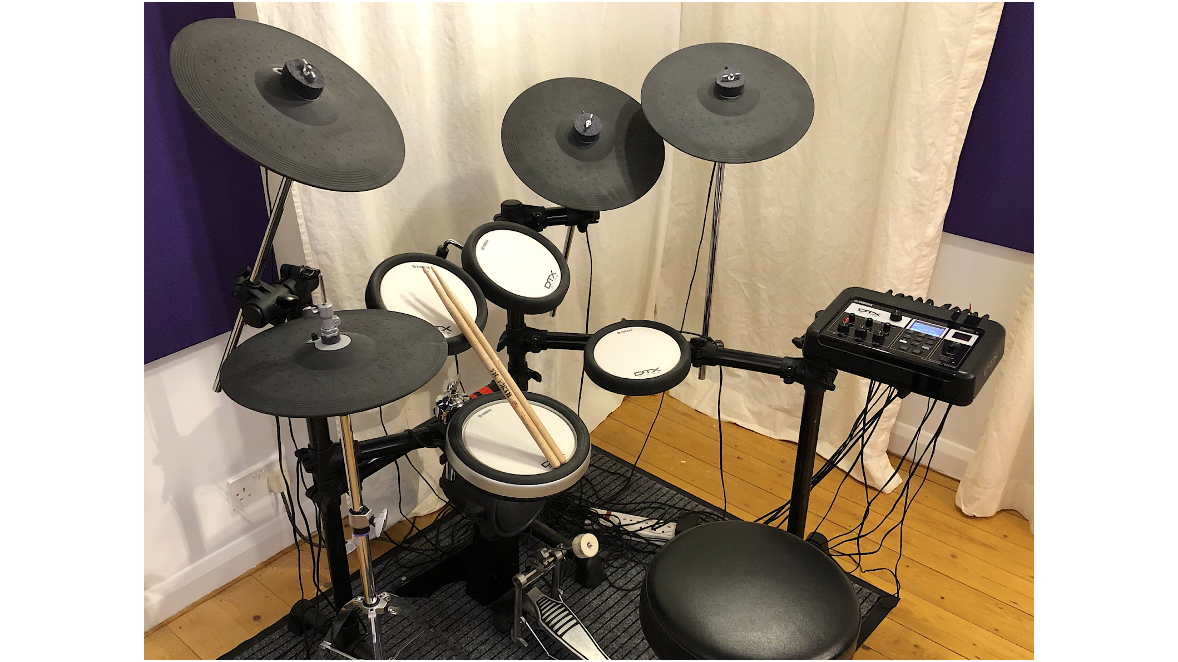
The DTX402K utilizes high-quality rubber pads that produce minimal acoustic noise while maintaining excellent stick and pedal response. The rubber construction absorbs stick impact effectively, generating sound levels comparable to a practice pad. The silent kick pedal design eliminates the floor vibrations that typically travel through apartment buildings, making this kit exceptionally neighbor-friendly.
A detailed comparison of Roland V-Drums vs Yamaha DTX systems reveals how different pad technologies affect both noise levels and playing experience for beginning drummers.
The DTX402K's compact footprint allows setup in spaces where acoustic drums would never fit. Despite the smaller dimensions, pad spacing remains comfortable and natural, avoiding the cramped feeling that plagues many ultra-compact electronic kits.
Roland's dual-layer mesh heads provide authentic stick rebound and response while generating even less acoustic noise than rubber alternatives. The dual-layer design captures subtle playing dynamics that a single-layer mesh cannot detect, from ghost notes to rim shots.
The TD-07KV's 12" dual-zone mesh snare pad responds to different striking zones, allowing techniques like cross-stick playing and rim shots that expand musical expression. This professional-level responsiveness helps beginners develop proper technique from the start, rather than adapting to electronic limitations.
Cable management on the TD-07KV keeps connections organized and reduces visual clutter in small spaces. The thoughtful routing system prevents the cable sprawl that can make electronic kits feel overwhelming in compact living areas.
Both Roland and Yamaha systems include volume controls that extend beyond simple output adjustment. Independent volume levels for different drum voices allow customization of practice mixes - reducing cymbal levels while maintaining snare presence, for example.
The built-in limiting functions prevent sudden volume spikes that could disturb neighbors during energetic playing sessions. These smart volume controls maintain consistent sound levels regardless of playing dynamics, ensuring practice remains consistently quiet.
Bluetooth connectivity enables silent practice through wireless headphones, eliminating cable constraints while maintaining complete isolation from ambient noise. This feature proves invaluable for late-night practice sessions or shared living spaces.
The physical playing experience determines how effectively beginners can develop proper technique and musical expression. Both Roland and Yamaha approach playability differently, each offering distinct advantages for developing drummers.
Roland's mesh technology delivers an authentic stick response. The dual-layer construction captures playing nuances that help beginners develop proper stick technique and control over dynamics. Unlike rubber pads that can feel "bouncy" or artificial, mesh heads respond naturally to different stick angles and striking forces.
The adjustable tension system allows customization of stick rebound and feel. Beginners can start with looser tension for more effortless playing, then gradually increase tension as their technique develops. This adaptability helps maintain proper form while accommodating different skill levels and playing styles.
Multi-zone triggering on Roland pads enables advanced techniques like rim shots, cross-sticks, and edge/bell cymbal articulations. These features ensure that skills developed on electronic drums transfer seamlessly to acoustic kits when opportunities arise.
The DTX402K shines with its built-in training functions, including timing exercises, rhythm challenges, and accuracy drills. The Fast Blast, Pad Gate, and Rhythm Gate programs provide structured practice routines that develop specific skills systematically.
The free DTX402 Touch app extends training capabilities through mobile device integration. The app includes advanced practice tools, kit customization options, and progress tracking features that gamify the learning process. The DTX Drum Lesson Program evaluates performance accuracy and awards completion certificates, providing motivation for consistent practice.
Built-in recording capabilities allow beginners to capture practice sessions and monitor their progress objectively. This self-assessment tool helps identify problem areas and track improvement over time, accelerating skill development through focused practice.
Roland's TD-07KV features larger pad sizes overall, with the 12" snare providing ample striking surface for developing proper stick placement. The generous pad dimensions reduce the precision required for clean hits, allowing beginners to focus on timing and dynamics rather than targeting small surfaces.
Yamaha's DTX402K optimizes pad positioning within its compact footprint, maintaining comfortable reach distances despite smaller overall dimensions. The ergonomic arrangement prevents the awkward stretches that can develop bad playing habits in beginning drummers.
Both systems offer height and angle adjustability, accommodating different body sizes and playing preferences. This customization ensures comfortable playing positions that promote proper posture and technique development.
Understanding the pricing landscape helps beginners make informed decisions about their electronic drum investment. The relationship between price and features varies significantly across different models and manufacturers.
Quality electronic drum sets typically start around $200, with beginner-focused models averaging $600-800. This price range delivers professional-quality sounds, reliable triggering, and practice features that would cost thousands of dollars in comparable acoustic equipment.
The Roland TD-02KV occupies the mid-range of this spectrum, providing Roland quality and reliability in an ultra-compact, budget-friendly package. Despite its entry-level positioning, it includes a mesh snare pad and a professional-grade sound module with 16 preset kits.
Mid-range options like the TD-07KV and DTX402K fall into the $600-800 category, offering significant feature upgrades and improved playability. These models provide the best balance of affordability and professional capabilities for serious beginners.
Yamaha's DTX402K delivers exceptional training value, with its 10 built-in learning functions and app integration providing structured skill development worth hundreds of dollars in private lessons. The 287 percussion sounds and 10 drum kits offer variety that keeps practice engaging.
Roland's TD-07KV emphasizes premium build quality and a realistic feel. The dual-layer mesh technology and professional sound engine provide long-term value through superior durability and an authentic playing experience. The 25 preset kits and advanced sound modeling justify the higher price point.
Both options include Bluetooth connectivity, USB audio/MIDI capabilities, and professional-grade sounds that support everything from basic practice to home recording projects. These connectivity features extend the kit's usefulness beyond simple practice, supporting creative projects and skill development.
Choosing between Roland and Yamaha electronic drums depends on prioritizing advanced mesh technology versus training tools. Roland is often preferred for its authentic playing feel and professional build quality, while Yamaha emphasizes educational features and compact design efficiency.
Both manufacturers offer excellent entry points into electronic drumming, with models spanning from ultra-compact budget options to feature-rich professional systems. The key lies in matching kit capabilities with individual learning goals, space constraints, and budget requirements.
Consider your primary practice environment, noise limitations, and long-term drumming goals when evaluating options. Beginners focused on rapid skill development might prefer Yamaha's training features, while those prioritizing realistic playing experience may gravitate toward Roland's mesh technology and professional sound quality.


