As global organizations set targets for universal digital identity systems and programmable currencies eliminate transaction privacy, the technological infrastructure described in Revelation 13:16-17 is rapidly becoming reality, but are Christians prepared for what’s coming?
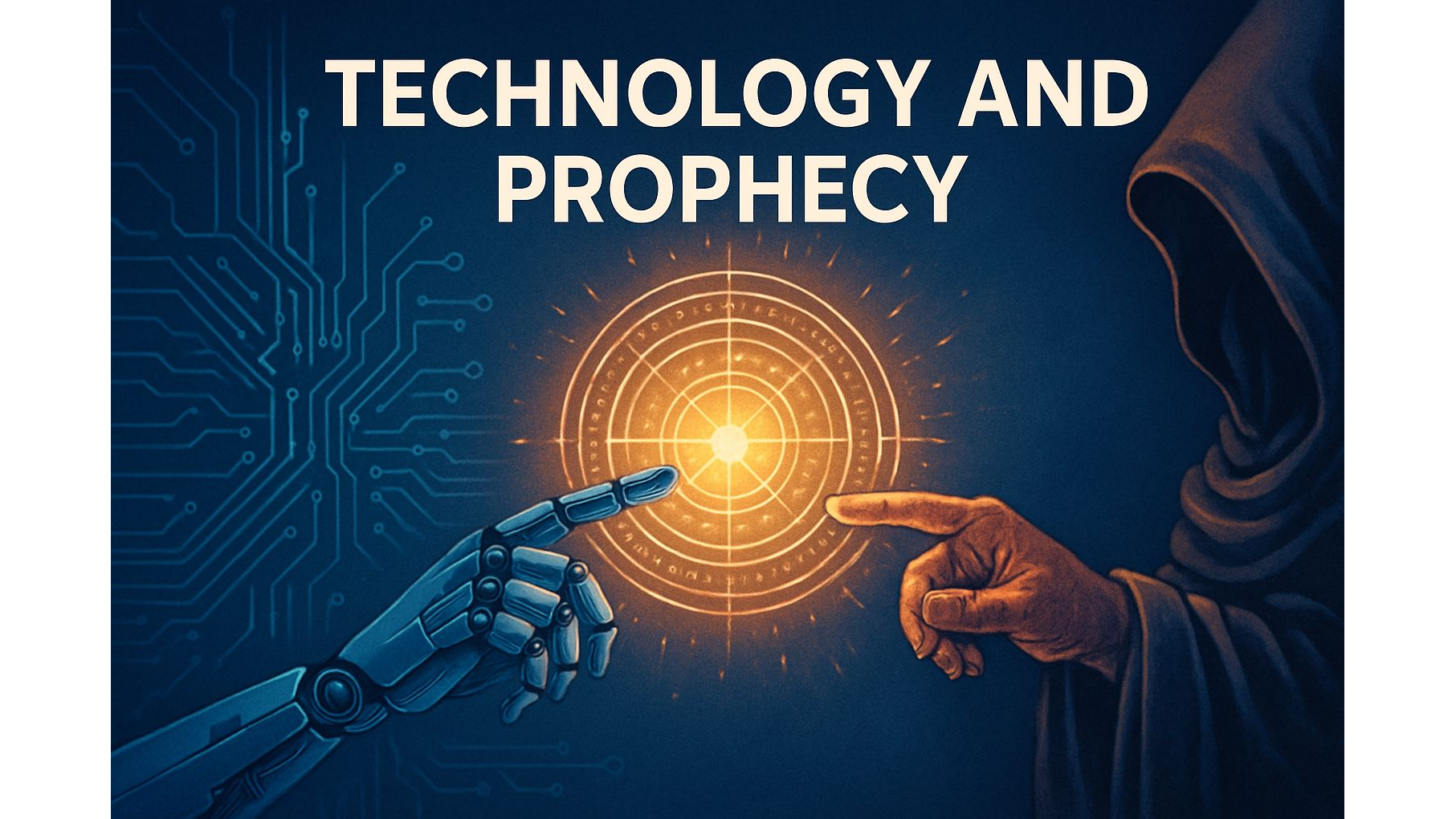
The convergence of surveillance technology and digital commerce systems creates an unprecedented ability to control economic participation - exactly as described in biblical prophecy written nearly 2,000 years ago.
Every smartphone transaction, facial recognition scan, and digital payment creates data points in vast surveillance networks that can track, analyze, and potentially control human behavior. The technological foundation for implementing the economic restrictions described in Revelation 13 now exists for the first time in human history. What previous generations could only imagine as distant prophecy, today's believers can observe taking shape through actual deployed systems.
The parallels between ancient biblical warnings and modern technological capabilities become more striking each year. Digital identity systems, cashless payment networks, and surveillance technologies provide exactly the infrastructure needed to control who can "buy or sell" in society. Wordsmith World has documented these technological developments and their relationship to biblical prophecy, providing Christians with the insights needed to understand these rapidly changing times.
The speed of technological advancement means systems that seemed theoretical just decades ago are now operational across multiple nations. Biometric identification has become routine for accessing financial services, while artificial intelligence networks can identify individuals in crowds and track their movements across entire cities. These capabilities, combined with programmable digital currencies, create the technical foundation for implementing exactly the type of economic control system described in scripture.
The Book of Revelation describes a future system where economic participation requires receiving a specific mark: "It also forced all people, great and small, rich and poor, free and slave, to receive a mark on their right hands or on their foreheads, so that they could not buy or sell unless they had the mark, which is the name of the beast or the number of its name" (Revelation 13:16-17, NIV). This passage specifically connects identification, allegiance, and economic access through a centralized control mechanism.
The prophecy's emphasis on universal implementation - affecting "all people" regardless of social status - mirrors today's push for universal digital identity systems. The restriction of basic economic activities like buying and selling creates powerful leverage for ensuring compliance with the controlling system's requirements.
The specific details in Revelation align remarkably with current technological capabilities. The mention of marks on the "right hand or forehead" corresponds to the primary biometric identifiers used today - fingerprints (hand) and facial recognition (forehead). The connection between identification and economic access describes exactly how digital identity systems function, where biometric verification becomes mandatory for accessing financial services.
Modern digital systems can implement the prophesied restrictions instantly and globally. Unlike historical attempts at economic control, which required physical enforcement and could be circumvented through alternative means, digital systems create oversight that makes unauthorized economic activity nearly impossible.
Christian denominations approach the mark of the beast prophecy through different interpretive frameworks. Premillennial dispensationalists typically view the mark as a literal, physical identifier that will emerge during a future tribulation period. These believers see current technologies as potentially setting the stage for the prophesied system's implementation.
Amillennialists and preterists often interpret the mark symbolically, representing allegiance to worldly powers throughout church history rather than a specific future technology. Catholic and Orthodox traditions have historically emphasized allegorical readings, viewing the mark as spiritual corruption rather than physical identification. However, many scholars across denominational lines acknowledge that modern technology creates unprecedented potential for systems matching the biblical description's specifics.
Central Bank Digital Currencies (CBDCs) represent the most significant enabler of economic control systems matching biblical descriptions. Unlike physical cash, which enables anonymous transactions, CBDCs create fully trackable digital money that authorities can program, monitor, and restrict in real-time. China has already deployed its Digital Yuan, while the Federal Reserve, European Central Bank, and Bank of England are developing similar systems.
These programmable currencies enable authorities to prevent specific purchases, freeze assets instantly, or even make money expire if not used within certain timeframes. When combined with digital identity verification, CBDCs create the exact mechanism described in Revelation - the ability to prevent individuals from buying or selling without proper authorization from the controlling system.
Biometric identification systems using fingerprints, facial recognition, and iris scans are rapidly becoming mandatory for accessing financial services worldwide. India's Aadhaar system, which links biometric data to banking, welfare, and telecommunications for over a billion citizens, demonstrates how biological identification can become necessary for economic participation.
A 2021 Juniper Research study estimated that biometric authentication would verify over $3 trillion in payment transactions by 2025, driven by mobile commerce adoption. This creates direct links between physical biological traits and economic access, precisely as prophesied. In 2017, an evangelical Christian coal miner filed a lawsuit, later upheld by the Fourth Circuit Court of Appeals, claiming that workplace biometric scanners represented the "Mark of the Beast," resulting in a damages award for the employee and highlighting growing concerns among believers about these systems.
RFID and NFC microchips small enough for human implantation are being voluntarily adopted by thousands worldwide. Companies like Sweden's Biohax International have implanted chips in employees for building access, payments, and identification. These rice-grain-sized chips, typically implanted between the thumb and forefinger, can store identification data, medical records, and payment credentials.
A European survey found that 51% of respondents would consider hand-implanted RFID chips for contactless payments. While currently voluntary and limited, this technology demonstrates the feasibility of physical implants for identification and economic access, creating a pathway toward normalized adoption and potential future mandates.
Facial recognition systems capable of identifying individuals in crowds with remarkable accuracy have been deployed globally. As of August 2023, China had over 700 million surveillance cameras that can identify citizens and track movements throughout cities. Similar networks are expanding rapidly in Western nations through law enforcement, retail, and transportation systems.
These AI-powered networks enable tracking individuals without their knowledge while providing frictionless payment options through facial recognition. When connected to digital payment systems, they create the ability to deny economic access based on identity - exactly the type of seamless yet controlling system described in biblical prophecy.
China's social credit system represents perhaps the most complete implementation of prophetically-described control mechanisms currently operational. This scoring system monitors citizen behavior across multiple domains and assigns consequences accordingly. Citizens with low scores face restrictions on airline tickets, high-speed rail travel, property purchases, and even access to certain luxury goods.
The system explicitly ties economic privileges to compliance with government-approved behavior, creating direct consequences for non-conformity. Citizens who fall out of favor with authorities face immediate restrictions on their ability to buy and sell, precisely matching the economic control mechanism described in Revelation 13:17.
China's social credit system provides a functioning model of digital control at national scale. The system uses surveillance cameras, artificial intelligence, and centralized databases to monitor virtually every aspect of citizen behavior, from financial transactions and social media posts to minor infractions like jaywalking.
Economic consequences for low social credit scores are severe and expanding. Blocked citizens cannot purchase airline tickets, high-speed train tickets, or certain properties. Some face restricted access to luxury goods and services, higher interest rates, loan denials, and limited financial services. The system directly fulfills the prophecy's description of economic participation being contingent on compliance with the controlling authority.
While proponents argue that social credit systems improve social order and financial inclusion, critics warn about unprecedented government control over individual freedom. Elements of China's model are appearing in modified forms across Western democracies through ESG (Environmental, Social, Governance) scores, expanded credit scoring criteria, and citizen scoring systems for accessing government services.
These fragmented implementations, while not yet as complete as China's system, create technical and social foundations for similar control mechanisms worldwide. The rapid acceptance of behavioral monitoring and consequences during recent global events has accelerated public accommodation to such systems.
Multiple global organizations, including the United Nations, have established 2030 as a target for universal legal identity, while the World Economic Forum promotes digital identity frameworks. These initiatives align with UN Sustainable Development Goals, calling for legal identity for all people, including the approximately 1 billion individuals globally who currently lack formal identification.
The World Economic Forum has published detailed roadmaps for digital identity systems that would include health records, financial information, social connections, travel history, carbon footprints, and ideological affiliations. While presented as tools for efficiency and inclusion, these frameworks create unprecedented possibilities for monitoring and controlling social and economic participation.
The COVID-19 pandemic dramatically accelerated global adoption of digital identification systems. Vaccine passports normalized showing digital credentials to access basic services and venues. Contact-tracing apps established precedents for continuous location monitoring. Remote work and education pushed daily activities into trackable digital spaces.
These rapid changes accomplished in months what might otherwise have taken decades, creating both technical infrastructure and public acceptance for digital identity verification as a prerequisite for social participation. The precedent of health-based access restrictions demonstrated how quickly control systems can be implemented and accepted globally.
Major technology companies have built unprecedented data collection systems tracking billions of people across multiple life dimensions. Companies like Google, Facebook, Amazon, Microsoft, and Apple create artificial intelligence systems that can predict behavior, identify dissent, and potentially manipulate decisions. Their payment systems increasingly dominate commerce while their cloud infrastructure provides computational capacity for massive surveillance operations.
The merging of corporate and government power creates systems where government objectives can be enforced through corporate infrastructure. Social media companies regulate speech according to government guidelines, while financial services companies block transactions to entities deemed problematic. This public-private approach circumvents traditional limitations on government power while creating control capabilities.
The rollout of 5G networks and the development of 6G technology provide the connectivity backbone required for surveillance systems. These high-speed, high-capacity networks enable real-time monitoring of billions of connected devices, seamless facial recognition, and continuous biometric verification across entire populations simultaneously.
Without this connectivity infrastructure, the control systems described in Revelation would remain technically impossible. With advanced wireless networks, however, tracking and processing the movements, behaviors, and transactions of entire populations becomes entirely feasible, creating the technical foundation for implementing prophesied restrictions.
Scripture calls believers to be "wise as serpents and harmless as doves" - knowledgeable about developing systems without being driven by fear or paranoia. The appropriate response combines spiritual preparation with practical wisdom, engaging thoughtfully with technology while maintaining firm boundaries around systems that could compromise faith or freedom.
Practical steps include using privacy-focused technologies, minimizing unnecessary data sharing, maintaining cash reserves, and developing analog skills that function without digital dependence. The goal isn't technological rejection but intentional engagement that preserves independence and aligns with biblical values.
Perhaps the most important response involves strengthening faith communities to support members facing technological pressures. Throughout history, strong Christian communities have provided alternatives when believers faced pressure to compromise faith for social or economic participation.
Today's communities can develop resource-sharing systems, alternative exchange networks, and mutual aid frameworks that would provide practical support if members face exclusion from mainstream economic systems for maintaining their convictions. These community systems enable thoughtful technology implementation that serves shared values rather than undermining them.
The rapid convergence of surveillance technology, digital identity systems, and programmable currencies creates the precise infrastructure needed to implement the economic control mechanisms described in Revelation 13. For the first time in history, the technical capabilities exist to restrict buying and selling on a global scale based on compliance with centralized authority.
While complete prophetic fulfillment involves spiritual and political dimensions beyond mere technology, the foundational infrastructure is developing rapidly. The explicit timelines set by global organizations for implementing universal digital identity by 2030, combined with accelerated public acceptance of digital verification requirements, suggest that believers may witness unprecedented alignment between technological capabilities and biblical prophecy within this decade.
According to author Betty Johansen, rather than responding with fear, Christians can prepare spiritually and practically while maintaining hope in God's sovereignty over human history. Understanding these developments through a biblical lens provides wisdom for navigating an increasingly digitized world without compromising faith or falling into paralyzing anxiety about prophetic fulfillment.


