Running your AC nonstop during a New Jersey heat wave? Your ducts could be silently sabotaging every cooling cycle—and costing you hundreds in wasted energy. The EPA says just 0.042 inches of dust can slash efficiency by 21%. Here’s what actually works.
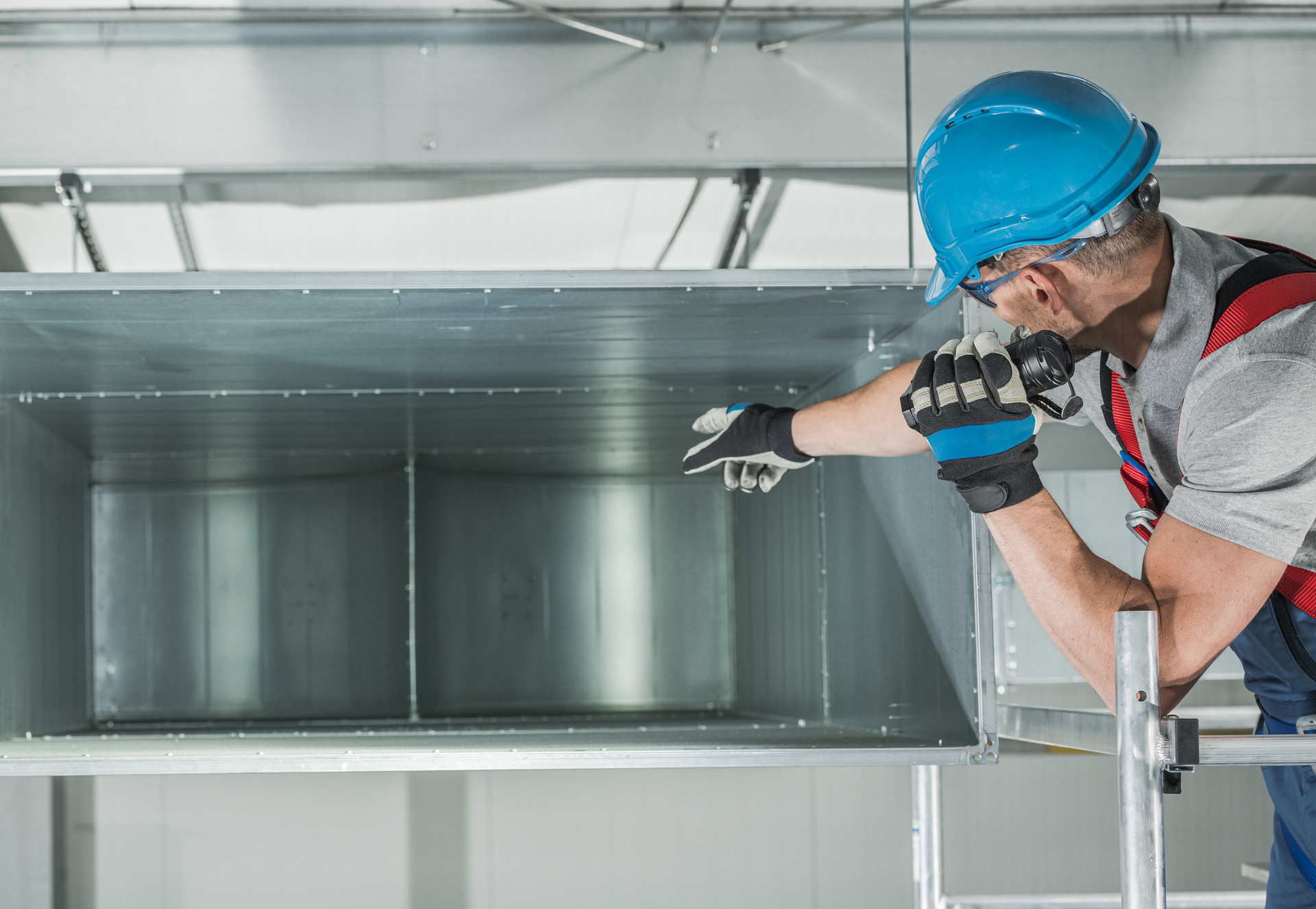
When New Jersey temperatures push into the high 90s, and AC systems run almost around the clock, most homeowners focus on their thermostat, their unit's age, or their energy plan. What often goes unexamined is right behind the walls: the ductwork quietly carrying all that conditioned air through the home. Dirty, leaky, or clogged ducts can silently undo everything a powerful AC system is trying to accomplish — and the data backs that up.
New Jersey is no stranger to summer heat, but recent heat dome events have pushed statewide temperatures well into the mid-to-high 90s, with inland areas and urban hotspots breaking past 100 degrees F. That means residential AC systems are not cycling on and off. They are running continuously just to maintain livable indoor temperatures.
Under normal conditions, an HVAC system has room to compensate for minor inefficiencies. But under extreme heat stress, every friction point in the system gets amplified. A blower fan working against a layer of dust and debris is not just a minor nuisance anymore. It becomes the reason a home cannot cool down, and the reason an energy bill spikes well beyond what the season alone would justify.
This is exactly the scenario that makes duct condition a front-and-center concern for homeowners right now. The AC unit on the outside of the house might be perfectly functional. But if what is inside the walls is restricting airflow, the whole system underperforms — and the homeowner pays for it in electricity costs and discomfort.
When dust, debris, pet dander, and other contaminants accumulate over the years, the internal diameter of the duct pathway effectively narrows. The result is increased resistance, and the HVAC system's blower motor has to push harder against that resistance to move the same volume of air.
This shows up directly on the monthly energy bill. When airflow is restricted, the system runs longer cycles to achieve the target temperature. Longer cycles mean more electricity consumed, and more electricity consumed means higher bills. The more the blower motor strains, the faster components like the motor windings and belts wear down, shortening the overall lifespan of the system.
One of the most striking data points on this topic comes directly from the EPA: a buildup of just 0.042 inches of dust on a heating coil is enough to reduce system efficiency by 21%. That is a fraction of the thickness of a standard credit card — and it is enough to meaningfully degrade performance.
The reason comes down to heat transfer. Evaporator coils are engineered to absorb heat from indoor air efficiently. Dust acts as an insulating layer on those coil surfaces, interfering with the thermodynamic exchange the system depends on. The system then has to run longer and work harder to accomplish what clean coils would handle in a shorter cycle.
Professional duct cleaning removes the accumulated debris that creates resistance throughout the duct system. Research has shown that restoring clean duct passages can improve supply airflow by 10% to 46% compared to an uncleaned system.
Improved supply airflow translates directly into a home that cools faster and more evenly. The blower motor no longer has to compensate for restriction, which means it can operate within its designed parameters instead of at the high end of its capacity range.
The energy impact on the blower motor is one of the most compelling arguments for duct cleaning. Industry data shows that cleaning clogged duct systems can reduce blower energy consumption by 41% to 60%. For a system running continuously during a heat wave, that is a substantial reduction in the electricity being drawn just to circulate air.
Cleaning the ducts returns the motor to low-resistance operation, which not only cuts energy use but also significantly reduces the thermal stress that leads to early motor failure.
There is another downstream benefit that often gets overlooked: filter longevity. When ducts are full of debris, that particulate matter circulates continuously through the system. Filters clog faster, airflow through the filter media decreases, and performance degrades more quickly between replacements.
Clean ductwork means the filters are not being overwhelmed by recirculating contaminants from within the system itself. They last longer, maintain higher airflow, and do a better job catching what actually comes in from the living space.
The National Air Duct Cleaners Association (NADCA) has documented that cleaning even lightly fouled heating and cooling systems can produce energy savings of 5-11%. For a household spending $250 to $350 per month on summer cooling, that is a meaningful reduction that adds up quickly over a full summer season.
Most homeowners do not realize their ducts have accumulated significant buildup until a technician shows them what is inside. A system that feels like it is performing adequately may still be operating well below its designed efficiency, and the savings from cleaning it may come as a genuine surprise.
For systems that have not been cleaned in many years — or where pets, recent renovations, or older construction have contributed heavier contamination — the savings picture improves substantially. Heavily contaminated systems can see energy reductions of 15-30% or more after professional cleaning, according to NADCA research.
NADCA data indicates that duct cleaning, as part of a broader maintenance effort that includes coil cleaning and blower servicing, can contribute meaningfully to overall heating and cooling energy reductions. At the higher end of that range, the return on investment from a single professional cleaning can be realized within a matter of months, particularly in a high-cooling-demand summer like the ones NJ has been experiencing.
Energy savings are the financial headline, but the air quality improvement from duct cleaning is an equally important benefit — particularly for households where someone has allergies, asthma, or other respiratory sensitivities. Ductwork that has not been cleaned in years can harbor dust mites, mold spores, pet dander, and pollen, all of which get recirculated into the living space every time the AC runs.
The EPA identifies visible mold growth inside ducts and dust blowing from vents as clear indicators that cleaning is needed, and NADCA research supports that professional duct cleaning can contribute to measurably healthier indoor air. During a heat wave, windows stay closed and the AC runs constantly, which means whatever is inside the ductwork gets circulated more frequently than at any other point during the year. For families with allergy sufferers or young children, summer is an especially important time to have duct conditions assessed.
One of the clearest early indicators of duct problems is an unexplained increase in energy bills. If usage habits have not changed but the monthly electricity cost keeps climbing, the HVAC system is likely compensating for something. Restricted or leaking ductwork is one of the most common causes.
A well-functioning duct system delivers conditioned air relatively evenly throughout the home. When certain rooms consistently run warmer than others — despite the thermostat being set the same — that is a sign of either a blockage restricting flow to those zones, or a leak diverting conditioned air away from them before it arrives.
This kind of temperature inconsistency is more than a comfort issue. It often leads homeowners to drop the thermostat further to try to compensate, which increases energy consumption even more. Addressing the root cause in the ductwork fixes the problem properly, rather than just masking it with a lower set-point.
If a visible puff of dust shoots from the vents the moment the system kicks on, the ductwork is heavily contaminated. This is among the most direct visual confirmations that cleaning is overdue. The EPA specifically lists this, along with visible mold growth and pest evidence, as a clear indicator that professional cleaning should be scheduled promptly.
Beyond the efficiency implications, dust blowing from vents means those contaminants are actively entering the breathing air of the home. During a heat wave, when the system cycles on frequently and windows stay closed, this becomes an ongoing air quality issue with every cooling cycle.
NADCA's standard recommendation for most homes is annual HVAC system inspections, with professional duct cleaning performed every 3 to 5 years under normal conditions — or sooner if inspections indicate buildup. That cadence keeps contamination from reaching the point where efficiency losses become significant and avoids the larger energy and performance penalties that come with years of neglect.
Several household factors justify more frequent cleaning:
A new residential HVAC system typically costs between $5,000 and $10,000 installed. Protecting that investment through routine duct maintenance is one of the most cost-effective decisions a homeowner can make. Clean ducts reduce strain on the blower motor, evaporator coils, and heat exchanger — all of which are expensive components that degrade faster under sustained high-load conditions.
Industry data indicates that proper system maintenance, including duct cleaning, can extend equipment life by 1 to 3 years. Over the full lifecycle of an HVAC system, that represents thousands of dollars in deferred replacement costs, in addition to the ongoing energy savings that accumulate month over month.
The math is straightforward: a professional cleaning service costs a fraction of what a single major repair costs, and a small fraction of full system replacement. Scheduling a cleaning before or during a high-demand cooling season means the system is running at its most efficient precisely when the stakes — and the energy bills — are highest.


