When your parent starts forgetting conversations or getting confused about familiar routines, how do you know if it’s normal aging or something more serious? One crucial warning sign that three-quarters of families miss could change everything.
Key Takeaways:
When a parent starts forgetting conversations or gets confused about familiar routines, families face a critical question: Is this normal aging or something more serious? Understanding the difference between age-related cognitive changes and early dementia symptoms can mean the difference between timely intervention and missed opportunities for care. While some memory changes are expected as we age, certain warning signs require immediate attention from healthcare professionals.
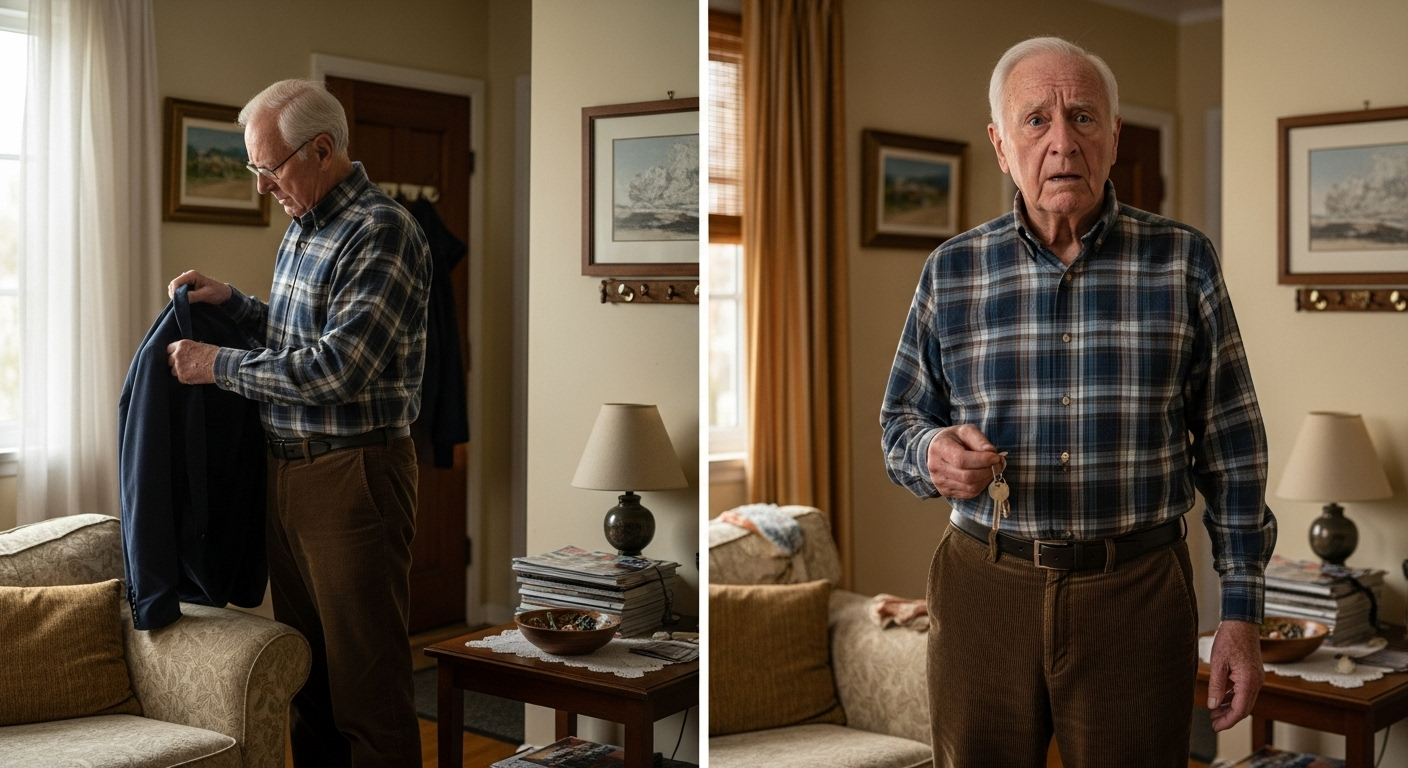
Memory changes happen to everyone as they age, but not all forgetfulness signals dementia. Normal aging affects how quickly the brain retrieves information, similar to a computer that takes longer to open files as it accumulates data over time. An older adult might forget where they placed their car keys but remember after retracing their steps or receiving a helpful hint.
Dementia presents a fundamentally different pattern. Rather than slower retrieval, the brain experiences more significant difficulty storing new information. A person with dementia might have the same conversation multiple times within an hour, genuinely forgetting it occurred. This forgetting happens despite cues, reminders, or familiar contexts, though the degree can vary depending on the stage and type of dementia.
The progression timeline also differs significantly. Normal memory changes develop gradually over years or decades, remaining relatively stable in day-to-day function. Dementia symptoms typically accelerate over months, creating noticeable changes that family members can pinpoint to specific time periods. Sage Senior Support provides resources for families navigating these challenging transitions, helping distinguish between concerning changes and typical aging patterns.
The brain's filing system works differently in normal aging versus dementia. During healthy aging, memories get stored properly but may take longer to access. Think of it like searching for a document in a well-organized but extensive filing cabinet – the information exists, but finding it requires more time and sometimes a helpful hint about where to look.
Dementia disrupts the filing system itself. New information may not get properly stored, or existing files become corrupted beyond recovery. A person might meet someone new and completely forget the encounter minutes later, even when reminded of specific details about the conversation. This happens because the encoding process – the brain's method of converting experiences into stored memories – has broken down.
Normal aging primarily affects memory retrieval speed while leaving the storage system largely intact, though encoding can also be affected to a lesser extent. Older adults can still learn new skills, remember important events, and form lasting memories when given adequate time and attention. They might need to write things down more often or use memory aids, but the fundamental ability to create and maintain memories remains functional.
Dementia attacks the memory system at its foundation. The brain loses much of its ability to encode new experiences into long-term memory storage. Even more concerning, previously stored memories begin deteriorating, starting with recent events and gradually affecting older, more established memories. This explains why someone with dementia might forget their grandchild's name but remember details from their childhood with startling clarity.
The most crucial difference lies in how memory changes affect daily life. Normal aging might cause minor inconveniences – forgetting where you parked at the grocery store, struggling to remember a neighbor's name, or needing to check your calendar more frequently. These changes rarely interfere with living independently or managing important responsibilities.
Dementia crosses the independence threshold. Memory problems begin affecting activities like managing medications, paying bills, or following familiar recipes. Safety concerns emerge when someone forgets to turn off appliances, gets confused about driving routes, or can't remember important medical information. This functional breakdown distinguishes dementia from normal aging more reliably than any single symptom.
Executive function includes the brain's ability to plan, organize, make decisions, and manage multiple tasks simultaneously. Normal aging might make these processes slower or more effortful, but they remain functional. An older adult might need more time to balance their checkbook or prefer handling one task at a time instead of multitasking.
Dementia causes severe executive function breakdown that goes far beyond simple planning difficulties. Complex tasks become impossible to complete, even with assistance. Someone might start cooking a familiar meal but forget the steps midway through, or begin paying bills but become confused about which ones need attention. The ability to sequence actions, solve problems, and adapt to unexpected situations deteriorates significantly.
This impairment often appears before obvious memory problems, making executive function changes valuable early warning signs. Families might notice their loved one struggling with technology they previously mastered, having difficulty following multi-step instructions, or showing poor judgment in situations that would normally be manageable.
Apathy in dementia differs fundamentally from depression or emotional withdrawal. While depression involves feelings of sadness, hopelessness, or worthlessness, dementia-related apathy stems from the brain's decreased ability to initiate and sustain goal-directed behavior. The person isn't choosing to withdraw – their brain has lost some capacity for planning and organization.
This type of apathy appears as a lack of interest in previously enjoyed activities, reduced motivation to complete tasks, or diminished emotional responses to significant events. Unlike depression, where individuals often express distress about their feelings, people with dementia-related apathy may seem unbothered by their reduced activity level. They might stop hobbies they once loved, show less interest in social interactions, or seem indifferent to important family events.
Navigation problems represent one of the most concerning potential early dementia symptoms. This goes beyond occasionally forgetting directions to a new location – it involves getting confused in previously familiar environments. Someone might become disoriented in their own neighborhood, forget how to get home from the grocery store they've visited for years, or become lost inside familiar buildings.
The brain regions responsible for spatial navigation are among the first affected by Alzheimer's disease and related dementias. This creates a characteristic pattern where someone can remember distant locations from their past but struggles with current spatial relationships. They might remember their childhood home's layout perfectly while becoming confused about their current living situation.
These navigation difficulties often coincide with other spatial processing problems, such as misjudging distances, having trouble with stairs, or difficulty parking a car. Family members should take notice when someone who was previously an excellent driver begins having minor accidents, seems confused about familiar routes, or expresses anxiety about driving to known locations.
Everyday problem-solving requires multiple cognitive skills working together: memory, attention, reasoning, and executive function. Normal aging might slow this process, but the fundamental ability remains intact. Someone might take longer to figure out a new appliance or need to read instructions more carefully, but they can still work through problems systematically.
Dementia disrupts this problem-solving network at multiple points. Previously automatic tasks become overwhelming challenges. A person might stare at a recipe they've made countless times, unable to determine what ingredients to gather or what steps to take first. Bills might pile up not because of forgetfulness, but because the cognitive process of understanding what needs to be paid, calculating amounts, and executing payments has become too complex.
Technology often becomes particularly challenging. Someone who previously managed their smartphone or computer with ease might appear unable to perform basic functions. This isn't about keeping up with new features – it's about losing the ability to navigate systems they previously understood well.
Behavioral changes in dementia often result from confusion and frustration rather than personality shifts. When the brain struggles to process information correctly, previously mild-mannered individuals might become irritable, suspicious, or agitated. They might accuse family members of stealing items they've misplaced or become convinced that familiar people are strangers.
Motor symptoms can accompany cognitive changes, particularly in certain types of dementia. Increased falls, tremors, or changes in walking patterns might signal neurological involvement beyond memory centers. Someone might develop a shuffling gait, have trouble with balance, or show decreased coordination in fine motor tasks like writing or buttoning clothes.
Sleep pattern disruptions often accompany these changes. Day-night confusion, frequent waking, or complete sleep schedule reversals can indicate brain changes affecting circadian rhythms. These symptoms typically worsen over time and rarely respond to simple sleep hygiene measures.
Depression and dementia share several symptoms, including memory problems, difficulty concentrating, and social withdrawal. This overlap creates diagnostic challenges, particularly since both conditions commonly affect older adults. However, key differences help distinguish between them, most notably the person's awareness of their difficulties.
People with depression typically maintain good insight into their problems. They often explicitly complain about memory difficulties, express frustration with their cognitive abilities, and show concern about their symptoms. This awareness contrasts with dementia, where individuals frequently lack insight into their deficits – a condition called anosognosia, though some individuals with dementia may have some level of insight, especially in the early stages.
Depression-related cognitive problems usually improve with successful mood treatment. When someone's memory concerns resolve after addressing underlying depression, it suggests the cognitive symptoms were secondary to the mood disorder rather than indicating primary neurodegeneration. This responsiveness to treatment provides valuable diagnostic information and hope for reversible cognitive decline.
Delirium presents perhaps the most critical differential diagnosis because it's often reversible with proper treatment. Unlike dementia's gradual progression over months or years, delirium develops rapidly – usually within hours to days – and shows characteristic fluctuation in symptoms throughout the day.
The hallmark of delirium is its fluctuating course. Someone might seem relatively clear in the morning but become severely confused by evening, or alternate between periods of agitation and lethargy within the same day. This variability contrasts with dementia's more consistent presentation, though symptoms may worsen with stress or unfamiliar environments.
Common delirium triggers include infections (particularly urinary tract infections in older adults), medication side effects, metabolic imbalances, or hospitalization stress. Identifying and treating the underlying cause often leads to complete symptom resolution, making rapid evaluation necessary when confusion appears rapidly. However, delirium can precipitate lasting cognitive decline in vulnerable individuals, highlighting the importance of prevention and prompt treatment.
Two screening tools have proven particularly effective for early dementia detection in primary care settings: the Mini-Cog and the General Practitioner Assessment of Cognition (GPCOG). Both require less than five minutes to administer and can be performed by trained medical staff, making them practical for routine use.
The Mini-Cog combines a simple drawing test with word recall. Patients draw a clock showing a specific time and recall three words after the drawing task. This brief assessment evaluates multiple cognitive domains simultaneously: executive function (clock drawing), memory (word recall), and visual-spatial skills (clock face organization). Its simplicity makes it relatively free from educational and cultural biases that can affect other cognitive tests.
The GPCOG includes both patient testing and informant questioning, providing a more thorough assessment. The patient portion involves orientation questions and a clock-drawing task, while the informant section asks family members about functional changes in daily activities. This dual approach helps identify early changes that might not appear on patient testing alone, particularly when individuals have high baseline cognitive abilities or early-stage symptoms.
Family member observations provide crucial diagnostic information, especially given the anosognosia common in dementia. Structured informant questionnaires like the AD8 (Eight-Item Informant Interview) systematically capture functional changes that differentiate normal aging from pathological decline.
These tools ask specific questions about changes in judgment, interest in activities, task completion, and orientation. Unlike casual conversation about concerns, validated questionnaires provide standardized scoring that helps distinguish between typical age-related changes and more significant functional decline. They're particularly valuable when patients perform well on brief cognitive tests despite having noticeable real-world difficulties.
However, informant reports require careful interpretation within the broader clinical context. Factors like the informant's relationship to the patient, frequency of contact, and their own cognitive abilities can influence report accuracy. Depression in either the patient or informant can also affect perceptions of cognitive abilities, making professional evaluation necessary for proper diagnosis.
Timely diagnosis transforms the trajectory of dementia care by enabling early intervention, care planning, and family preparation. While no current treatments can reverse dementia, early detection allows families to maximize remaining cognitive abilities, address modifiable risk factors, and plan for future care needs while the person can still participate in decision-making.
Early diagnosis provides access to medications that may temporarily slow cognitive decline in some individuals. More importantly, it enables lifestyle interventions that can significantly impact progression. Regular exercise, social engagement, cognitive stimulation, and management of cardiovascular risk factors all show promise for slowing dementia progression when implemented early in the disease course.
Perhaps most crucially, early detection allows families to have important conversations about preferences for future care, financial planning, and legal arrangements while their loved one can still express their wishes clearly. This proactive approach reduces family stress and ensures care decisions align with the person's values and preferences.
The global underdiagnosis of dementia – affecting approximately three-quarters of people with the condition according to the World Alzheimer Report 2021 – represents a significant public health challenge. Implementing systematic screening in primary care settings, using validated tools, and maintaining high clinical suspicion for cognitive changes can help close this treatment gap. Early detection doesn't just benefit individual patients and families; it contributes to better resource allocation and care system planning.
For families navigating the complex landscape of aging-related concerns and potential cognitive changes, Sage Senior Support offers compassionate guidance through senior care transitions and housing decisions.


