Hit by a delivery van with a national logo? Learn how Amazon and FedEx use contractor structures to dodge liability, who else may owe a victim money, and the evidence that wins these Texas cases.
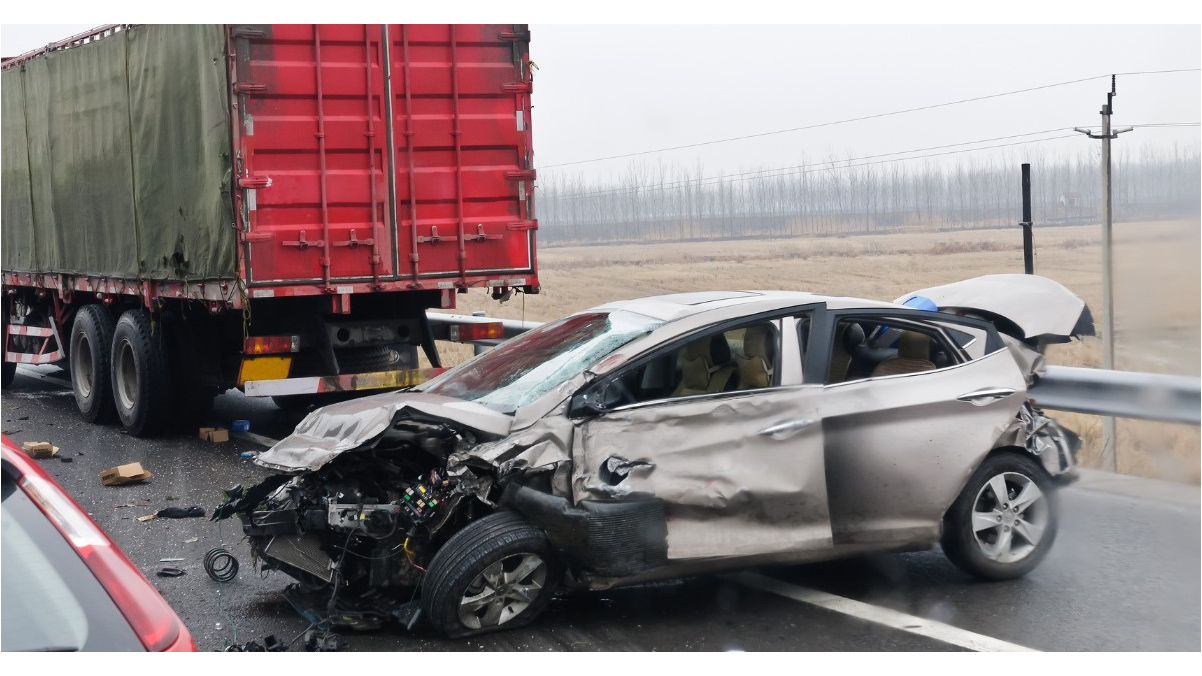
A victim is hit by a van with a national logo on the side. The driver wore that company's uniform and followed that company's app. Yet weeks later, that same company insists it has nothing to do with the crash.
That contradiction sits at the center of the single most important — and most misunderstood — question in delivery truck accident law: who actually pays when a carrier's driver injures someone.
A delivery truck accident is built on three things an ordinary fender-bender is not: corporate contractor structure, algorithm-driven route pressure, and federal regulatory gaps.
The contractor structure is the headline issue. Amazon's Delivery Service Partner program and FedEx Ground's independent service provider model exist primarily to put legal distance between the parent brand and the person driving the van. On paper, the driver works for a small contractor — one that rarely carries enough insurance to cover a catastrophic injury. A firm like The León Law Firm is built to pierce that structure rather than accept it.
Route pressure is the engine underneath it. Modern delivery routes are generated by software that calculates stops per hour and scores every driver. When the algorithm decides a route should take eight hours, the driver gets that route, whether or not eight hours is realistic. The result is speeding, distracted scanning, and fatigue baked directly into the workday.
Then there are the regulatory gaps. Federal hours-of-service rules that protect against long-haul trucker fatigue apply only to vehicles above a certain weight. Many delivery vans fall below that threshold, so the federal fatigue protections that cover an 18-wheeler driver do not cover the person driving through residential neighborhoods.
Once the pressure built into the job becomes clear, the crash patterns stop looking like accidents and start looking like outcomes. Most delivery truck crashes trace back to one or more of the same recurring causes:
Because so many of these crashes involve pedestrians, cyclists, and unprotected residential road users, the injuries skew severe even at moderate speeds — traumatic brain injury, spinal cord damage, multiple fractures, internal injuries, and, in the worst cases, wrongful death.
When a carrier says "that's a contractor matter, not our concern," it is making a legal bet — that the victim will accept the label and walk away.
Texas law generally looks at the real relationship between the parties, not just the paperwork. If the parent carrier or contractor controlled the driver's route, schedule, vehicle, uniform, performance metrics, and pay — and most do — there is often a viable claim against multiple parties despite the contractor label.
That is exactly how a $7 million delivery driver crash settlement came together. Through aggressive discovery, the legal team obtained the contractor agreement, route assignments, onboarding records, GPS and telematics data, and internal communications about driver complaints. The evidence showed a company controlling every meaningful aspect of the driver's work while denying responsibility for that control.
The number of defendants in a delivery case directly affects the amount of compensation available. A seasoned delivery truck accident lawyer pursues every viable defendant rather than settling with the first insurer that responds.
Delivery liability is more complex than almost any other vehicle accident case, which is why it belongs within a firm's broader commercial vehicle and 18-wheeler practice rather than being treated as a routine car wreck.
When physically able, an injured person can take these steps to protect both health and any future claim:
Under Texas law, an injured person generally has two years from the date of the crash to file a personal injury lawsuit, and two years from the date of death in a wrongful death case. Special rules may apply to minors and to claims against governmental entities.
Two years sounds long. It is not. The evidence that wins delivery cases — GPS and telematics data, route assignments, algorithmic scoring, internal communications — can begin disappearing within 30 to 90 days unless a legal hold is in place. The filing deadline is not the one that matters most.
Knowing the tactics in advance takes away their power. In nearly every delivery case, the same playbook appears:
The counter is evidence gathered quickly: a scene investigation within 24 to 48 hours before skid marks fade and nearby surveillance footage is overwritten, doorbell-camera footage from neighboring homes, telematics, the algorithmic route the driver was assigned, and the contractor agreement that reveals how much control the parent actually held.
A national carrier's legal team is working on the case within hours of the crash. Their goal is to limit who can be sued and close fast. No victim has to face that alone — and none should accept the contractor label as the final answer.
When a delivery truck or van injures someone anywhere in Texas, the safest first move is to consult a lawyer who handles these cases before signing anything — ideally one whose commercial vehicle and 18-wheeler practice is built for exactly this fight. The León Law Firm offers free, bilingual case reviews. Hablamos Español. The firm works on a contingency basis, with no fee unless it recovers.


