If your massage gun barely makes a dent in those deep knots, you’re probably using a device with wimpy strike force. New 48kg specifications are changing everything about muscle recovery, but there’s a catch most people don’t know about.
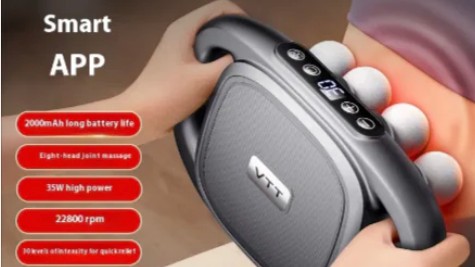
The massage gun industry has evolved rapidly, with manufacturers pushing the boundaries of percussive therapy technology. Strike strength specifications have become a critical differentiator, directly impacting therapeutic effectiveness and muscle treatment depth.
Strike strength represents the amount of force a massage gun can deliver before the motor stalls under resistance. Entry-level consumer devices operate between 20-40 pounds (9-18kg) of stall force, while professional-grade units can reach up to 60 pounds (27kg). The 48kg specification significantly exceeds these industry benchmarks, positioning these devices in the high-performance category.
This substantial force differential translates into measurable therapeutic advantages. Higher strike strength allows the device to maintain consistent percussive delivery even when pressed firmly against dense muscle tissue. For example, Profiler Digital's 16-head massage gun features a 48kg strike strength specification, enabling practitioners to address deep muscle tension that lighter devices cannot effectively penetrate.
The force measurement directly correlates with motor power and internal mechanism design. Devices achieving 48kg output typically feature brushed or brushless motors with enhanced torque specifications, reinforced drive mechanisms, and optimized gear ratios to sustain high-force percussive delivery without overheating or mechanical failure.
Stall force and amplitude work together to determine massage effectiveness. Amplitude measures how far the massage head travels with each percussion, typically ranging from 10-16mm in quality devices. When combined with high strike strength, greater amplitude allows deeper tissue penetration while maintaining consistent force delivery.
The mechanical relationship between these specifications creates the therapeutic window. Lower stall force devices lose effectiveness when encountering muscle resistance, while high-amplitude units without adequate strike strength deliver superficial treatment. The 48kg specification ensures the motor maintains percussive consistency even at maximum amplitude, delivering therapeutic benefits to deeper muscle layers.
Research indicates that percussive therapy effectiveness depends on reaching target muscle depths. Superficial treatments address only surface tension, while deeper penetration impacts fascia, trigger points, and muscle fiber adhesions. Higher strike strength enables penetration through multiple tissue layers, addressing both surface and deep muscle dysfunction.
The increased penetration directly supports recovery mechanisms. Deeper percussion stimulates increased blood flow to targeted areas, promoting nutrient delivery and metabolic waste removal. Studies show vibration therapy effectively reduces delayed onset muscle soreness (DOMS) when sufficient force reaches affected muscle fibers, making strike strength a critical performance factor.
Modern massage guns offer extensive speed customization, typically ranging from 1200-3200 percussions per minute (PPM). The 30-speed configuration allows precise intensity control, enabling users to match percussive frequency to specific therapeutic needs. Lower speeds (1200-1800 PPM) provide gentle muscle activation, while higher settings (2400-3200 PPM) deliver intensive deep-tissue treatment.
The broad PPM range accommodates different muscle groups and treatment objectives. Dense muscles like quadriceps and glutes respond well to higher intensities, while sensitive areas like neck and forearms require gentler frequencies. Multiple intensity levels also support progressive therapy protocols, allowing gradual intensity increases as muscles adapt to treatment.
Attachment variety enables precise muscle group targeting. Ball heads provide general muscle massage, while bullet attachments focus on trigger points and deep knots. Fork heads work effectively on spinal muscles and Achilles tendons, and flat heads address larger muscle surfaces like the back and thighs.
Each attachment design optimizes force distribution for specific anatomical structures. Rounded attachments distribute pressure broadly, reducing discomfort while maintaining therapeutic effectiveness. Pointed attachments concentrate force on smaller areas, enabling precise treatment of adhesions and trigger points that broader heads cannot address effectively.
Advanced noise reduction technology has become necessary for user comfort and practical application. The 36-45dB operating range maintains conversation-level quietness, comparable to a refrigerator's ambient sound. This specification enables use in shared spaces, early morning sessions, and extended treatment periods without causing disturbance.
Advanced motor designs and internal dampening systems achieve these noise levels without compromising power delivery. Brushless motors typically operate quieter than brushed alternatives, while internal foam padding and precision-balanced components reduce vibration-induced noise. The quiet operation encourages consistent use, supporting better long-term recovery outcomes.
Massage guns serve different physiological functions depending on application timing. Pre-workout use focuses on muscle activation, increasing blood flow and improving mobility through gentle percussion. This preparation improves muscle fiber recruitment and joint range of motion, potentially improving workout performance and reducing injury risk.
Post-workout application targets recovery acceleration. Percussion therapy maintains elevated blood flow after exercise, supporting lactate clearance and nutrient delivery to recovering muscles. The mechanical stimulus also helps break down metabolic byproducts that contribute to muscle stiffness and soreness, facilitating faster return to training readiness.
Clinical research demonstrates vibration therapy's effectiveness in DOMS management. The mechanical stimulation disrupts pain signaling pathways while promoting cellular repair processes. High strike strength devices can address the deep muscle damage that contributes to prolonged soreness, providing more thorough DOMS relief than surface-level treatments.
Flexibility benefits emerge from multiple mechanisms. Percussion therapy reduces muscle tension by mechanically breaking up adhesions and trigger points. The treatment also stimulates mechanoreceptors that promote muscle relaxation and improved range of motion. Research suggests massage gun application can improve flexibility in hip and posterior chain muscles.
Optimal recovery benefits require strategic application timing and duration. Athletes can effectively use massage guns 2-3 times daily: 30 seconds per muscle group for pre-workout activation, 15 seconds for mid-workout reactivation, and 2 minutes for post-workout recovery. This protocol maximizes therapeutic benefits while preventing tissue irritation from overuse.
Session duration should match treatment objectives and individual tolerance. Brief activation sessions prepare muscles for activity, while longer recovery sessions address accumulated tension and metabolic stress. Consistent application following these protocols produces measurable improvements in muscle function and recovery markers.
Battery capacity directly impacts practical usability, especially for athletes requiring multiple daily sessions. Runtime varies with intensity, with the 1800mAh specification providing a general range of 2-4 hours depending on usage patterns. Higher speeds and maximum force applications drain battery faster, while gentle activation sessions extend runtime.
Runtime calculations must account for real-world usage patterns. Professional athletes using maximum settings for deep tissue work may achieve 2-hour sessions, while recreational users employing moderate intensities can expect 3-4 hours. Battery performance also degrades over time, making initial capacity specifications critical for long-term functionality.
Self-application requires thoughtful ergonomic design to ensure effective treatment of all muscle groups. Weight distribution, grip comfort, and handle angles determine whether users can maintain proper positioning during extended sessions. Well-designed units balance power delivery with comfortable handling, enabling users to reach difficult areas like upper back and shoulders.
Handle design particularly impacts usability for reaching different body areas. Angled grips facilitate treating posterior muscles, while adjustable positioning helps accommodate various user heights and arm lengths. The ergonomic factors become especially important during longer recovery sessions where grip fatigue could compromise treatment effectiveness.
The 48kg strike strength specification represents a significant advancement in massage gun technology, delivering therapeutic benefits comparable to some professional manual therapy techniques. This increased force capability addresses the fundamental limitation of lower-powered devices: insufficient penetration through dense muscle tissue and fascial layers.
For athletes and fitness enthusiasts, this specification translates into measurable recovery advantages. The deeper tissue access enables treatment of adhesions and trigger points that contribute to performance limitations and injury risk. Combined with strategic application protocols, 48kg strike strength supports faster recovery, improved flexibility, and better training readiness.
The technical specifications work synergistically to create a thorough therapy platform. High strike strength, multiple speed settings, specialized attachments, and quiet operation combine to deliver professional-grade treatment in a practical home-use format. These devices represent the convergence of therapeutic effectiveness and user accessibility in modern recovery technology.
For muscle recovery solutions and advanced massage therapy devices, visit Profiler Digital to view their range of high-performance recovery tools designed for serious athletes and fitness professionals.


