Three confusing acronyms determine whether your heat pump will cost you a fortune or save you thousands over its lifetime. SEER, HSPF, and COP ratings directly impact your energy bills—but most homeowners don’t understand what these numbers actually mean or why they matter.
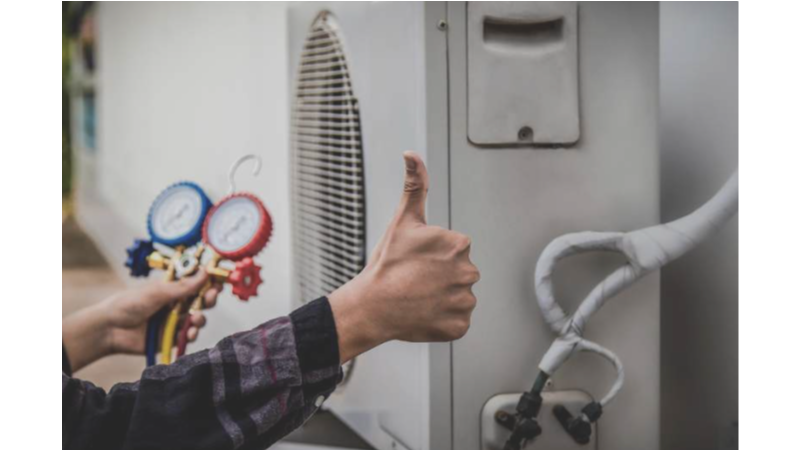
Heat pump efficiency is not a single number but a collection of measurements that account for different environmental stresses. These metrics function like a vehicle's fuel economy ratings, providing a standardized way to compare different models. However, unlike a simple "miles per gallon" calculation, heat pump ratings must account for the fluctuating humidity and temperature swings common in the Birmingham metro area.
Crossover heat pump systems consistently outperform traditional units across all three categories. By combining the high-volume airflow of a ducted system with the precise inverter technology of a mini-split, these units optimize every watt of electricity consumed.
The Seasonal Energy Efficiency Ratio 2 (SEER2) measures how efficiently a heat pump cools your home over an entire summer. It is calculated by dividing the total cooling output (measured in BTUs) by the total electrical energy used during the same period.
In 2023, the Department of Energy moved from the original SEER to SEER2. This updated standard uses a more rigorous testing procedure that accounts for the external static pressure found in real-world ductwork. For homeowners in the Southeast region, the current minimum allowable efficiency for a new split-system heat pump is 14.3 SEER2.
High-efficiency crossover models far exceed this baseline, often reaching ratings between 17 and 22 SEER2. These higher numbers indicate that the system requires less electricity to remove heat from your home, a critical factor during Alabama's prolonged humidity peaks.
The financial impact of a high SEER2 rating is cumulative. Upgrading from an aging 8-SEER or 10-SEER unit to a modern 16-SEER2 system can result in an immediate 50% reduction in cooling-related electricity usage. Over a system's expected 15-to-20-year lifespan, these monthly savings can total thousands of dollars, often paying back the initial price difference between a standard and premium model.
While SEER2 focuses on the summer, the Heating Seasonal Performance Factor 2 (HSPF2) quantifies how well a system heats your home during the winter. This is the ratio of total heat provided to the total electricity consumed over the entire heating season.
In Central Alabama, where winter temperatures are generally moderate but prone to sudden freezes, a high HSPF2 rating is vital. Modern heat pumps typically range from 7.5 to 10.5 HSPF2. A system with a rating above 9.0 HSPF2 is considered high-efficiency and is more likely to maintain its performance as the mercury drops.
Similar to SEER2, the transition to HSPF2 ensures that the numbers on the box reflect how the unit will actually perform in your attic or crawlspace. The current national minimum for split-system heat pumps is 7.5 HSPF2. Crossover systems excel here because their variable-speed compressors can ramp up to meet heating demand without the energy "spikes" associated with traditional electric heat strips.
The Coefficient of Performance (COP) is arguably the most important metric for understanding a heat pump's raw power. Unlike seasonal averages, COP measures efficiency at a specific moment in time. It is a simple ratio: if a heat pump has a COP of 3.0, it is producing three units of heat for every one unit of electricity it consumes.
SEER2 and HSPF2 tell you what to expect on your bill at the end of the year. COP tells you how the system is behaving right now. For example, on a mild 47°F day, an air-source heat pump might achieve a COP of 3.5 (350% efficiency). If the temperature drops to 5°F, that COP might decrease to 1.75.
Understanding these variations helps identify the "balance point" of your home—the temperature at which the heat pump may need assistance from a backup source. Premium crossover systems are engineered to maintain high COPs even in extreme cold. Some units utilize vapor-injection technology to maintain over 70% of their heating capacity at temperatures as low as 5°F.
The superior ratings of crossover systems are not accidental; they are the result of three specific engineering advancements:
With the expiration of federal tax credits at the end of 2025, the focus for 2026 has shifted to local utility incentives and operational savings.
Homeowners in Central Alabama can currently access specific rebates through Alabama Power to offset the cost of high-efficiency upgrades:
Replacing an outdated single-stage system with a high-efficiency crossover unit can shrink annual energy bills by $800 to $1,500. In a state like Alabama, where cooling demand is high for most of the year, the return on investment for a 17+ SEER2 system is often much faster than in more temperate climates.
A heat pump's efficiency ratings are only as good as its installation. If a system is improperly sized for the home's square footage or if the existing ductwork is restrictive, even a 22-SEER2 unit will underperform.
Expert technicians can perform detailed load calculations to determine the exact tonnage required for your property. They also ensure that dual-fuel crossover systems are calibrated correctly to switch between electric and gas at the most cost-effective "economic balance point" for your specific utility rates.
For a comprehensive analysis of crossover heat pump efficiency and performance metrics tailored to your specific home, consult with local HVAC specialists who understand the unique climate demands of Central Alabama.
Note: Price estimates reflect current market costs and may vary based on your specific situation. For a personalized quote tailored to your needs, contact a local HVAC specialist directly.


