When e-commerce businesses choose packaging based on upfront costs alone, they’re missing a crucial calculation. One packaging solution can reduce assembly time from minutes to seconds-but the real savings might surprise you.
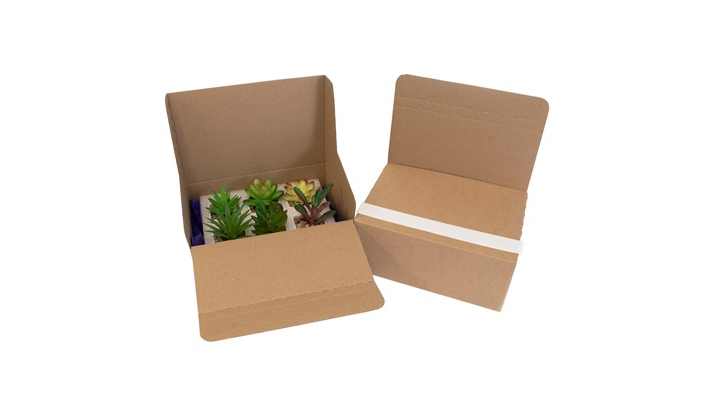
When e-commerce businesses evaluate packaging options, the choice between crash lock boxes and standard cardboard often comes down to perceived cost differences. However, efficiency extends far beyond the initial price tag, encompassing assembly time, labour costs, security features, and environmental impact.
The assembly speed difference between crash lock boxes and standard cardboard boxes is dramatic. Standard cardboard boxes require a multi-step process: opening the flat pack, folding bottom flaps in sequence, applying multiple strips of tape to secure the base, flipping the box, and repeating the taping process for closure. This labour-intensive procedure typically takes several minutes per box.
Crash lock boxes eliminate this complexity entirely. The intelligent design allows the base to automatically fold into a locked position when opposite corners are gently pushed together. This self-erecting mechanism transforms a flat pack into a ready-to-use box within seconds, with no manual folding or tape application required.
Globe Packaging explains that crash lock boxes demonstrate this efficiency advantage, featuring patented interlocking bases that provide both speed and security for online retailers.
The higher initial cost of crash lock boxes reflects their more complex manufacturing process. Unlike standard boxes produced in a single casemaker operation, crash lock boxes require die-cutting followed by precision gluing at multiple points. This additional manufacturing complexity translates to higher per-unit costs at purchase.
The significantly faster assembly time creates substantial labour savings that quickly offset the initial price difference. In some cases, businesses have seen potential to increase output from 100 boxes per day to 1,000 with the same workforce, or reduce staffing requirements whilst maintaining current packing volumes. This efficiency gain becomes particularly valuable during peak seasons when temporary staff costs escalate and training time is limited.
Standard cardboard boxes require significant tape consumption for secure closure-typically multiple strips across the base and top. Crash lock boxes eliminate this requirement entirely through their integrated peel-and-seal closure strips. This removes ongoing consumable costs whilst also eliminating the time spent applying tape, replacing empty dispensers, and maintaining taping equipment.
The intuitive assembly process requires minimal staff training compared to the multi-step folding and taping procedures of standard boxes. This reduces onboarding time for new employees and temporary seasonal staff. Additionally, the reduced manual handling and repetitive motions lower the risk of repetitive strain injuries, potentially reducing workplace compensation claims and staff turnover.
Beyond assembly efficiency, crash lock boxes provide protective capabilities that standard cardboard boxes cannot match. The pre-glued overlapping flaps create a structurally superior base that withstands greater stress during handling and transit.
While some standard crash lock box designs can present security vulnerabilities, advanced designs incorporate features like interlocking hooks that fold into one another, making unauthorised access virtually impossible without visible damage to the box structure. This tamper-evident feature proves particularly valuable for high-value items like premium cosmetics or electronics.
The overlapping flap design and precision gluing create a base capable of handling heavier loads than standard cardboard boxes of equivalent material thickness. This strength reduces the risk of bottom failure during transit, protecting both products and brand reputation. The structural integrity proves especially beneficial for fragile items requiring secure containment.
Environmental considerations increasingly influence packaging decisions, and crash lock boxes offer several sustainability advantages over tape-dependent alternatives.
Standard cardboard boxes rely heavily on plastic packing tape for secure closure, introducing non-biodegradable materials into the packaging stream. Each box typically requires multiple tape applications, creating cumulative plastic waste across thousands of shipments. Crash lock boxes eliminate this plastic component entirely through their mechanical locking systems and integrated closure strips.
The tape-free design significantly simplifies the recycling process for end customers. Recipients can flatten crash lock boxes directly without the tedious task of removing plastic tape strips. The starch-based glues commonly used in crash lock construction often dissolve easily during the repulping process, separating cleanly to leave pure paper pulp for recycling.
The customer unboxing experience directly impacts brand perception and repeat purchase likelihood. Crash lock boxes provide several advantages in creating memorable, professional presentations.
Standard cardboard boxes rely heavily on individual packer skill and attention to detail. Inconsistent folding, uneven tape application, or rushed assembly can create unprofessional appearances that reflect poorly on the brand. Crash lock boxes guarantee uniform results regardless of who performs the packing, ensuring consistent brand presentation across all shipments.
Many crash lock designs incorporate secondary peel-and-seal strips on the lid, enabling customers to easily repackage returns without additional tape or packaging materials. This convenience reduces friction in the returns process, improving customer satisfaction and encouraging future purchases despite the initial return experience.
The controlled opening mechanism allows precise placement of printed branding elements for maximum visual impact. The kraft paper exterior can provide an elegant contrast to colourful interior designs, creating an engaging unboxing journey. Custom fitments and protective inserts integrate seamlessly with the box structure to improve product presentation.
Despite their numerous advantages, crash lock boxes aren't universally superior. Certain applications favour the simplicity and lower cost of standard cardboard boxes.
Business-to-business shipping where presentation isn't critical can justify standard cardboard boxes. When products require additional external packaging or boxes serve purely as protective transit containers, the features of crash lock boxes provide limited value. Bulk storage and warehouse applications similarly benefit little from rapid assembly capabilities.
Small businesses shipping fewer than 50 packages weekly may not realise sufficient labour savings to justify the higher per-unit costs. When packing volume is minimal and time pressures are low, the assembly speed advantage becomes less compelling than absolute cost minimisation.
For most e-commerce operations, crash lock boxes represent a superior packaging solution that delivers measurable efficiency gains across multiple metrics. The significant assembly time reduction, elimination of tape costs, security features, and improved environmental profile create compelling value propositions that extend far beyond the initial price comparison.
The consistent professional presentation and built-in returns functionality improve customer satisfaction whilst reducing operational complexity. These benefits compound over time, creating sustainable competitive advantages that justify the modest upfront investment.
E-commerce businesses seeking to optimise their packaging operations should evaluate their specific volume, labour costs, and customer experience priorities. For operations exceeding 100 shipments weekly, the efficiency gains may justify the transition within the first quarter of implementation.
For packaging solutions designed specifically for e-commerce efficiency, see how Globe Packaging helps online retailers optimise their shipping operations through crash lock box designs.


