Ever wondered why some concerts feel electric while others fall flat? The secret lies in backline gear and lighting equipment that most audiences never notice—but one crucial specification mistake can derail an entire performance.
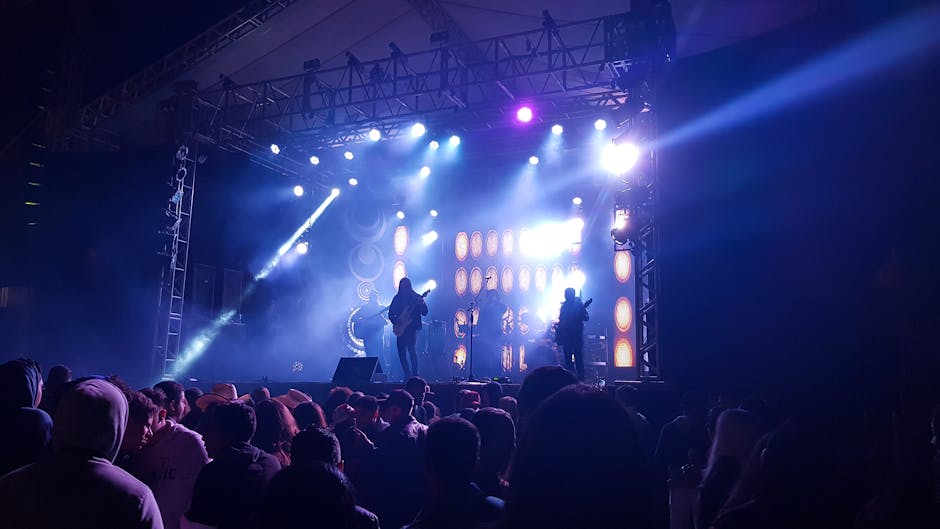
Setting up a professional concert stage involves much more than plugging in a microphone and turning on some lights. The equipment that powers live performances—from backline gear to sophisticated lighting systems—requires careful planning and expertise to create memorable experiences for both performers and audiences. Understanding these essential components helps musicians, event organizers, and stage managers make informed decisions about their concert production needs.
Backline equipment refers to the musical instruments and amplification gear required for live performances, excluding the main PA system, monitors, and lighting. This essential equipment forms the foundation of any concert setup and includes guitar amplifiers, bass amplifiers, keyboards, keyboard amplifiers, drum kits, cymbals, percussion instruments, stands, rack effects, cables, and various accessories.
The specific backline requirements depend on the musical style, venue size, group instrumentation, and available budget. Rock bands typically need powerful guitar and bass amplifiers, while jazz ensembles might focus more on keyboard setups and acoustic instrument amplification. Electronic music artists often require extensive keyboard rigs and specialized controllers that connect to laptops or hardware sequencers.
Professional music retailers like of backline equipment from industry-leading manufacturers, helping musicians find the right gear for their specific performance needs. Beyond basic amplification, modern backline setups often incorporate effects processors, wireless systems, and digital interfaces that allow for more complex signal routing and sound manipulation during live shows.
Proper backline specification requires detailed technical information that goes far beyond simply listing "guitar amp" or "drum kit." Professional venues and rental companies need exact make and model information, power handling capacities, speaker configurations, and specific feature requirements to provide the correct equipment for each performance.
Guitar and bass amplifiers form the core of most backline setups, and their specifications directly impact both sound quality and stage volume. When specifying amplifiers, include the exact make and model, such as "Fender Twin Reverb (85 watts)" or "Ampeg SVT Classic (300 watts)," along with power ratings measured in watts. Speaker cabinet specifications should detail the number and size of drivers—for example, "4x12 cabinet with Celestion Vintage 30 speakers" or "8x10 bass cabinet, 8-ohm impedance."
Power handling becomes especially important for larger venues where amplifiers need sufficient headroom to cut through dense mixes without distortion. Many professional riders also include acceptable alternative models and explicitly list equipment that should not be used, helping rental companies understand both preferences and deal-breakers for specific artists.
Drum kit specifications require detailed information about shell sizes, hardware types, and cymbal requirements. A typical specification might include "22" kick drum, 10" and 12" rack toms, 16" floor tom, 14" snare drum," along with specific hardware like "double-braced cymbal stands" and "heavy-duty hi-hat stand." Many drummers also specify cymbal types and sizes, such as "20" ride cymbal, 16" crash cymbal, 14" hi-hats."
Professional drum specifications often include details about drum head preferences, hardware finish requirements, and any specialty percussion items like tambourines, cowbells, or electronic pads. The positioning and accessibility of these components can significantly impact a drummer's performance, making precise specification essential for successful shows.
Keyboard specifications must account for both the instruments themselves and their supporting equipment. This includes the exact models needed—such as "Hammond B3 organ with Leslie 147 speaker" or "Yamaha CP88 stage piano"—along with sturdy stands rated for the instrument's weight. Many keyboardists require multiple tiers of stands to accommodate several instruments simultaneously.
Miscellaneous gear includes the numerous smaller items that keep performances running smoothly: instrument cables of specific lengths, power strips with surge protection, guitar stands, music stands, and various adapters. These seemingly minor components often determine whether equipment functions properly together, making their specification just as important as the primary instruments.
Stage lighting serves multiple critical functions that extend far beyond basic visibility. While illuminating performers remains the primary objective, professional lighting design also shapes audience attention, controls selective visibility, reveals form and location, establishes time of day, and creates atmospheric effects through carefully controlled color, intensity, and movement.
Proper stage illumination ensures that audiences can clearly see performers' facial expressions, instrument techniques, and stage movements from every seat in the venue. This requires strategic placement of front lights that wash the entire stage with even coverage, while side and high side lighting fill in shadows and provide dimensional depth. Without adequate illumination, even the most talented performers can appear flat and disconnected from their audience.
Visibility requirements vary significantly between different types of performances. Theatrical productions need precise control over which areas remain lit or dark to guide audience focus, while concerts often require consistent illumination across the entire stage. Dance performances benefit from strong backlighting that creates silhouettes and emphasizes movement, while speaker presentations typically need bright, even front lighting that minimizes shadows.
Lighting color and intensity directly influence audience emotions and attention throughout a performance. Warm colors like red and amber create intimate, energetic atmospheres perfect for rock concerts or romantic scenes, while cool blues and purples evoke sadness, mystery, or tranquility. The ability to transition between different color palettes allows lighting designers to support the emotional arc of musical performances or theatrical productions.
Strategic lighting placement helps direct audience attention to specific stage areas or performers. A single followspot can isolate a soloist during a guitar solo, while dimming surrounding areas. Moving lights can create visual effects that complement musical crescendos or dramatic moments, transforming static stages into visually engaging environments that support the overall performance experience.
Professional stage lighting relies on several distinct fixture types, each designed for specific applications and effects. Understanding these different instruments helps lighting designers create systems that provide both functional illumination and creative visual impact for live performances.
Ellipsoidal reflector spotlights (ERS) produce intense, precisely controlled beams that make them ideal for front lighting applications and creative effects. These fixtures feature adjustable focus systems that can create sharp or soft beam edges, along with built-in shutters that shape the light and prevent unwanted spill into dark areas. The ability to hold gobos and color gels makes ellipsoidals versatile tools for both functional lighting and artistic effects.
Front lighting typically uses ellipsoidal spotlights positioned in the audience area, angled toward the stage to illuminate performers' faces evenly. This positioning minimizes harsh shadows while providing the primary illumination that audiences need to see facial expressions and performance details clearly. Multiple ellipsoidals are often used to cover different stage areas independently, allowing lighting operators to adjust intensity and color for specific scenes or songs.
PAR (Parabolic Aluminized Reflector) cans represent one of the most common lighting fixtures in concert and theatrical applications. These sealed-beam units resemble large automotive headlights and provide wide, soft-edged coverage perfect for wash lighting applications. Available in sizes ranging from PAR16 to PAR64, their simple design makes them reliable and cost-effective, while their intense output handles large venue requirements effectively.
Fresnel lanterns feature specialized stepped lenses with concentric rings that create bright centers with soft, feathered edges. This characteristic makes them excellent for blending multiple fixtures together without visible beam boundaries. Unlike PAR cans, Fresnels offer variable focus control, allowing operators to adjust beam width from spot to flood positions. However, they cannot accommodate shutters or gobos, limiting their applications to wash and area lighting.
Followspots provide manually operated, intense beams that can track performers moving across the stage. These fixtures typically feature variable iris controls for adjusting beam size, color changers for quick color shifts, and dowser mechanisms for smooth fade-outs. Professional followspot operators require skill and practice to smoothly track performers while making real-time adjustments to beam size, color, and intensity.
Specialty fixtures include moving lights with motorized pan, tilt, color, and gobo systems controlled by lighting consoles. These automated fixtures can create complex movements and rapid color changes that would be impossible with conventional lighting. Strip lights and cyc lights provide large-area color washes for backdrops and cycloramas, while floodlights offer wide, uncontrolled coverage for general illumination applications.
Professional performances require detailed documentation that communicates exact equipment needs and placement requirements to venues and rental companies. This documentation takes three primary forms: the contract rider that lists all required equipment with specifications, the stage plot that shows precise positioning of every piece of gear on stage, and input lists that detail signal routing requirements.
The contract rider serves as a legally binding document that specifies exactly what equipment the venue or rental company must provide for the performance. This document should list every piece of backline equipment with complete specifications, including make, model, power requirements, and any special features needed. Professional riders also include acceptable alternative equipment and explicitly state which brands or models are unacceptable for the performance.
Effective riders include contingency planning for equipment failures, specifying backup instruments and amplifiers that must be available on-site. They should also detail power requirements, cable specifications, and any special setup instructions that venue technicians need to follow. Clear, detailed riders prevent misunderstandings that could lead to performance delays or cancellations due to inadequate or incorrect equipment.
Stage plots provide visual representations of equipment placement, typically drawn from an overhead perspective with the audience at the bottom of the page. These diagrams show the exact position of every amplifier, drum kit component, keyboard stand, and microphone, along with cable routing and power requirements. Professional stage plots also indicate performer positions and movement patterns during the show.
Accurate stage plots help venue technicians prepare equipment placement before the band arrives, reducing setup time and preventing conflicts during sound check. They should include measurements for critical spacing requirements, such as minimum distances between amplifiers or specific positioning relative to drum risers. Many professional acts also include photographs of their actual stage setup to supplement the technical drawings with visual references.
Selecting the right equipment retailer significantly impacts both the quality of gear obtained and the level of support available for complex concert productions. Professional music retailers provide expertise, quality assurance, and service packages that extend far beyond simple equipment sales or rentals.
Modern online music retailers provide extensive product catalogs, detailed specifications, and expert consultation services that help musicians make informed equipment decisions. Professional staff can recommend appropriate gear based on specific performance requirements, venue sizes, and budget constraints. Many retailers also provide rental programs that allow musicians to test equipment before purchasing or access high-end gear for specific performances without major capital investments.
Quality retailers maintain relationships with major manufacturers that ensure access to the latest equipment releases and factory support for warranty issues. They often provide technical support services, including equipment setup assistance, troubleshooting guidance, and repair coordination. Some retailers also provide financing options that make professional-grade equipment accessible to musicians who need quality gear but face budget constraints.
For backline and lighting equipment needs, Sam Ash provides professional musicians with and expert consultation services.


