Planning a commercial exterior repaint but not sure if you’re getting a fair price? Most business owners don’t realize that “cost per square foot” doesn’t mean what they think it does, and that misunderstanding alone can derail an entire project budget.
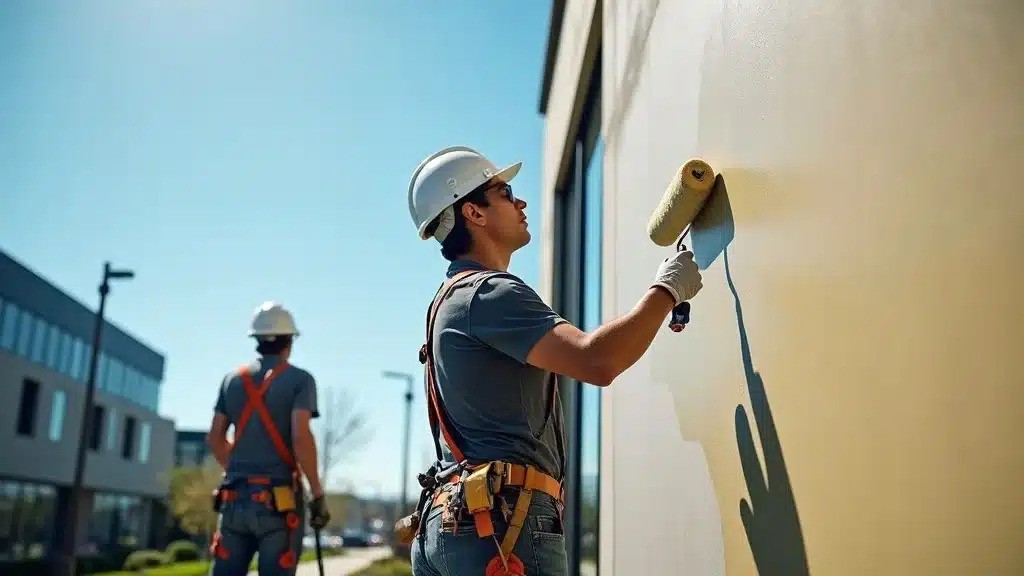
Getting a quote for a commercial exterior repaint and not knowing whether it's a fair deal is a frustrating position to be in. The numbers can vary wildly between contractors, and without knowing what drives those numbers, it's hard to tell the difference between a great deal and a cost disaster waiting to happen. According to the experts from The Painting Pros, a Silicon Valley-based commercial painting contractor, this guide breaks down exactly how commercial exterior painting costs are structured - so the next quote that lands on the desk makes sense.
Commercial exterior painting in Silicon Valley typically runs between $2.00 and $6.00 per square foot for labor and materials. For a standard 10,000 sq ft commercial building, that puts total project estimates somewhere between $20,000 and $60,000. That's a wide range - and it exists for very specific reasons.
The low end reflects simple, single-story buildings with minimal prep requirements. The high end reflects multi-story buildings with complex trim, heavy surface deterioration, or specialty coatings. Here's how the tiers typically break down:
Understanding where a specific project falls in that range requires looking at a handful of key cost drivers - which is exactly what the rest of this guide covers.
In commercial painting, square footage refers to paintable surface area - the actual wall, trim, and facade surfaces that will be coated. A 10,000 sq ft office building with 9-foot ceilings has dramatically less paintable exterior surface than a 10,000 sq ft warehouse with 24-foot walls. More wall height means more surface area, more labor hours, and more material - which means a higher total cost, even if the floor plans look identical on paper.
When comparing quotes, always confirm how each contractor measured square footage. If two bids use different baselines, they aren't comparable.
A thorough commercial painting estimate includes surface preparation (cleaning, sanding, patching), masking and protection, primer where required, finish coats, labor, supervision, standard equipment, and cleanup. These line items reflect the full scope of work needed to deliver a lasting result.
Low bids cut scope, not corners - and the missing scope shows up as change orders. Common exclusions include:
A bid without these line items isn't cheaper - it's incomplete. The cost of those items doesn't disappear; it just gets added later, usually at a premium.
Single-story buildings are straightforward to access. Once a building exceeds 15 feet, the equation changes. Scaffolding setups and motorized boom lift rentals can add thousands of dollars to a project budget - and that cost scales with building height and the complexity of the facade. Any quote for a multi-story building that doesn't itemize access equipment is almost certainly underestimating the real cost.
Surface preparation is often the single largest cost driver in a commercial exterior repaint. A well-maintained surface may need little more than a pressure wash. A deteriorated surface - with peeling paint, cracking stucco, failing caulk, or moisture damage - can require scraping, patching, priming, and extensive caulking before a single finish coat goes on. Surface preparation can account for an estimated 40-60% of total labor hours on complex jobs, which translates to a substantial share of the overall project cost. Skipping or shortcutting prep is the fastest way to get a paint job that fails years before it should.
Occupied commercial buildings add a layer of cost that vacant ones don't. When work needs to happen after hours, on weekends, or in phases to avoid disrupting tenants or daily operations, labor costs increase due to overtime wages and more complex project coordination. The more constrained the schedule, the more expensive the execution - a factor that should always appear as a line item in any honest bid.
The Bay Area's coastal-adjacent climate is harder on exterior coatings than many property owners realize. High UV exposure, seasonal fog, and rainfall cycles all accelerate surface degradation. Buildings near the coast deal with salt air. Older buildings may have lead-paint concerns that require remediation before any new coating goes on. All of these factors increase the scope and cost of prep work, and they influence which coatings are appropriate for the job.
Standard exterior latex performs adequately in mild, stable climates. In Silicon Valley, it's rarely the right long-term choice for commercial exteriors. Elastomeric coatings - thick, flexible systems designed to bridge hairline cracks and resist moisture penetration - are widely recommended for Bay Area commercial buildings. They handle the thermal expansion and contraction that comes with temperature swings, and they hold up against fog-driven moisture in a way that thinner coatings simply don't. Anti-microbial formulations are also worth considering for north-facing or heavily shaded facades prone to mildew.
Before laying quotes side by side, confirm that each one clearly answers the following:
A low bid isn't automatically a good deal. Watch for these warning signs:
In California, commercial painting contractors must hold a valid, active license issued by the Contractors State License Board (CSLB). This isn't optional. An unlicensed contractor operating on a commercial property exposes the building owner to significant legal and financial liability. Before signing anything, verify the license number directly on the CSLB website. Workers' compensation coverage is equally non-negotiable - if a worker is injured on site without it, the property owner can be held responsible for medical costs.
General liability insurance protects against property damage caused during the project. For commercial properties, this is a baseline requirement, not a premium ask. Request a certificate of insurance naming the property owner or management company as an additional insured. Any contractor who hesitates at this request is not set up for commercial work.
A verbal agreement is not a contract. Every commercial repaint should begin with a written scope of work that itemizes surfaces, prep requirements, product specifications, number of coats, access methods, scheduling terms, and explicit exclusions. This document protects both parties - and it makes managing the project far easier once work begins. Clear upfront scope documentation is the single most effective way to prevent budget overruns and change order disputes.
The math on coating quality is straightforward. A premium elastomeric or high-build coating system costs more per gallon than a standard exterior latex - but it also lasts significantly longer, often extending the repaint cycle by several years. When factoring in the cost of mobilization, prep, labor, and disruption to business operations, pushing that cycle from five years to eight or nine years represents substantial savings over the life of the building.
Cheap paint applied over poor prep is the most expensive option available. The right coating system, properly applied over a well-prepared surface, is where long-term value is actually built.
Every factor covered in this guide - surface condition, building height, coating selection, scheduling constraints - needs to be evaluated by someone who has handled commercial exterior painting projects at scale in this specific market. The Bay Area's climate, local regulations, and the operational demands of occupied commercial properties all require local expertise, not just painting experience.
When evaluating contractors, look for verifiable credentials, a track record of commercial work, and a willingness to put everything in writing before any work begins. A transparent, itemized bid is the clearest signal that a contractor understands the scope - and is serious about delivering on it.


