Traveling DJs and bands are ditching traditional PA systems for a reason – column array speakers deliver professional sound with setup times under 5 minutes. But choosing the wrong system could leave you underpowered when it matters most.
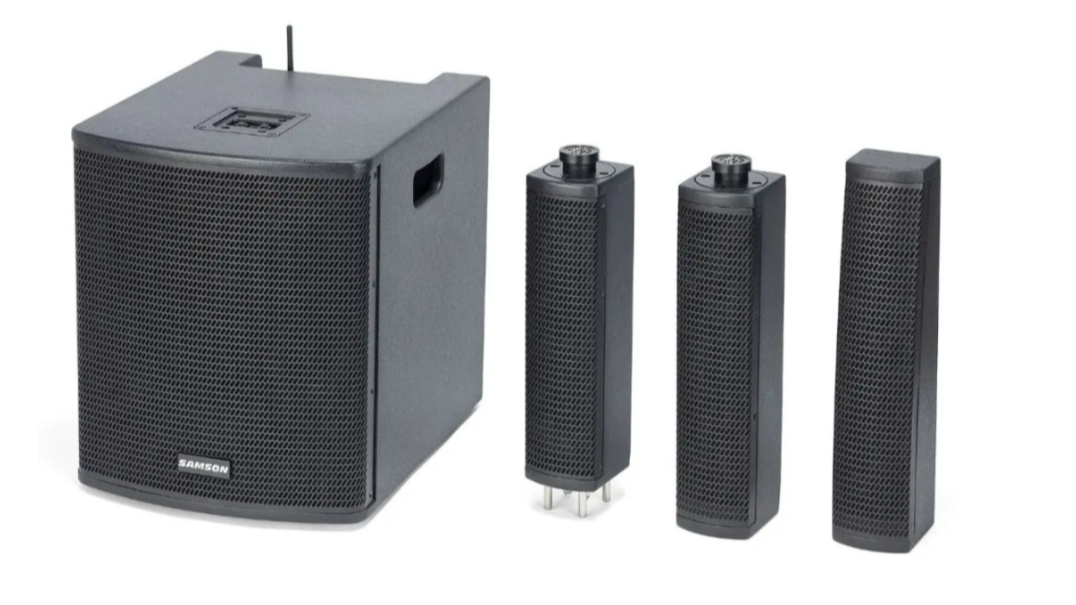
Traditional PA systems forced traveling performers into a nightmare of cables, stands, multiple speakers, and heavy lifting. Each gig meant unpacking boxes of equipment, threading countless connections, and hoping nothing failed mid-performance. Column array speakers eliminate this complexity by integrating full-range drivers, subwoofers, mixers, and DSP processing into sleek, portable systems that deliver professional sound with minimal setup time.
The technology behind column arrays creates wide horizontal coverage through vertically arranged line array speakers in a slim column design. Combined with powerful integrated subwoofers in the base unit, these systems deliver full-spectrum sound that rivals traditional setups costing thousands more while requiring significantly less transport effort and setup complexity. Sam Ash's detailed guide to column array speakers explains how these systems are transforming live sound for mobile performers who need reliability and consistent performance across different venue types.
Column array systems excel at reproducing mid and high frequencies with exceptional clarity, making them particularly effective for vocals, acoustic instruments, and speech applications. The vertical line array design creates a narrow vertical dispersion pattern that minimizes reflections from floors and ceilings while maximizing sound directed toward audiences. This engineering approach results in more consistent sound quality from front row to back row compared to traditional point-source speakers.
The Samson Resound VX8.1 proves that professional column array performance doesn't require premium pricing. This system delivers 700 watts of Class-D amplification through eight 3.5-inch drivers arranged in a two-segment interlocking column array, providing 120-200 degrees of horizontal coverage. The integrated 12-inch subwoofer extends low-end response down to 40Hz, delivering the chest-thumping bass that makes music feel alive while maintaining exceptional clarity in the mid and high frequencies.
Four onboard DSP presets (Music, Live, Speech, DJ) optimize sound for different applications with single-button operation, while Bluetooth connectivity enables wireless music streaming from smartphones or tablets. The VX8.1's modular design breaks down into portable components that interlock seamlessly for tool-free setup, and the complete system weighs just 67 pounds. An output connection enables daisy-chaining a second VX8.1 system for larger venues requiring additional coverage and volume.
Electro-Voice engineered the Evolve 50 for performers who demand professional audio performance without sacrificing practical portability. This 1000-watt system delivers exceptional sound quality through eight 3.5-inch neodymium compression drivers, each featuring custom waveguides that create ultra-wide 120-degree horizontal coverage matching the subwoofer's dispersion pattern. This precision engineering ensures consistent sound quality across the entire audience area.
QuickSmart DSP technology provides instant access to four venue presets (Music, Club, Live, Speech), three-band EQ, and visual metering through a single knob and LCD screen interface. For multi-system setups, the free iOS/Android app enables remote control of up to six Evolve systems, including system delay management for perfect synchronization. Despite its powerful 1000-watt output capability, the complete system weighs just 60 pounds and breaks down into manageable components for solo transport.
Yamaha's DXL1K addresses a critical challenge for solo performers: delivering professional-grade sound with exceptional coverage in a format simple enough for one-person operation. This 1,100-watt system features Yamaha's proprietary J-Curve Slim Line Array design that provides remarkable 170-degree horizontal coverage while maintaining focused 30-degree vertical dispersion. The high-frequency array comprises ten small-diameter 1.5-inch speakers arranged in the J-curve configuration for consistent, high-quality sound distribution from front row to back of audience.
The 1,100-watt Class-D amplifier delivers 125 dB SPL from its compact cabinet design. Three EQ modes (Speech, Music, Club) provide instant optimization with single-button operation, while the simplified two-channel mixer accommodates microphones and line-level sources. Despite its powerful output and wide coverage, the complete system weighs only 50.7 pounds, making it exceptionally manageable for mobile applications.
Weight becomes critical when loading gear into vehicles multiple times per week. Systems weighing 60-70 pounds remain manageable for solo performers, while heavier options may require assistance or rolling transport cases. Three-piece designs that break down completely fit smaller vehicles better than single-unit systems, and modular components should interlock securely without requiring tools or complicated assembly procedures.
Consider the breakdown dimensions relative to vehicle space constraints. Column sections typically measure 6-8 inches in diameter and 24-36 inches in height, while subwoofer bases range from 12-15 inches square. Systems with custom gig bags or protective cases provide additional transport convenience and equipment protection during frequent moves.
Built-in DSP presets eliminate the need for external processing equipment while optimizing sound for specific applications. Music presets typically boost overall frequency response for recorded playback, while Live presets emphasize vocal clarity and instrument definition for bands. Speech presets focus midrange frequencies for maximum intelligibility, and DJ presets often boost bass response and overall energy for dance music applications.
Advanced systems offer app-based remote control enabling real-time adjustments from anywhere in the venue. This capability proves particularly valuable when fine-tuning sound during performances or managing multiple speaker systems simultaneously. Look for systems offering at least three distinct presets covering music playback, live performance, and speech applications.
Horizontal coverage between 120-180 degrees suits most venue configurations effectively. Wider coverage patterns work better for rooms where audiences spread laterally, such as wedding receptions or corporate events. Narrower patterns focus acoustic energy for long, deep spaces like conference rooms or narrow performance venues. The key lies in matching coverage pattern to typical venue shapes and audience positioning.
Vertical coverage typically ranges from 30-40 degrees, directing sound toward audiences rather than ceilings and floors. This focused vertical dispersion improves system efficiency while reducing potential feedback from reflective surfaces. Systems with adjustable tilt mechanisms enable fine-tuning vertical coverage for different stage heights and audience configurations.
Column array systems reduce setup time from 20-30 minutes to under 5 minutes for most configurations. Traditional systems require assembling speaker stands, running multiple cables, connecting mixers, positioning subwoofers, and testing each component individually. Column arrays simply stack together, connect power, and activate with single-button operation.
The elimination of speaker stands removes a significant failure point while simplifying transport and storage requirements. Integrated mixing eliminates external console requirements for basic applications, though most systems include outputs for connecting additional equipment when needed. This streamlined approach enables faster load-in and strike times, critical factors for performers working multiple venues per week.
Column arrays maintain consistent tonal balance and coverage patterns regardless of venue acoustics. Traditional point-source speakers often sound dramatically different in various rooms due to reflections, room size, and acoustic treatment variations. The focused vertical dispersion of column arrays minimizes interaction with room surfaces while the wide horizontal pattern ensures even coverage across different audience configurations.
This consistency reduces the need for extensive sound checking and EQ adjustments between venues. Performers can rely on familiar DSP presets and basic level adjustments rather than spending valuable setup time compensating for room acoustics. The predictable performance characteristics enable confident sound quality delivery regardless of venue familiarity.
Systems delivering 700-800 watts provide sufficient volume and headroom for most indoor applications accommodating 50-200 people. This power range handles background music, DJ applications, small band performances, and speech reinforcement with comfortable volume levels and clean sound quality. Indoor venues benefit from wall and ceiling reflections that reinforce acoustic output, reducing power requirements compared to outdoor applications.
The Samson Resound VX8.1's 700-watt output exemplifies this category's capabilities, delivering 125 dB maximum SPL suitable for dance floors, wedding receptions, corporate presentations, and small live music venues. Built-in limiters prevent speaker damage while maintaining clean output during peak demand periods.
Power requirements increase significantly for outdoor events, larger indoor spaces exceeding 200 capacity, or applications demanding high volume levels. Systems delivering 1000-1400 watts provide the additional headroom necessary for these demanding applications while maintaining sound quality during peak output periods.
The Electro-Voice Evolve 50's 1000-watt capability and Yamaha DXL1K's 1100-watt output represent this performance category effectively. These systems handle outdoor wedding ceremonies, large corporate events, festival stages, and indoor venues up to 300-400 capacity depending on music style and volume requirements.
Maximum SPL ratings provide more accurate power assessment than wattage specifications alone. Systems producing 125-127 dB maximum SPL handle most mobile applications effectively, while 130+ dB capability suits extremely demanding situations. Driver sensitivity and acoustic design efficiency significantly impact actual volume output regardless of amplifier power ratings.
Music style influences power requirements substantially. Electronic dance music, hip-hop, and rock genres demand higher power levels due to compressed dynamics and extended low-frequency content. Jazz, acoustic performances, and speech applications require less power but benefit from extended headroom for transient peaks and dynamic range preservation.
Since 1924, Sam Ash has helped musicians, DJs, and performers find equipment that matches their needs, fits their budget, and delivers exceptional sound quality. The company's Gear Expert team includes working audio professionals who use column array systems themselves, understanding the difference between marketing specifications and real-world performance requirements. Whether comparing the Samson Resound VX8.1's value proposition against the Electro-Voice Evolve 50's advanced features, or evaluating the Yamaha DXL1K's exceptional coverage capabilities, expert guidance helps navigate these important decisions based on specific performance situations.
Professional audio equipment represents a significant investment, which is why Sam Ash partners with multiple financing providers to make these systems accessible. Options include 0% interest financing through the Synchrony Music & Sound card, Affirm's buy-now-pay-later plans for spreading payments over time, and progressive leasing programs that bring premium systems within reach of any budget. Every order over $49 ships free, and the 45-day return window provides adequate time for testing new systems at actual gigs before committing fully.
Visit Sam Ash today to view their complete selection of professional column array speakers and find the perfect system for your mobile performance needs.


