Most people never think twice about their watch band—until they learn what’s hiding in the materials. Here’s how to keep “forever chemicals” off your wrist for good.
You probably don't think much about your watch strap—until you do. Maybe it's the way it feels after a long, sweaty day, or the faint chemical odor that never quite goes away. Or maybe it's the headlines: “Forever chemicals found in everyday wearables.” Suddenly, that simple band on your wrist feels a little less innocent.
Since when did your Apple watch strap become involved in the question of what we put on our skin? It started with buyers waking up to the risks of PFAS (polyfluoroalkyl substances), the so-called “forever chemicals” that don’t break down and can linger in our bodies and the environment. Yes, is always going to be about comfort and aesthetics, but now also about safety, sustainability, and, yes, a little peace of mind.
PFAS aren’t just a problem in nonstick pans and raincoats. Recent investigations have found them in everything from yoga pants to fitness trackers. Why? Because these chemicals make materials water-resistant, stain-proof, and durable—qualities that sound great until you realize the environmental and health costs.
Many synthetic bands, especially those made from fluoroelastomers or treated fabrics, can contain PFAS or other persistent chemicals. These chemicals have been linked to endocrine disruption, liver damage, and accelerated puberty. And since your watch is something you wear all day, every day, it’s worth asking: what’s actually in that band?
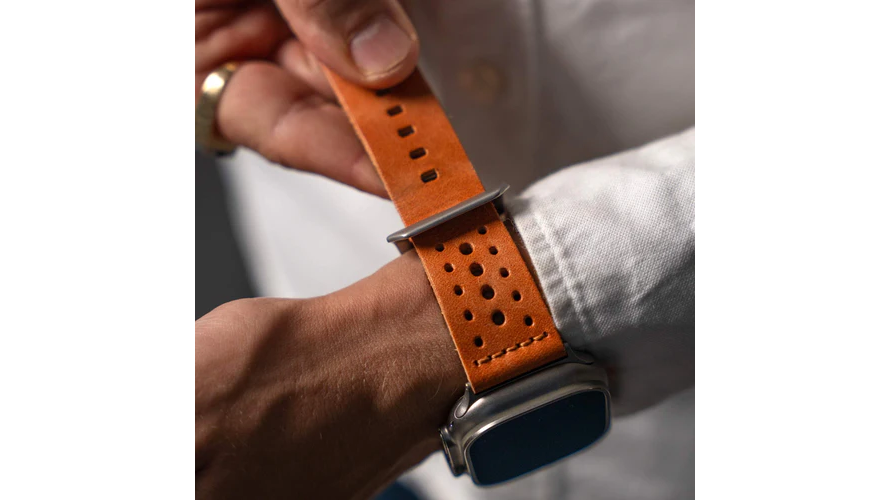
Vegetable-tanned leather has been around for centuries, but now, it may be back for good. Unlike chrome-tanned leather (which relies on heavy metals and harsh chemicals), vegetable-tanned leather uses plant-based tannins to transform raw hides into supple, durable straps. The process is slower, more traditional, and, crucially, doesn’t rely on PFAS or other synthetic additives.
Brands like Robust Goods are now crafting their Apple Watch straps from Italian vegetable-tanned bovine grain leather. The result is a strap that’s free from PFAS, heavy metals, and other “forever chemicals,” while paying homage to Italy's artisanal brilliance.
If you’re shopping for a new watch band and want to avoid unwanted chemicals, here’s what the experts suggest:
It’s not just about what’s on your wrist—it’s about what happens when you’re done with it. Vegetable-tanned leather is biodegradable and produced with fewer environmental impacts than its synthetic or chrome-tanned counterparts. And because get better with age, you’re less likely to toss them after a season or two.
Natural, vegetable-tanned leather straps—like those from Robust Goods—are a way to wear your values on your sleeve (or, well, your wrist).
So the next time you’re in the market for a new band, ask yourself: What’s in this strap? The answer might matter more than you think.


