Full mouth dental implants offer a fixed alternative to removable dentures, using systems like All-on-4 and All-on-6 to support a complete arch of replacement teeth. This guide covers how each approach works, what affects cost, and what the treatment process typically involves.
Losing multiple teeth can affect far more than appearance. Everyday activities like eating, speaking clearly, and even smiling comfortably often become more difficult over time. While removable dentures remain a common solution, many patients eventually begin looking for something that feels more stable and long-term.
Full mouth dental implants have become one of the most widely discussed alternatives. Designed to replace an entire upper or lower arch of teeth, these systems offer a fixed solution that functions more like natural teeth than traditional removable appliances.
For patients researching treatment, one of the biggest challenges is understanding the different options available and how costs are determined. From All-on-4 systems to full-arch implant bridges, treatment plans can vary significantly depending on the condition of the mouth and jawbone.
Full mouth dental implants are used to replace most or all teeth in the upper jaw, lower jaw, or both. Instead of relying on removable dentures that sit on the gums, implants are placed directly into the jawbone to support a fixed restoration.
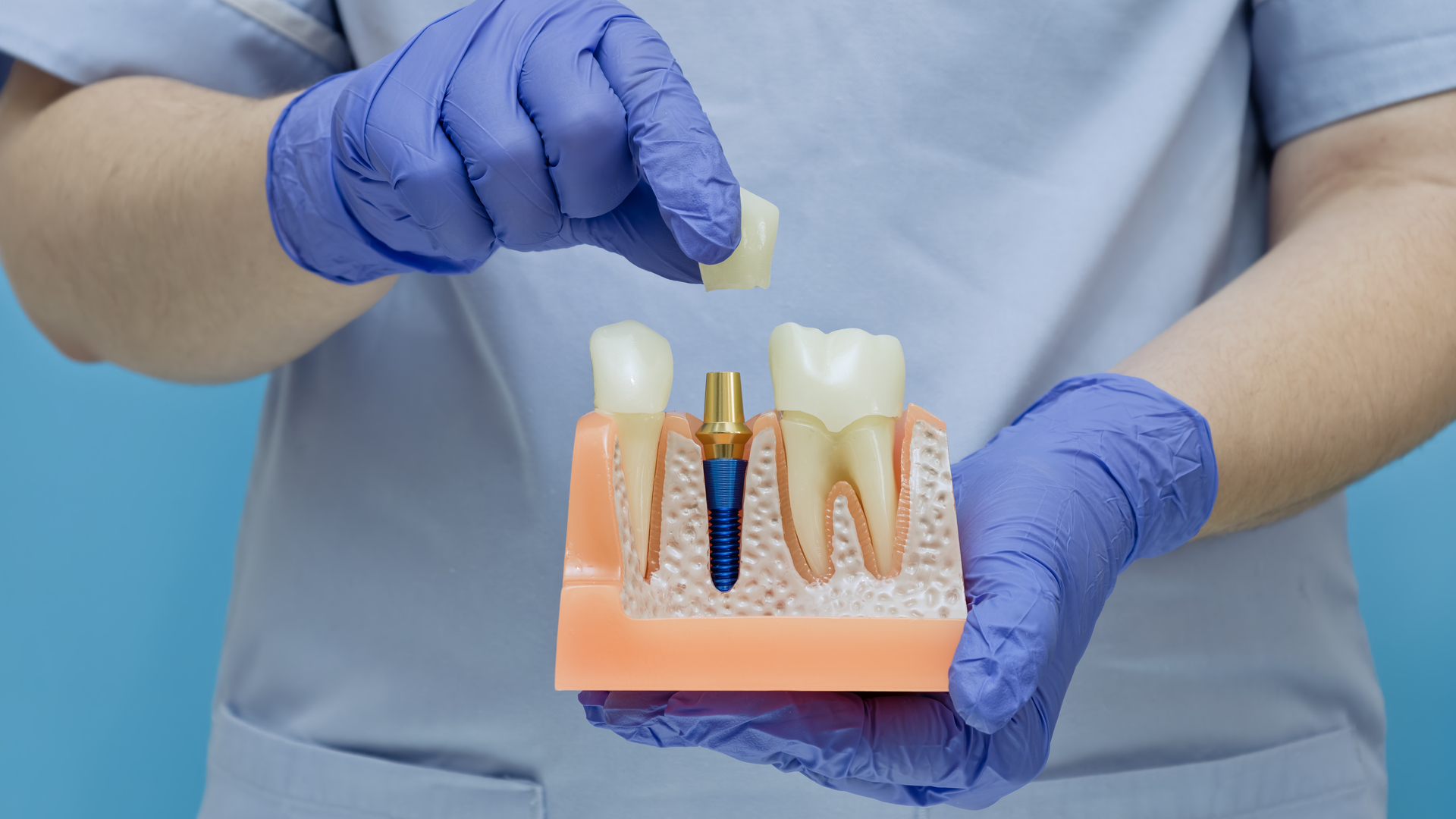
The implants themselves are small titanium posts that act as artificial tooth roots. Once placed, they gradually integrate with the surrounding bone through a process called osseointegration. This creates a stable foundation for replacement teeth.
Depending on the treatment plan, implants may support a fixed bridge, a full-arch prosthesis, or implant-retained dentures. The goal is to restore both function and appearance while reducing many of the common frustrations associated with removable dentures.
Traditional dentures can help restore appearance initially, but they also come with limitations that many patients find difficult over time.
Loose-fitting dentures may move during eating or speaking, particularly as the jawbone changes shape over the years. Adhesives and repeated adjustments can become part of daily life, and some patients avoid harder foods altogether because chewing feels uncomfortable or unstable.
Dental implants work differently because they are fixed in place. Rather than resting on the gums, they anchor directly into the jawbone, which allows for greater stability during daily activities.
Another major factor is bone preservation. When teeth are lost, the jawbone gradually begins to shrink because it no longer receives stimulation from natural tooth roots. Implant placement helps maintain that stimulation, supporting facial structure and reducing the sunken appearance sometimes associated with long-term tooth loss.
Two of the most common full-mouth implant systems are All-on-4 and All-on-6. While both are designed to support a complete arch of teeth, they differ slightly in structure and stability.
The All-on-4 approach uses four implants to support a full arch restoration. The rear implants are usually angled strategically to make the best use of available bone and avoid anatomical structures such as sinus cavities.
Because fewer implants are used, this approach may reduce the need for additional bone grafting in some patients. It can also simplify treatment planning for individuals who have experienced moderate bone loss.
All-on-4 systems are commonly chosen by patients looking for a fixed alternative to dentures without undergoing extensive preparatory surgery.
All-on-6 systems use six implants instead of four, distributing biting forces across more support points. This may provide additional stability, particularly for patients with stronger bite pressure or better bone density.
The additional implants can also create more support for larger restorations and may improve long-term load distribution across the jaw.
Whether four or six implants are recommended depends entirely on the patient’s anatomy, bone availability, and overall treatment goals.
One of the biggest questions patients ask is whether they will leave treatment without teeth during healing. In many cases, the answer is no.
Some full-mouth implant procedures allow temporary teeth to be fitted on the same day as surgery. Often referred to as “same-day teeth” or “immediate loading,” this approach gives patients a temporary fixed restoration while the implants heal.
These temporary teeth are not the final prosthesis. Instead, they act as a short-term solution during the integration phase, which typically lasts several months.
Once healing is complete, the final restoration is fitted. This stage usually involves stronger and more detailed materials designed for long-term durability and aesthetics.
Full mouth dental implant costs vary widely because every patient’s needs are different. Factors such as bone density, the number of implants required, additional procedures, and restoration materials all influence the final cost.
Some patients require preparatory treatment before implants can be placed. Bone grafting or sinus lift procedures may be necessary if the jawbone has deteriorated significantly after years of tooth loss.
The type of final restoration also affects pricing. Acrylic restorations are often more affordable, while zirconia and porcelain restorations typically cost more due to their durability and appearance.
Rather than focusing on a single advertised number, dentists usually assess costs after a consultation and digital imaging process. This allows treatment plans to be tailored more accurately to the patient’s condition.
Modern implant dentistry relies heavily on digital technology to improve planning accuracy and consistency.
Cone Beam Computed Tomography (CBCT) scans create detailed 3D images of the jaw, allowing dentists to evaluate bone density, nerve locations, and anatomical structures before surgery begins. This information helps reduce uncertainty during implant placement.
Digital scans are also used to map the shape of the mouth and existing bite. These scans can replace traditional impressions and help design restorations more precisely.
At Arnold Dental & Implant Centre in Nottingham, digital planning workflows — including advanced imaging and guided placement systems — are used to support accuracy across full-arch cases.
One of the major developments in implant dentistry is guided surgery. Using digital planning data, custom surgical guides can be created before treatment.
These guides help direct implant positioning according to the pre-planned angle and depth established during the digital assessment phase. The process supports consistency and may reduce unnecessary trauma to surrounding tissues.
For patients, this often means a more predictable treatment experience and better alignment between the surgical phase and the final restoration.
Many adults with multiple missing or failing teeth may qualify for implant treatment, but suitability depends on several factors.
Bone quality is one of the most important considerations. Patients must have enough healthy bone to support implant placement, although bone grafting may help in some situations.
General oral health also matters. Conditions such as untreated gum disease may need to be addressed before implants are considered.
Lifestyle factors can influence healing as well. Smoking, uncontrolled diabetes, and certain medical conditions may increase the risk of complications or slower integration.
Because every case is different, a full assessment is needed before treatment recommendations are made.
Healing times vary depending on the complexity of the procedure and the patient’s overall health.
Most patients experience swelling and mild discomfort for several days after surgery, although this is usually manageable with standard aftercare instructions and medication.
The implants themselves generally require several months to fully integrate with the jawbone. During this period, patients often wear temporary restorations while healing progresses.
Regular follow-up appointments are used to monitor healing and ensure the implants remain stable before the final prosthesis is fitted.
Replacing all teeth with dental implants is a significant treatment decision, but for many patients, it offers a more stable and long-term alternative to traditional dentures.
From All-on-4 systems to digitally planned full-arch restorations, modern implant dentistry now provides several approaches depending on the patient’s needs and bone structure. Understanding the differences between these options, along with the factors affecting cost and treatment timelines, helps patients make more informed decisions about their care.
As digital planning and guided surgery continue to develop, implant treatment is becoming increasingly precise, structured, and tailored to individual patients seeking both functional and aesthetic improvements.


