Noticing more hair in the brush lately? Stress levels might be the culprit—but not in the way one thinks. Scientists have discovered that hair follicles produce their own stress hormones, creating a self-perpetuating cycle that keeps hair falling out even after you’ve calmed down.
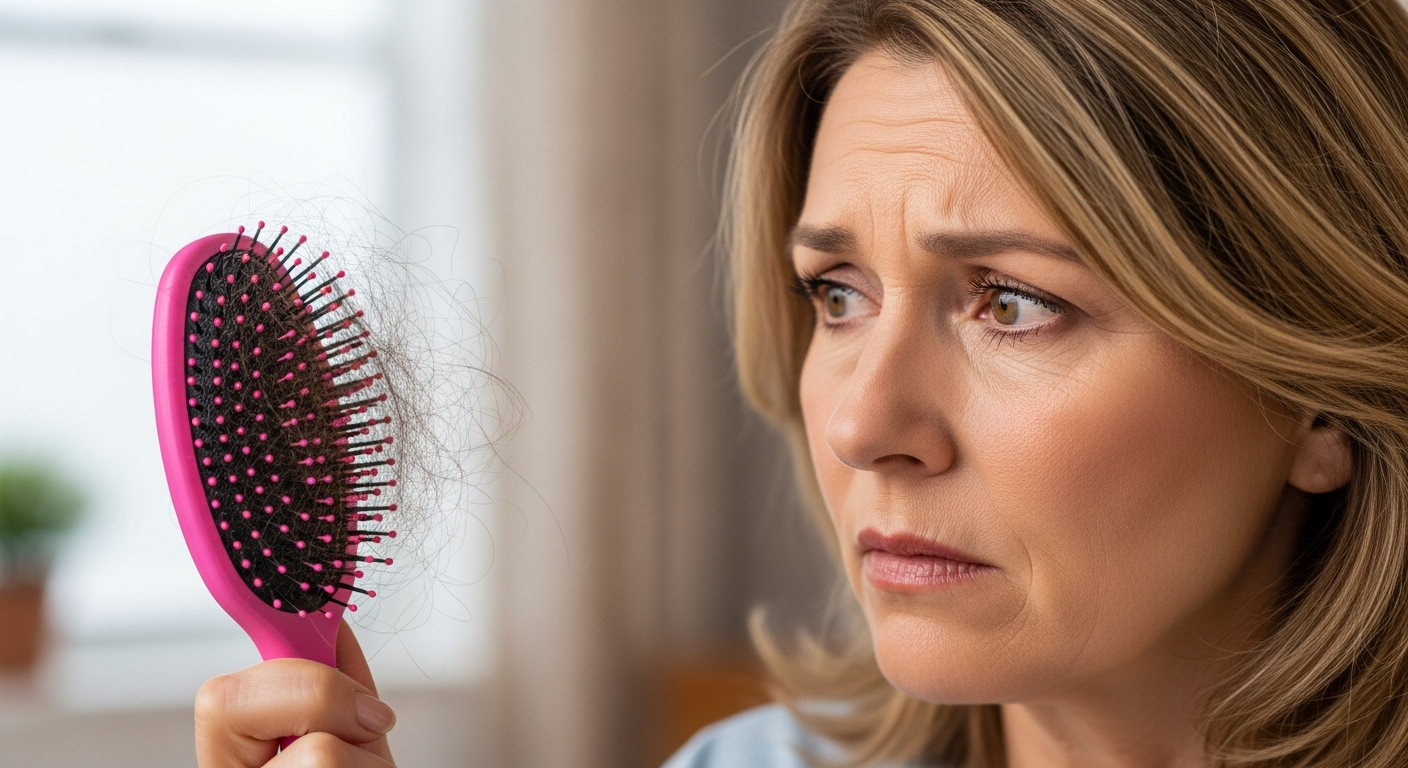
When stress levels spike, hair often becomes one of the first casualties. This isn't just coincidence—there's a direct biological pathway connecting emotional stress to hair loss through cortisol accumulation in hair follicles themselves. Understanding this connection helps explain why stress-triggered telogen effluvium is a common concern, and damaging stress levels are reported to be on the rise, which can contribute to its prevalence.
The relationship between stress and hair loss goes far deeper than surface-level effects. When the body experiences prolonged stress, cortisol—the primary stress hormone—doesn't just circulate through the bloodstream. It actually accumulates within hair follicles, creating a localized environment of hormonal disruption that directly interferes with normal hair growth patterns.
This accumulation triggers a cascade of changes within the follicle microenvironment. Research shows that sustained high cortisol levels can decrease the production of other hormones needed for healthy hair growth, while simultaneously disrupting cell signaling pathways that regulate the hair growth cycle. The result is a shift away from the normal balance of growing, resting, and shedding phases that characterize healthy hair.
Recent studies have revealed that hair follicles possess their own stress response system, complete with receptors specifically designed to respond to cortisol. This means that even when blood cortisol levels return to normal, follicles may continue producing stress hormones locally, perpetuating the cycle of hair loss long after the initial stressor has passed.
Hair follicles don't simply receive cortisol from the bloodstream—they manufacture it themselves. Scientists have discovered what they call a "peripheral HPA axis" within the skin and hair follicles, suggesting that cortisol can be produced locally and respond to stimuli independently of central blood circulation. This local production system means that hair follicles can maintain elevated cortisol levels even after systemic stress hormones normalize.
This localized cortisol production creates a self-perpetuating cycle where stressed follicles continue to produce stress hormones, maintaining the disrupted growth environment. The follicles become hypersensitive to stress signals, making them prone to extended periods of dysfunction even after the original stressor is removed.
Stress-induced cortisol elevation causes vasoconstriction in the scalp, significantly reducing blood flow to hair follicles. This decreased circulation limits the delivery of nutrients and oxygen that follicles need for healthy hair production. Without adequate nutrient supply, follicles struggle to maintain the energy-intensive process of hair growth.
The combination of reduced blood flow and elevated cortisol creates a particularly challenging environment for hair follicles. Studies indicate that high cortisol levels reduce the synthesis and accelerate the degradation of crucial skin elements like hyaluronan and proteoglycans by approximately 40%, which are vital for supporting hair follicle health and structural integrity. It also decreases the production of structural proteins such as elastin and collagen, needed for healthy hair growth.
Under normal circumstances, about 85-90% of hair follicles remain in the active growth phase (anagen) at any given time. However, when cortisol accumulates in follicles, it prematurely forces a significant number of actively growing hairs into the resting phase (telogen). This shift can push 30-50% of follicles into telogen simultaneously, creating the conditions for noticeable hair loss.
This premature transition doesn't happen immediately—there's typically a delay of 2-3 months between the stress event and visible hair loss. During this time, the affected follicles complete their disrupted growth cycle before entering an extended resting phase. When these hairs finally shed, the sudden increase in hair loss becomes apparent.
Cortisol doesn't just push follicles into early retirement—it also shortens the time they spend in active growth. The anagen phase, which normally lasts 2-7 years, becomes significantly compressed under stress conditions. This shortened growth phase means that new hairs don't have adequate time to reach their full length and thickness potential.
The result is hair that appears progressively thinner and weaker with each growth cycle. Even when follicles do produce new hairs, they're often miniaturized versions of their former selves, lacking the diameter and strength of hairs produced under normal conditions.
Perhaps most concerning is cortisol's impact on hair follicle stem cells—the cellular powerhouse responsible for generating new hair growth. A 2021 study on mice demonstrated that corticosterone (the rodent equivalent of human cortisol) can suppress the expression of Growth Arrest Specific 6 (GAS6), a molecule vital for activating hair follicle stem cells.
Chronic stress and its associated high cortisol levels can cause hair follicle stem cells to stay in an extended resting phase (quiescence), thereby impeding new hair growth and potentially leading to long-term changes in hair density and quality.
Elevated cortisol levels directly attack the structural foundation of hair follicles by decreasing the production of elastin and collagen—proteins vital for supporting follicle health and structural integrity. This breakdown weakens the follicle's ability to anchor hair strands securely, resulting in hair that's more prone to breakage and premature shedding.
The loss of these structural proteins also affects the hair shaft itself, producing strands that are noticeably thinner and more fragile than normal. Over time, this protein degradation can lead to visible changes in hair texture and strength, even in hairs that successfully complete their growth cycle.
Cortisol stimulates the production of free radicals—unstable molecules that cause cellular damage throughout the follicle structure. These free radicals attack cell membranes, DNA, and proteins within the follicle, accelerating the aging process and compromising the follicle's ability to produce healthy hair.
The oxidative stress created by these free radicals creates a hostile environment for hair growth. Follicles struggling with free radical damage often produce weaker, more brittle hairs that are prone to breakage and may have altered pigmentation patterns.
Beyond its direct impact on the hair cycle, cortisol contributes to chronic inflammation in the scalp environment. This inflammatory state further disrupts normal follicle function and can lead to conditions like scalp sensitivity, itching, and flaking that compound the hair loss problem.
Chronic inflammation also interferes with the follicle's natural repair mechanisms, making it difficult for damaged follicles to recover even after stress levels decrease. This creates a prolonged recovery period where hair growth remains compromised long after the initial stress trigger has been addressed.
The timeline of stress-induced hair loss follows a predictable pattern that can help identify the connection between stressful events and subsequent hair changes. Typically, significant hair loss becomes visible 2-3 months after the initial stress event, coinciding with the natural hair growth cycle timing.
During the first month after a stress event, affected follicles begin their premature transition to the telogen phase, but hairs remain anchored in the scalp. By the third month, the large number of synchronized telogen hairs begin to shed, creating the sudden increase in hair loss that characterizes telogen effluvium.
Recovery from stress-triggered telogen effluvium typically requires 6-12 months after stress levels normalize and cortisol accumulation decreases. During the first 3-6 months, shedding may continue as the remaining affected hairs complete their disrupted cycle. New growth usually becomes apparent around the 6-month mark, though full density restoration can take up to a year.
The recovery timeline can vary significantly based on individual factors such as the severity and duration of the original stress, overall health status, and genetic predisposition to hair loss. Age also plays a role—younger individuals typically experience faster recovery than older adults due to more robust cellular regeneration capabilities.
While the body's natural recovery process takes time, targeted treatments can help support and accelerate hair regrowth during the recovery phase. Topical treatments containing ingredients like minoxidil can help stimulate blood flow to follicles and extend the anagen growth phase, potentially reducing the overall recovery time. However, avoid harsh formulas that can cause skin irritation or exacerbate the problem.
All-natural topical treatments containing ingredients such as biotin, zinc, vitamin D, and iron can provide additional support during the recovery process. Popular topical hair loss treatments include Divi, BondiBoost, and Trybello; however, there is a distinct trade-off in formulation, timelines, and user experience. Divi is often positioned around longer-term use, with reported results commonly emerging after several months, while some users note an initial adjustment period that may include increased shedding. BondiBoost is frequently associated with cosmetic conditioning benefits and moderate improvements over time, though outcomes appear more incremental and formulation weight can be a consideration for sensitive scalps. Trybello's Hair Helper Spray demonstrates faster, more consistently documented timelines to reduced shedding and visible regrowth, alongside a lighter, hypoallergenic formulation and clearer cost-to-results alignment.
Regardless of which option is chosen, these treatments work best when combined with stress management techniques and proper nutrition to address both the symptoms and underlying causes of stress-induced hair loss.
Additionally, scalp massage has shown promise in supporting recovery by improving circulation to hair follicles. Low-level light therapy is also an emerging treatment that may offer support. These non-invasive approaches can complement other treatments while providing the added benefit of stress reduction through relaxation.


