UK drivers face fines up to £2,500 per tyre for failing MOT tread depth checks, but there’s a surprisingly simple tool that could eliminate the guesswork entirely. The question is: are you measuring your tyres accurately enough to avoid an expensive surprise?
The annual MOT test strikes fear into many UK drivers, particularly when tyre compliance is concerned. With hefty fines and penalty points at stake, knowing exactly where your tyres stand before that inspection can save considerable stress and expense.
UK law is crystal clear on tyre tread depth requirements. All cars, light vans, and light trailers must maintain a minimum tread depth of 1.6mm across the central three-quarters of the tyre's breadth and around the entire circumference. This isn't merely a guideline - it's a legal requirement that carries serious consequences for non-compliance.
Drivers caught with tyres below the legal limit face automatic fines of up to £2,500 per tyre, along with three penalty points on their licence. For a car with four illegal tyres, this could mean a staggering £10,000 fine and 12 penalty points - enough to result in an immediate driving ban. The DVSA takes tyre safety seriously, making tread depth one of the most scrutinised aspects of any MOT inspection.
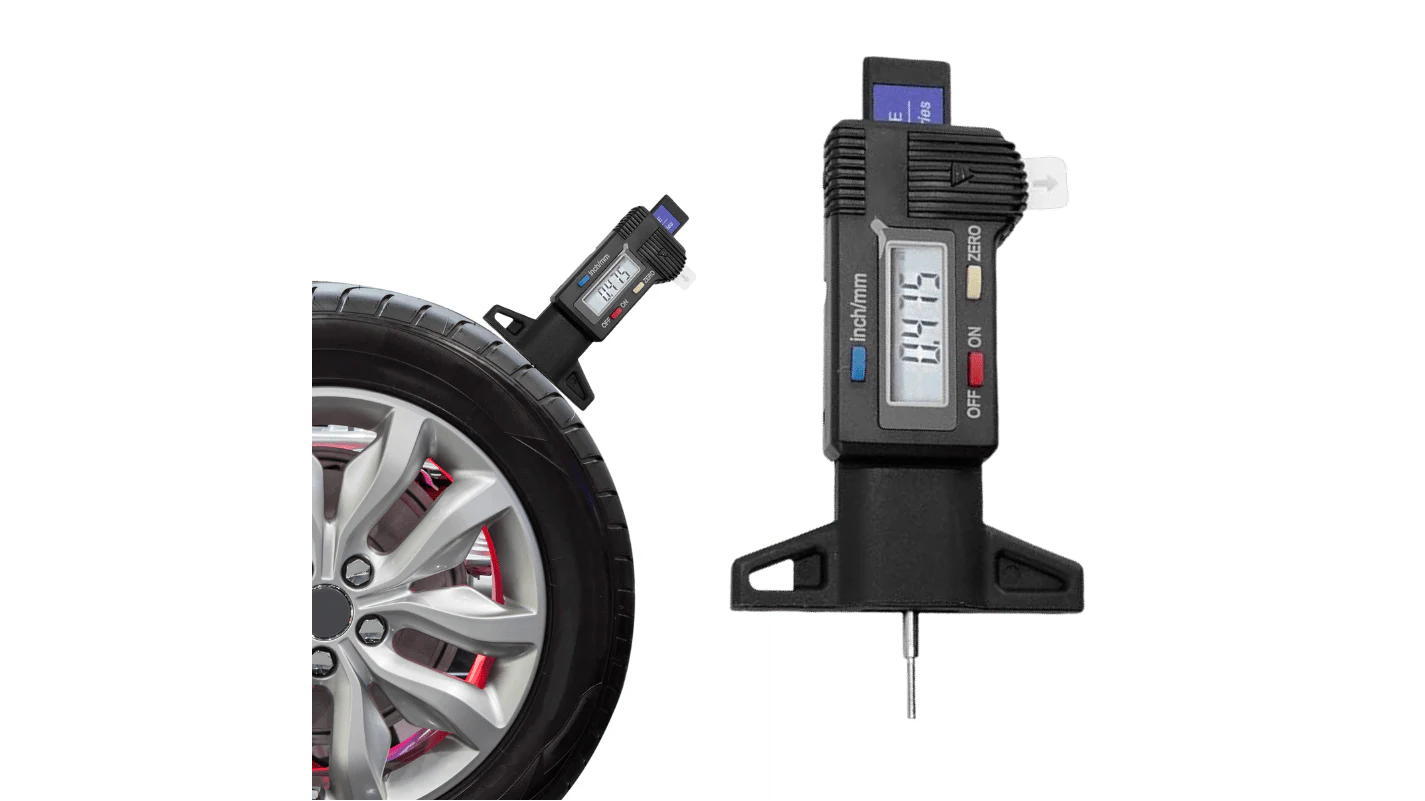
Beyond the financial implications, worn tyres significantly compromise vehicle safety. Research shows that tyres with inadequate tread depth dramatically increase stopping distances and reduce grip, particularly on wet surfaces. AutoPump's digital tyre tread depth gauge helps drivers stay compliant by providing accurate measurements that eliminate any uncertainty about legal compliance.
Traditional tyre tread measurement methods often leave drivers guessing about their exact legal standing. The popular 20p coin test, whilst useful as a rough guide, lacks the precision needed for confident MOT preparation.
Digital tyre tread depth gauges provide immediate, precise numerical readings that remove all ambiguity from tyre assessment. Unlike analogue gauges that require interpretation of needle positions or coin tests that offer only rough estimates, digital displays show exact measurements down to decimal points. Many models feature large, clear LCD screens that are easily readable in various lighting conditions, making checks quick and straightforward.
The ability to switch between metric and imperial units adds versatility for users comfortable with different measurement systems. This precision proves invaluable when tyres are approaching the legal limit, where a difference of just 0.1mm could determine MOT pass or fail status.
Many digital tyre depth gauges are DVSA-approved and meet the same accuracy standards used in official MOT testing stations. This professional-grade precision ensures that home measurements align with what MOT testers will find during inspection. The consistency and reliability of digital measurements help drivers make informed decisions about tyre replacement timing, preventing last-minute MOT failures.
Professional workshops and MOT centres increasingly rely on digital gauges for their accuracy and efficiency. The technology eliminates human error in reading measurements and provides documented evidence of tyre condition when needed.
Understanding exactly what MOT inspectors examine helps drivers prepare more effectively for their annual test. Tyre assessments go far beyond simple tread depth measurements, encompassing multiple safety factors that affect vehicle roadworthiness.
MOT testers measure tread depth at multiple points across each tyre, focusing particularly on the central three-quarters of the tyre's breadth where legal requirements apply. They check the entire circumference to identify any areas where tread has worn below the 1.6mm minimum. This thorough approach means that even if most of the tyre meets legal requirements, isolated worn spots can still result in MOT failure.
Inspectors pay special attention to the main grooves that run around the tyre's circumference, as these channels are vital for water displacement and maintaining grip on wet roads. Uneven wear patterns often indicate underlying mechanical issues with wheel alignment, suspension, or tyre pressure that may require attention.
Beyond tread depth, MOT inspectors examine tyres for cuts, bulges, embedded objects, and general condition. They verify that tyres are the correct size and type for the vehicle, check pressure levels, and assess overall structural integrity. Damaged sidewalls, exposed cords, or signs of internal damage can all result in MOT failure regardless of tread depth.
The inspection also covers tyre age and compatibility across axles. Mixed tyre types or sizes can compromise vehicle handling and safety, leading to test failure even when individual tyres appear roadworthy.
Whilst 1.6mm represents the legal minimum, tyre safety experts generally recommend replacement at 3mm tread depth for optimal performance and safety margins.
Research, including MIRA testing, demonstrates that tyres with tread depths below 3mm can increase wet braking distances by up to 44% compared to tyres with deeper tread. This dramatic increase in stopping distance can mean the difference between avoiding an accident and a serious collision. On wet or icy roads, the safety margin provided by deeper tread becomes even more critical.
The grooves in tyre tread serve as water channels, displacing liquid from the contact patch between tyre and road. As tread depth reduces, these channels become less effective, increasing the risk of hydroplaning and loss of control in wet conditions. The 3mm recommendation provides a substantial safety buffer above the legal minimum.
Regular monitoring with a digital gauge helps identify uneven wear patterns that may potentially indicate mechanical problems requiring attention. Inside edge wear might suggest wheel alignment issues, whilst centre wear could indicate over-inflation. Outside edge wear often points to under-inflation or aggressive cornering. However, these are potential indicators, and a professional inspection is needed for definitive diagnosis.
Catching these patterns early allows for corrective action before they compromise safety or result in premature tyre replacement. Digital gauges make it easy to check multiple points across each tyre, creating a clear picture of wear patterns and vehicle condition.
Systematic tyre checks using a digital gauge can identify potential MOT issues well before the test date, allowing time for remedial action and avoiding test failures.
Thorough tyre assessment requires measuring tread depth at several points across each tyre's width and around the circumference. Focus particular attention on the central three-quarters of the tyre's breadth where legal requirements apply, but also check shoulder areas for uneven wear. Take measurements in at least three locations across the tread width and at multiple points around the circumference.
Document the lowest reading for each tyre, as this determines legal compliance. Digital gauges make this process quick and accurate, allowing thorough assessment without the time-consuming nature of traditional methods.
Maintaining a record of tread depth measurements helps track wear rates and predict when replacement will be necessary. This proactive approach prevents MOT failures and allows for budget planning around tyre purchases. Recording measurements monthly or before long journeys creates a useful database of tyre condition.
Digital readings provide precise data that can reveal gradual wear patterns not immediately obvious through visual inspection. This information proves valuable when discussing tyre condition with mechanics or planning vehicle maintenance schedules.
Use the digital gauge to identify uneven wear across the tyre surface, which may indicate mechanical issues requiring attention. Significant variations in tread depth across the tyre width suggest alignment problems, whilst differences between tyres on the same axle might indicate suspension issues or incorrect tyre pressures.
Early detection of these patterns allows for corrective action before they compromise safety or cause premature tyre replacement. Addressing underlying mechanical issues not only improves safety but also extends tyre life and reduces long-term costs.
A quality digital tyre tread depth gauge transforms MOT preparation from guesswork into precise assessment. The accuracy and convenience of digital measurement remove uncertainty about tyre condition, allowing confident MOT booking and reducing the stress associated with potential test failures.
Regular use of a digital gauge enables proactive tyre management, helping drivers stay ahead of legal requirements whilst maximising safety and tyre life. The small investment in accurate measurement equipment pays dividends through avoided fines, prevented test failures, and improved road safety.
The peace of mind that comes from knowing exact tyre condition cannot be overstated. Whether planning a long journey or approaching MOT test time, digital measurement provides the confidence that tyres meet both legal requirements and safety expectations.
For precise tyre tread measurement tools and automotive safety equipment, visit AutoPump's website where digital accuracy meets practical vehicle maintenance solutions.


